Last updated 2026-07-10
TL;DR
Pediatric speech therapy helps children build communication through play-based sessions with a licensed speech-language pathologist. If your toddler isn't hitting language milestones, get an evaluation by 18 to 24 months. Private sessions run $100 to $350 out of pocket, insurance often covers part, and early intervention or school services can be free. Parents can do real, therapy-aligned practice at home every day.
What is speech therapy for toddlers?
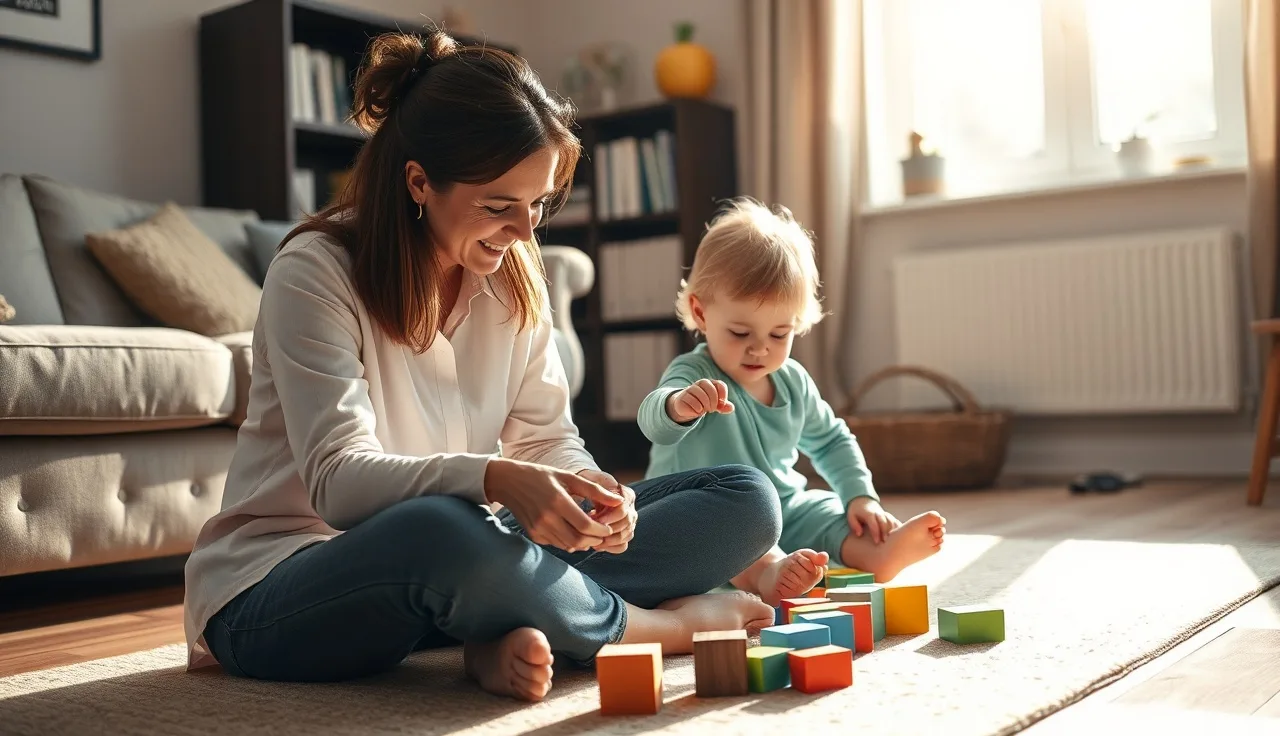
Speech therapy for toddlers is a set of techniques a licensed speech-language pathologist (SLP) uses to help young children understand language, produce words and sounds, and communicate with the people around them. It looks nothing like the drills adults picture. At this age it's almost all play: blowing bubbles to build lip strength, narrating a toy car down a ramp, repeating a sound until a child echoes it back.
The American Speech-Language-Hearing Association (ASHA) sets the scope of pediatric speech-language pathology to cover speech sound production, language comprehension and expression, social communication, fluency, voice, and feeding [1]. That's a wide net. A two-year-old who has words but won't use them socially is a very different case from a three-year-old who stutters, or a toddler who can't coordinate the muscles to form any consonants at all.
Most pediatric SLPs start with an evaluation. It looks at how many words a child says on their own, how well they follow directions, whether they make eye contact and point to share attention, and how their mouth muscles work. From that picture the SLP writes a plan with specific, measurable goals, something like "will spontaneously request a preferred item using a two-word combination in 8 out of 10 opportunities."
Parents are almost always in the room during toddler sessions. That's on purpose. The SLP is partly treating the child and partly coaching the parent, because the strategies only stick if they happen at home too, where the child spends the other six days of the week.
When should you consider speech therapy for a toddler?
Earlier than most families act on it. That's the honest answer. The gap between a late talker and their peers tends to widen the longer help is delayed, and the brain's language-learning window is widest before age five [2].
The American Academy of Pediatrics (AAP) recommends developmental surveillance at every well-child visit and formal developmental screening at 9, 18, and 30 months [3]. Language red flags they name include:
- No babbling by 12 months
- No single words by 16 months
- No two-word phrases by 24 months
- Any loss of language skills at any age (this one is urgent)
A child who talks but is hard to understand follows a different timeline. By age two, strangers should understand about 50% of what a toddler says; by age three, around 75%; by age four, close to 100% [1]. If your child is well below those numbers, get a referral.
You don't need a diagnosis to request a speech evaluation. In most U.S. states, you can self-refer to early intervention (for children under 3) or go straight to a private SLP. Waiting for the pediatrician to bring it up is fine, but you're allowed to bring it up first. If your gut says something's off, that's reason enough.
For families watching for possible autism, the timing pressure is sharper. The AAP recommends autism-specific screening at 18 and 24 months [3], and communication delays are one of the earliest signs. Our overview of autism spectrum speech therapy covers what to expect on that path.
What age should a child start speech therapy?
Speech therapy can begin as young as a few months old for feeding difficulties or early neurological concerns. For language delays, the earliest formal help usually comes through early intervention programs, which serve children from birth to age 3 in the United States under the Individuals with Disabilities Education Act (IDEA), Part C [4].
Part C guarantees a free evaluation and, if the child qualifies, free or low-cost services in their "natural environment," which usually means home. Family income does not decide eligibility; the child's developmental needs do [4]. If your child is under 36 months, this is the first call to make, and finding out whether they qualify costs you nothing.
For children over three, Part B of IDEA covers services through the public schools. A child who qualifies for an Individualized Education Program (IEP) can get school-based speech therapy at no cost to the family [4].
Private therapy has no minimum age. Some SLPs specialize in infants; others focus on preschoolers. Starting early puts neuroplasticity on your side, but "early" doesn't mean you blew a deadline if you begin at four or five. The research on late talkers is genuinely reassuring. A 2013 review in Pediatrics reported that roughly 70 to 80% of late talkers who got intervention showed real gains in expressive language by school age [5]. The children who didn't fully catch up more often had extra risk factors like receptive language delays, so those kids especially benefit from early, targeted help.
How much does speech therapy cost for toddlers?
Here's where families get surprised. Private pediatric speech therapy in the United States runs roughly $100 to $350 per session out of pocket, with most metro clinics landing between $150 and $250 for a 45-to-60-minute session [6]. Teletherapy (live video with a licensed SLP) tends to sit on the lower end, often $80 to $200, partly because the SLP carries less overhead.
Insurance coverage is all over the map. The Mental Health Parity and Addiction Equity Act doesn't directly mandate speech therapy coverage, and benefits swing hard by plan. Some plans cover speech therapy with a copay after a diagnosis code; others require prior authorization or cap the number of sessions per year (20 to 30 is a common limit). Call the member services number on the back of your card and ask this exact question: "Does my plan cover pediatric speech therapy billed under CPT code 92507, and is there a session limit?"
Medicaid covers speech therapy for children who qualify, with no session caps in most states under the Early and Periodic Screening, Diagnostic, and Treatment (EPSDT) benefit [7]. If your child has Medicaid and was denied speech therapy, appeal it.
Early intervention under IDEA Part C is free or on a sliding fee scale depending on your state. School-based IEP services are always free. Pursue both before you pay out of pocket.
| Setting | Typical cost per session | Notes |
|---|---|---|
| Early intervention (under 3) | $0 or sliding scale | IDEA Part C, income-independent eligibility |
| School-based IEP (3+) | $0 | IDEA Part B, requires qualifying evaluation |
| Private clinic, in-person | $150 to $350 | Insurance may cover part |
| Teletherapy | $80 to $200 | Same licensure, lower overhead |
| In-home private SLP | $175 to $375 | Travel time sometimes billed extra |
How long does speech therapy take for toddlers?
Nobody has a clean answer, and anyone who hands you a precise timeline at the first visit is guessing. Duration hangs on the type and severity of the delay, the child's age at the start, how consistently the family practices at home, and whether other diagnoses are in play.
For a late talker with no other concerns, some children make dramatic gains in three to six months of weekly therapy. For a child with apraxia of speech, a motor-planning disorder that affects how the brain programs speech movements, therapy usually runs longer, often one to two years or more, and frequency matters. Research on childhood apraxia of speech supports more frequent sessions, three to five times per week, over once-weekly visits [8].
For children on the autism spectrum, communication goals evolve for years, and the focus shifts over time from basic vocabulary to conversation to social language. That's not a failure. That's the work.
A reasonable expectation: plan for at least six months before you get a clear read on the trajectory. Most SLPs reassess goals every six to twelve weeks. If your child isn't making measurable progress after three to four months of consistent attendance, have a direct talk with the SLP about changing the approach, the frequency, or the targets.
Frequency beats total duration. A child who gets two sessions a week will almost always outpace a child who gets one session every two weeks, everything else equal.
How do you do speech therapy at home?
At-home practice isn't a watered-down version of the real thing. For toddlers, the home is where language actually lives. The words they hear at breakfast, in the bath, on the drive to the park, those are the moments where new language locks in.
Here are strategies that match what SLPs teach parents in coaching sessions:
Follow the child's lead. If your toddler grabs a toy train, you talk about the train. You don't redirect to the flashcard you planned. Interest-based learning holds words better than drills.
Use parallel talk. Narrate what you or the child is doing in short sentences. "Cup. You're drinking. Cold water." You're not quizzing. You're modeling.
Give choices, not open questions. "Do you want the ball or the book?" pulls for language in a way "What do you want?" doesn't, especially for children with limited expressive language.
Wait expectantly. After you model a word or phrase, pause for five to ten full seconds. Make eye contact. Leave a real window for the child to answer before you fill the silence.
Expand and recast. If your child says "more," you say "more juice" or "more crackers." You're not correcting. You're adding one word to what they gave you.
Read together every day. Not to quiz on comprehension, but to feed them new vocabulary inside a predictable, low-pressure routine. Board books with clear images and simple text work well. Pointing at pictures and naming them is genuinely useful.
If you want printable practice, searching "speech therapy activities for toddlers at home PDF" turns up free resources from university extension programs and state early intervention offices. The communication milestones chart from ASHA is a solid starting reference [1].
For families who want structured daily support between appointments, the Little Words app was built to give neurodivergent kids and late talkers a consistent, playful language environment at home. It's no replacement for an SLP. It fills the five days a week the therapist isn't in your living room.
You can also read how early intervention programs connect you with professionals who coach you in exactly these techniques, often at home.
What happens in an in-home pediatric speech therapy session?
In-home pediatric speech therapy is just what it sounds like. A licensed SLP comes to your house and runs the session in your living room, kitchen, or wherever the child is most at ease. For toddlers, this is often the better setup. No clinic anxiety, favorite toys right there, and the SLP can show parents how to fold language targets into the routines the home already has.
A typical in-home session for a two-year-old runs 45 to 60 minutes. The SLP arrives, watches what the child is doing for a few minutes, then moves into structured play aimed at the current goals. Say the goal is requesting: the SLP puts a favorite toy just out of reach, waits for any communicative attempt, then models the target word and hands it over. At the end, a good SLP spends five to ten minutes coaching the parent directly: "Here's what I did when he reached for the blocks, and here's how you do the same thing at dinner."
In-home sessions cost a bit more than clinic visits because the SLP spends non-billable time driving. Rates vary by region, but expect a home-visit premium of about $25 to $75 per session in most markets.
Teletherapy is the middle ground. The child stays home, which cuts anxiety and brings in real objects, and there's no travel cost for the SLP. For many families, especially in rural areas or without reliable transportation, online speech therapy works as well as in-person care for many language goals. A 2021 review in the American Journal of Speech-Language Pathology found telepractice produced outcomes comparable to in-person therapy for school-age children with language disorders [9].
How do you choose a pediatric speech therapy program?
Start with licensure. Any practicing SLP in the United States must hold a state license, and those with the Certificate of Clinical Competence from ASHA (the CCC-SLP credential) have finished a supervised clinical fellowship on top of a master's degree [1]. You can verify a therapist's ASHA certification through ASHA's ProFind directory.
After licensure, the questions that actually matter:
Does this SLP have real experience with children your child's age and profile? An SLP who specializes in adult stroke rehab is the wrong fit for a two-year-old late talker. Ask flat out: "What percentage of your caseload is toddlers?" and "Have you worked with kids who have my child's specific profile?"
What approach do they use, and why? For late talkers, naturalistic developmental behavioral interventions (NDBIs) like JASPER and PECS-based approaches have solid evidence behind them [10]. For childhood apraxia of speech, look for someone trained in DTTC (Dynamic Temporal and Tactile Cueing) or the Nuffield Dyspraxia Programme. An SLP who can't explain their approach is a red flag.
Will they include you in sessions and give you home strategies? Parent coaching isn't optional for toddlers. A therapist who parks you in the waiting room while they work alone with your two-year-old is skipping a big part of the model.
What's the session frequency, and why? Twice a week is a common start for toddlers with meaningful delays. Once a week can fit mild delays or a maintenance phase. Five times a week shows up for apraxia. Make sure frequency ties to your child's goals, not to what's convenient for the clinic.
What does progress look like, and when will you reassess? Goals should be written, measurable, and reviewed on a schedule. If a therapist can't tell you what success looks like in concrete behavioral terms, find someone else.
For families weighing clinic-based, in-home, and teletherapy options, see our full breakdown of speech therapy and speech therapists.
What speech therapy activities can parents do with toddlers at home?
The best at-home speech therapy activities happen inside real routines, not carved out as special sessions. Here are activities SLPs commonly assign as home practice, grouped by the communication goal they target.
For building vocabulary: Label everything during daily routines. Bath time is rich: "soap, rinse, bubbles, warm, cold." Grocery shopping works too; point and name produce, animals in books, trucks on the street. You don't need flashcards. The real world holds more vocabulary than any curriculum.
For requesting and initiating: Sabotage is a legitimate therapy technique. Hand your child a container they can't open, or wind up a toy and then hold it. Wait for them to tell you they need help. Any communicative attempt, a look, a reach, a sound, earns the help. You're building the habit of communicating on purpose.
For two-word combinations: If your child uses single words, model two-word phrases back. Child says "ball." You say "throw ball," then throw it. You're not correcting. You're showing the next step up.
For turn-taking (a social communication foundation): Simple back-and-forth games do the job: rolling a ball, taking turns stacking blocks, trading sounds. Turn-taking is the frame of conversation, and you can practice it before spoken language is fully there.
For children using AAC: If your child uses a speech-generating device or a PECS system, model on their device during play the same way you'd model spoken words. This is called aided language stimulation, and the evidence for it is strong [10]. Read more about how AAC devices work and how to support them at home.
If your child leans on repeated or echoed phrases, that's worth reading up on too. Echolalia is often communicative, not meaningless, and knowing how to answer it is part of at-home practice.
What's the difference between a late talker and a language disorder?
This distinction changes both the prognosis and the plan. A late talker is usually a child under three with fewer words than expected who is otherwise developing well: good comprehension, good social connection, solid play skills. About 70 to 80% of these children catch up by school age, with or without intervention [5]. But nobody can tell from the outside which child sits in the 20 to 30% who won't catch up on their own, which is exactly why experts recommend evaluation and monitoring over a blanket "wait and see."
A language disorder is a persistent trouble understanding or using language that doesn't clear up on the typical timeline. A child who at age five is still well behind peers in vocabulary, sentence structure, or following directions likely has developmental language disorder (DLD), which affects around 7% of children [11]. DLD doesn't mean a child can't learn language. It means they need more explicit, structured exposure over a longer stretch.
Specific conditions that often bring speech or language delays include childhood apraxia of speech, autism spectrum disorder, Down syndrome, and echolalia patterns that point to atypical language processing. Each has its own therapeutic profile.
The safest move for any worried parent: get the evaluation. It tells you exactly where your child is and what, if anything, they need. It doesn't stamp a label on a child forever. It informs a plan.
How do you find a pediatric SLP near you?
The ASHA ProFind directory lets you search by location, specialty, and age group, and it lists only ASHA-certified clinicians [1]. That's the fastest place to start.
For children under three, call your state's early intervention program directly. Each state runs its own program and intake process, and one call to your state's Part C lead agency gets things moving. The IDEA Infant and Toddler Coordinators Association keeps a state-by-state contact list.
For children three and older, contact your local public school district's special education coordinator. Districts are legally required to evaluate, at no cost, any child a parent suspects has a developmental delay [4].
For teletherapy, platforms like Expressable and Presence connect families to licensed SLPs for video sessions. Rates and insurance acceptance vary. Always confirm the SLP is licensed in your state before booking, because SLP licenses are state-specific.
Waitlists for pediatric SLPs are long across most of the country right now, often three to six months for private clinics. That time isn't wasted. Use the at-home strategies in this article, write down what you're seeing, and ask the front office about their cancellation list. Some clinics offer parent coaching sessions while you wait for full therapy to start, and those can do more than you'd expect.
Frequently asked questions
How do I do speech therapy at home with my toddler?
Follow the child's lead during play, narrate what you're both doing in short sentences, and give choices instead of open-ended questions to pull language. Pause five to ten seconds after modeling a word so the child has time to respond. Expand whatever they say by adding one word. These are the same techniques SLPs teach in coaching sessions, and they work best woven into daily routines like meals, baths, and play.
How much does speech therapy cost for toddlers?
Private out-of-pocket sessions run roughly $100 to $350 in the U.S., with most clinics charging $150 to $250. Teletherapy is typically $80 to $200. Children under three may qualify for free services through IDEA Part C early intervention, and children three and older may qualify for free school-based services through an IEP. Medicaid covers speech therapy for eligible children under the EPSDT benefit.
When should I consider speech therapy for my toddler?
Request an evaluation if your child has no words by 16 months, no two-word combinations by 24 months, or loses any language skill at any age. Strangers should understand about 50% of a two-year-old's speech and 75% of a three-year-old's. You don't need a diagnosis or a pediatrician's referral to start; you can self-refer to early intervention or a private SLP.
What age is best to start speech therapy?
The earlier the better, but there's no hard cutoff. Speech therapy can begin in infancy for feeding or neurological concerns. For language delays, IDEA Part C services are available from birth to age three at no cost. The brain's language-learning window is widest before age five, but meaningful gains are possible at any age. Acting at 18 to 24 months, when concerns exist, gives a child the most runway.
How long does speech therapy take for toddlers?
It depends on the type and severity of the delay. A late talker with no other concerns may make big gains in three to six months of weekly therapy. Childhood apraxia of speech typically needs one to two years or more at higher frequency. Autism-related communication goals often evolve across several years. Plan for at least six months before you get a clear read on how your child is progressing.
What should I look for when choosing a pediatric speech therapy program?
Verify the SLP holds state licensure and, ideally, the ASHA CCC-SLP credential. Ask about their experience with children your child's age and profile. Ask which evidence-based approach they use and why. Insist on parent involvement in sessions and written, measurable goals reviewed regularly. For toddlers, any program that parks parents in the waiting room is missing a key piece of effective treatment.
Is in-home speech therapy as effective as clinic-based therapy?
For toddlers, in-home therapy is often better, not merely equal. The child is in their natural environment without clinic anxiety, and the SLP can model strategies using the child's own toys and routines. Teletherapy also shows outcomes comparable to in-person care for many language goals, according to a 2021 review in the American Journal of Speech-Language Pathology.
What is early intervention and how do I access it?
Early intervention is a federally mandated program under IDEA Part C that provides developmental services to children from birth to age three. Eligibility is based on the child's developmental needs, not family income. Services are free or sliding-scale and delivered in the child's natural environment, usually at home. To access it, contact your state's Part C lead agency; your pediatrician can refer you, or you can self-refer.
What speech therapy activities work best for toddlers at home?
Labeling objects during daily routines, sabotage games where you create a communication opportunity by making something just out of reach, turn-taking games like rolling a ball back and forth, and reading board books daily with lots of pointing and naming. If your child uses AAC, model on their device the way you'd model spoken words. Simple, repeated, play-based exposure is what the research supports.
Can my child get speech therapy for free through the school system?
Yes. Children under three may qualify for free early intervention services under IDEA Part C. Children three and older can be evaluated by their local public school district at no cost, and if they qualify for an IEP, speech therapy is provided free. Children with Medicaid can also access speech therapy through the EPSDT benefit with no session caps in most states. Start by contacting your school district's special education office.
What is the difference between a speech delay and a language disorder?
A speech delay means a child is producing sounds and words later than expected, which many children resolve with time and intervention. A language disorder, like developmental language disorder (DLD), is a persistent trouble understanding or using language that doesn't resolve on its own. DLD affects about 7% of children. An SLP evaluation tells the two apart and determines what support, if any, is needed.
Does insurance cover pediatric speech therapy?
Coverage varies widely by plan. Some plans cover speech therapy after a diagnosis with a copay; others require prior authorization or cap sessions at 20 to 30 per year. Call member services and ask about CPT code 92507. Medicaid covers speech therapy for eligible children with no session caps under EPSDT in most states. Early intervention and school-based services are publicly funded and free to qualifying families regardless of insurance.
What is echolalia and should I be worried about it?
Echolalia is when a child repeats words or phrases they've heard, either right after hearing them or much later. It's common in autism and in some late talkers, and it's often communicative rather than meaningless. A child who says "do you want a snack?" when they want a snack is using a memorized phrase to communicate a real need. An SLP can help you read what your child's echolalia is doing and build on it.
How often should a toddler have speech therapy sessions?
Once or twice a week is the most common starting frequency for toddlers with moderate language delays. Childhood apraxia of speech often needs three to five sessions per week for meaningful progress. The right frequency depends on the severity of the delay, the family's capacity to practice at home between sessions, and what the SLP recommends based on specific goals. More frequent sessions generally produce faster gains.
Sources
- American Speech-Language-Hearing Association (ASHA), Practice Portal: ASHA sets the scope of pediatric SLP to cover speech sound production, language comprehension and expression, social communication, fluency, voice, and feeding; also provides milestones for speech intelligibility by age.
- Shonkoff JP, Phillips DA (eds.), National Academies Press: From Neurons to Neighborhoods (2000): The brain's language-learning window is widest in the early years; early experience shapes neural architecture in ways that become harder to alter over time.
- American Academy of Pediatrics, Developmental Surveillance and Screening: AAP recommends developmental surveillance at every well-child visit and formal screening at 9, 18, and 30 months; autism-specific screening at 18 and 24 months.
- U.S. Department of Education, Individuals with Disabilities Education Act (IDEA): Part C and Part B: IDEA Part C guarantees free evaluation and services in the natural environment for children birth to age 3; Part B covers school-based IEP services from age 3; eligibility is based on developmental need, not family income.
- Pediatrics (2013), late talkers research to practice: Approximately 70 to 80% of late talkers who received intervention showed significant improvement in expressive language by school age; children with co-occurring receptive language delays were less likely to fully catch up.
- ASHA 2022 SLP Health Care Survey and member data: Private-practice session rates for pediatric speech therapy in the U.S. typically range from $100 to $350 per session depending on region and setting.
- Centers for Medicare & Medicaid Services, EPSDT benefit: Medicaid covers speech therapy for eligible children under the EPSDT benefit with no session caps in most states.
- American Journal of Speech-Language Pathology (2020), Dynamic Temporal and Tactile Cueing for childhood apraxia of speech: Research on childhood apraxia of speech supports more frequent sessions (three to five times per week) rather than once-weekly visits for meaningful motor-learning progress.
- American Journal of Speech-Language Pathology (2021), telepractice outcomes for children with language disorders: A 2021 review found telepractice produced outcomes comparable to in-person therapy for school-age children with language disorders.
- Journal of Child Psychology and Psychiatry (2014), JASPER and naturalistic developmental behavioral interventions for autism: Naturalistic developmental behavioral interventions (NDBIs) including JASPER have strong evidence for toddlers with autism-related language delays; aided language stimulation is effective for children using AAC.
- Journal of Child Psychology and Psychiatry (2016), prevalence of developmental language disorder: Developmental language disorder (DLD) affects approximately 7% of children in the general population.