







Built by a dad. For his neurodivergent daughter. Now for yours.

Speech practice that feels
like play.

Little Words gives kids ages 2 to 8 a patient AI bunny to talk and play with. Older children through age 10 can also benefit from age-respectful activities matched to their communication level. Practice at home with parent controls and no pressure to perform.

Download on the App Store

Free on iPhone and iPad.

Prefer email? Get occasional Buddy tips and news, nothing more.

Now on the App Store

Buddy is ready to meet your child.

Little Words is free to download. Buddy is a voice-first practice companion for children who are learning to talk, working on speech or language goals, or simply want extra speaking practice.

Download on the App Store
QR code to download Little WordsPoint your iPhone camera here to download.

Free on iPhone and iPad.

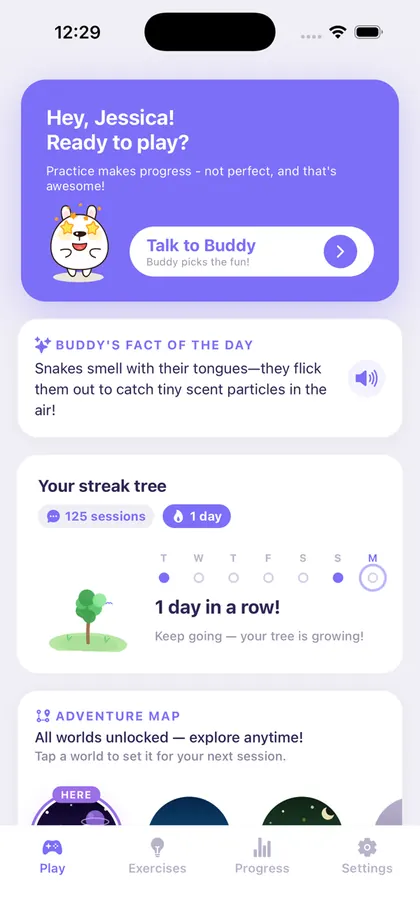
Little Words app: meeting Buddy
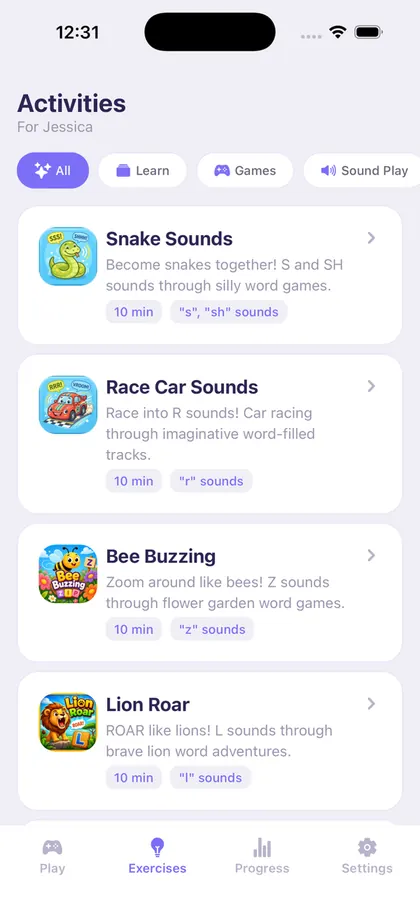
Little Words app: activities and games
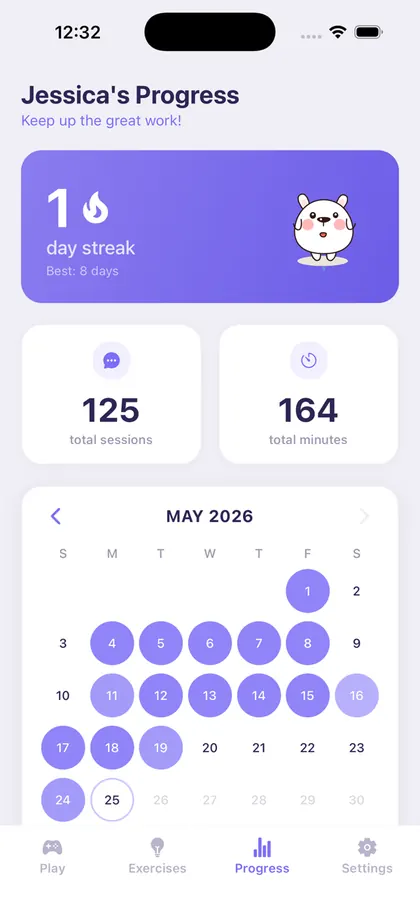
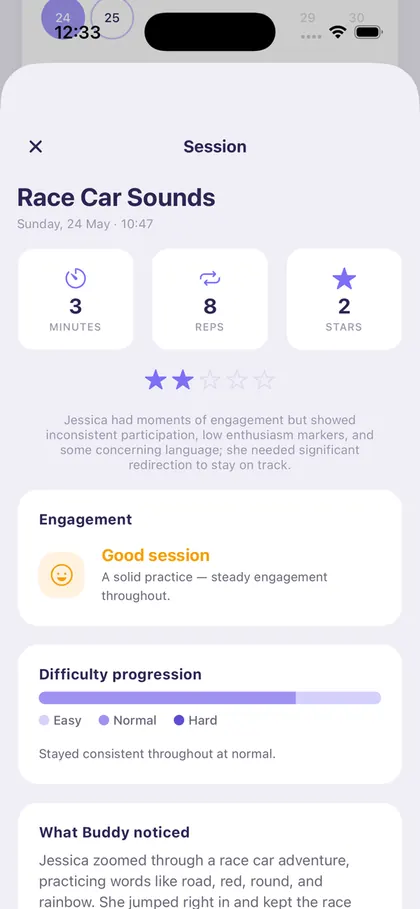
Little Words app: tracking progress
Little Words app: playful speech practice
Why this exists

I built this because my daughter needed a little more time to find her words. And I wanted to help.

My daughter turned 4 in September. She has a pretty significant speech delay, some sensory sensitivities, big emotions, and a mind that moves in its own beautiful way. She's in speech therapy once a week for 45 minutes. She has an OT. She has evaluations. But between all those appointments, I felt like I was supposed to be doing so much more at home and didn't know how.

The flashcards would last two minutes before a meltdown. The exercises from her therapist assumed she'd sit still, make eye contact, and repeat on command. But that's not how her brain works. And the harder I pushed, the more she shut down.

I'm an engineer. I work with AI. So I started building something - just for her. A little character called Buddy that meets her where she is. No eye contact required. No sitting still. Just a patient voice that plays with her on her terms.

She'll sit with Buddy for 10-15 minutes, which is way longer than she'll practice with me. I think it's because Buddy never gets frustrated, never checks his phone, never asks her to "try again" in that voice, and never makes a face when she says something wrong.

It's still early. But watching her choose to practice - without being asked - told me this was worth building for every neurodivergent kid whose parents are searching for something that actually fits how their child's brain works.

Will - founder of Little Words, ND dad first
What every ND parent knows

The system wasn't built for your kid. So we're building something that is.

Waitlists, busy weeks, and rigid exercises can make home practice hard. Whether your child is neurodivergent, has goals from a speech-language pathologist, is learning to talk, or just wants extra practice, the routine should fit the child.

🧩

One-size-fits-none

Most tools assume a neurotypical child. Sit still. Make eye contact. Repeat after me. But your kid's brain doesn't work that way - and when tools don't flex, kids shut down and parents burn out.

😤

Practice becomes a battleground

You sit down with the flashcards. They resist. You push. Sensory overload hits. Meltdown. You feel guilty. It's not that you're doing it wrong - it's that the tools weren't designed for how your child processes the world.

🤫

So much is locked inside

Understanding and expression do not always develop at the same pace. Buddy offers another low-pressure place to make choices, try sounds or words, and take conversational turns.

What Buddy actually does

Built different, for kids who are different

Parents choose the child's goals, interests, sensory settings, and pace. Buddy keeps turns short and playful; an adult stays in control of when to continue, switch activities, or stop.

🐍

Sound games

"Let's be snakes! Sssssss!" Practices target sounds like S, R, L, TH through silly games - not flashcards that trigger shutdown.

👋

Social scripts

"Pretend I'm a new friend at the park - what could you say?" Builds social communication through low-pressure scenarios for kids who find social situations overwhelming.

💬

Conversation practice

Taking turns. Asking questions. Telling stories. The daily back-and-forth that builds language naturally - without requiring eye contact or sitting still.

🧘

Regulation support

Parents can choose calmer pacing and lower-stimulation visuals. Buddy can offer breathing or feelings games, while an adult watches the child's cues and decides when to stop.

🎯

Personalized practice

Buddy uses parent-selected interests, communication stage, target sounds, and practice history to choose an appropriate next turn. Parents can adjust the settings anytime.

📊

Parent dashboard

See activities completed, practice words recognized by automatic transcription, and session highlights. Export a home-practice summary to discuss with your child's care team.

"So is this replacing therapy?"

No. Think of it as a home-practice tool. Your child's speech-language pathologist or care team provides assessment, diagnosis, and individualized clinical guidance. Little Words provides optional conversation and game practice between visits or as a family-directed speaking routine. It is not medical care and its automatic speech recognition is not a clinical accuracy score.

Designed for lower-pressure practice

The child gets room to respond

Buddy keeps turns short, allows extra response time, and follows parent-selected interests. Those choices can make it easier to try, pause, or stop without turning practice into a test.

😌

Buddy never makes a face

Buddy responds with consistent warmth and is instructed not to shame, rush, diagnose, or pretend it heard a word clearly when the audio is uncertain.

🎮

It feels like playing, not performing

Buddy talks about dinosaurs and space and whatever your child loves - including the deep special interests that light them up. The speech exercises are woven into their world, not forced into someone else's curriculum.

🔁

Repetition without resistance

Sound play and games make it possible to revisit a goal without presenting the same flashcard again and again. The child can skip, switch, or stop at any time.

🕐

Ready when they're ready

Some days your child is regulated and chatty. Some days they're overstimulated before breakfast. Buddy is there at 7am or 8pm, for 5 minutes or 20. No appointments. No transitions. Just open the app when the window is there.

Who can benefit from practicing with Buddy?

Children learning to talk
First words, quiet or hard-to-understand speech, speech-sound or articulation practice, and extra opportunities to speak.

1
Early communication
Play, choices, sounds, and words

Children with communication goals
Expressive or receptive language, fluency, social communication, storytelling, turn-taking, and following directions.

2
Language and conversation
Parent- or clinician-selected goals

Autistic and neurodivergent children
Sensory-aware, interest-led practice for children who benefit from slower pacing, predictable turns, or less social pressure.

3
Different communication styles
No eye-contact or sit-still requirement

Families may also use Buddy alongside a speech-language pathologist's plan for motor-speech, myofunctional, resonance, or other communication concerns. Little Words does not evaluate these conditions; ask the treating professional which activities and targets are appropriate.

Built for neurodivergent kids. Trusted by their parents.

Privacy and safety aren't features. They're the foundation.

🛡️

Parent-Controlled

A parent account and consent are required before child voice features are used.

🔒

Never Sold

Child personal information is not sold or used for targeted advertising.

🗑️

Delete Anytime

Request complete data deletion whenever you want. Automatic limits built in.

👩‍⚕️

Clear Limits

Home-practice support, not diagnosis or therapy. Automatic recognition can make mistakes.

Ready to meet Buddy?

Little Words is free on the App Store. Download it today and let your child start talking and playing with Buddy, at their own pace, no pressure.

Download on the App Store

Free on iPhone and iPad.

Is Little Words a replacement for speech therapy?

No. Little Words is home practice support that works alongside speech therapy, never in place of it. Buddy gives your child low-pressure practice between sessions. The app cannot evaluate, diagnose, or treat a speech or language condition, and it cannot tell you why your child is struggling.

If your child is missing communication milestones, losing words, or hard to understand, talk with your pediatrician or a speech-language pathologist. In the United States, infants and toddlers can start early intervention services under IDEA Part C, and school-age children receive special education and related services under Part B. See IDEA at ed.gov and ASHA's late language emergence page, both checked August 10, 2026.

Start with the speech delay hub or the toddler not talking hub, see how we check claims, or try Buddy with your child.

Questions ND parents ask

Can a minimally speaking or autistic child use Little Words?

Little Words supports low-pressure sound play, turn-taking, simple choices, and communication games without requiring eye contact or sitting still. Every child communicates differently, so choose activities that fit your child and coordinate with their speech-language pathologist when appropriate. Little Words does not diagnose or replace therapy.

What about ADHD? My kid can't focus on speech exercises.

Buddy uses your child's interests, short turns, and parent-selected pacing to make home practice feel more like play. You can keep a session brief, switch activities, or stop whenever your child is tired or overwhelmed.

What conditions is this designed for?

Little Words is designed for children ages 2 to 8, with support for older children through age 10. It can support children who are learning to talk, want extra speaking practice, or have parent- or clinician-identified communication goals. It does not assess or treat a disorder.

My child has sensory sensitivities. Is this overwhelming?

Parents can choose a calmer sensory preset and slower pacing, keep sessions short, and stop at any time. The app cannot reliably detect distress, so an adult should supervise and follow the child's cues.

How is my child's data protected?

A parent account and parental consent are required before child voice features are used. Little Words does not store raw voice audio in its database, limits detailed conversation retention, does not sell child personal information, and provides data export and deletion controls. See our Privacy Policy for current providers and retention periods.

Can I share progress with our therapy team?

You can export a caregiver-owned home-practice summary showing activities completed, automatic word-recognition signals, and practice highlights. Share it for discussion if useful. It is not a clinical assessment or diagnosis.

Is it available now?

Yes. Little Words is live on the App Store and free to download for iPhone and iPad. Search for "Little Words" on the App Store or tap any download button on this page.

Your child has something to say.

Every sound is a victory. Every attempt matters. Every child deserves a patient friend who meets them exactly where they are.