Last updated 2026-07-09
At 32 months, a child with no words or only a handful of words is meaningfully behind where most toddlers are. By 24 months, most children already have 50 or more words and are combining them into short phrases. So at 2 years 8 months, a child with little or no speech needs a speech-language evaluation now, not another few months of watching and waiting. The good news is that intervention started before age three tends to produce the strongest gains, and you don't need a diagnosis in hand to start helping today.
By 32 months, most kids have around 200 to 300 words, are stringing three or more words into short sentences, and can be understood by strangers at least half the time, according to the American Speech-Language-Hearing Association [1]. That's the typical range. Kids vary, sure, but by this age the window for calling something "normal late talking" is closing fast.
The milestone everything else hangs on comes earlier: by 24 months, a child should have at least 50 words and be combining two of them, things like "more milk" or "daddy go" [2]. Between 30 and 36 months, three-word combinations start showing up, along with questions, negatives ("no want that"), and pronouns. A 2-year-8-month-old with fewer than 50 words, or who isn't putting words together at all, has moved past the slow-starter phase. That gap is real, and it changes what you should do next.
If your child is closer to 2 years 3 months and you're reading this ahead of schedule, the same logic applies. The 24-month mark is the first real checkpoint, and any child with fewer than 50 words at that age qualifies for an evaluation, and in most U.S. states, for early intervention services without needing a diagnosis first [3].
Late talker, or something more?
"Late talker" is a specific research term, not a general description of any toddler who isn't chatting much. It describes children roughly 18 to 30 months old with a limited spoken vocabulary who otherwise understand language, engage socially, play, and move the way you'd expect for their age. Somewhere between 10 and 20 percent of toddlers fit that profile [4]. Many catch up on their own. But the research on the rest is blunt: roughly half of late talkers still show language weaknesses once they reach school age, even after they seemed to have closed the gap [4].
By 32 months, the late-talker label starts to lose its usefulness. If your child was already behind at 24 months and still hasn't caught up, something else is usually driving the delay. Possibilities include developmental language disorder (DLD), where language difficulty persists with no other explanation; autism spectrum disorder, which often brings social-communication differences alongside the speech delay [5]; childhood apraxia of speech, a motor speech disorder where the brain struggles to coordinate the movements speech requires; hearing loss, still the most commonly missed cause of speech delay; intellectual disability; and echolalia used as a primary way of communicating, which shows up both in autism and in some neurotypical late talkers.
None of this gets sorted out from the sidelines. A speech-language pathologist looks at how much a child understands, how they express themselves, how they use language socially, and how their oral motor function is working. Sometimes a developmental pediatrician or a full evaluation team needs to get involved too. At 32 months, guessing isn't a plan. An actual assessment is.
At 32 months, a child should have somewhere between 200 and 300 words and be putting three words together at least some of the time, with stranger intelligibility around 60 to 75%. That's the range described by ASHA and the CDC [1][2] when you line up expectations at 24, 30, and 36 months.
| Age | Expected vocabulary | Expected sentence structure | Stranger intelligibility |
|---|---|---|---|
| 24 months | 50+ words | 2-word combinations | ~50% |
| 30 months | 200+ words | 3-word combinations | ~75% |
| 36 months | 300-500 words | 3-4 word sentences, basic grammar | ~75-100% |
| 32 months (your child) | ~200-300 words | 3-word combinations, some grammar | ~60-75% |
If your 32-month-old has fewer than 50 words and isn't combining any words yet, that puts them roughly 8 to 12 months behind where expressive language is expected to be. That's not a small lag you smooth over by waiting another month to see what happens. It's a gap worth acting on now.
What's behind the delay
There's no single answer, because causes vary enormously and often overlap. One child can carry two or three contributing factors at once.
Hearing is where every evaluation should start. Even mild or fluctuating hearing loss from recurrent ear infections (otitis media) can set language back significantly [6]. An audiologist can test very young children reliably, so if nobody has checked your child's hearing yet, do that first.
Autism spectrum disorder is the most common diagnosis tied to significant speech delay in toddlers. About 1 in 36 children in the U.S. receives an ASD diagnosis, and delayed or absent speech is one of the top reasons parents first seek an evaluation [5]. Autism doesn't require speech delay to diagnose, and a speech delay by itself doesn't mean autism. But the overlap is big enough that any child with a significant delay at 32 months should be screened.
Childhood apraxia of speech is less common and easy to miss. Kids with it often make inconsistent sound errors, had a quiet babbling history as babies, and struggle most with longer or unfamiliar words. They may understand everything said to them and produce almost nothing back. This condition needs motor-based therapy rather than standard language stimulation, so getting the diagnosis right actually changes the treatment plan.
Developmental language disorder affects roughly 7 to 10 percent of children and is one of the most common yet underdiagnosed childhood conditions [4]. It often runs in families. These kids hear normally and develop socially on track but keep struggling with the structure of language itself.
Environment matters too, though less than people assume. Heavy screen time, low language input at home, and family stress all show up in the research. Multilingualism does not cause speech delay. Bilingual children may carry slightly smaller vocabularies in each language, but their total word count across both languages is usually age-appropriate [7].
Getting an evaluation started
There are two tracks worth pursuing, and I'd start both at once rather than wait to see how one turns out.
The first is the public early intervention system. Under the federal Individuals with Disabilities Education Act, Part C covers children from birth to age three. You can contact your state's EI program directly, no doctor referral needed, and ask for an evaluation [3]. These evaluations are free, and if your child qualifies, services come at low or no cost, often right in your home. At 32 months, you've got roughly four months before your child ages out of Part C and moves into Part B, the school-based system for ages 3 to 5. This isn't something to put off.
The second track is a private or insurance-covered evaluation with a speech-language pathologist, which tends to move faster and dig deeper than the EI version. Ask your pediatrician for a referral, then call your insurance that same day to find out what's covered. Expect the evaluation itself to run one to two hours, with standardized testing, a conversation with you, and time spent simply observing your child. If the SLP suspects apraxia, autism, or a hearing issue, they'll point you toward the right specialist from there.
A full workup from a developmental pediatrician can mean a long wait, six months or more in many U.S. cities, which is a genuine problem when you're trying to get help started. The good news is you don't need that diagnosis in hand to begin speech therapy. Start while you're waiting rather than after, and if in-person services aren't easy to reach quickly, online speech therapy has expanded a lot in recent years and has decent evidence behind it for toddler language work, particularly the models built around coaching parents directly.
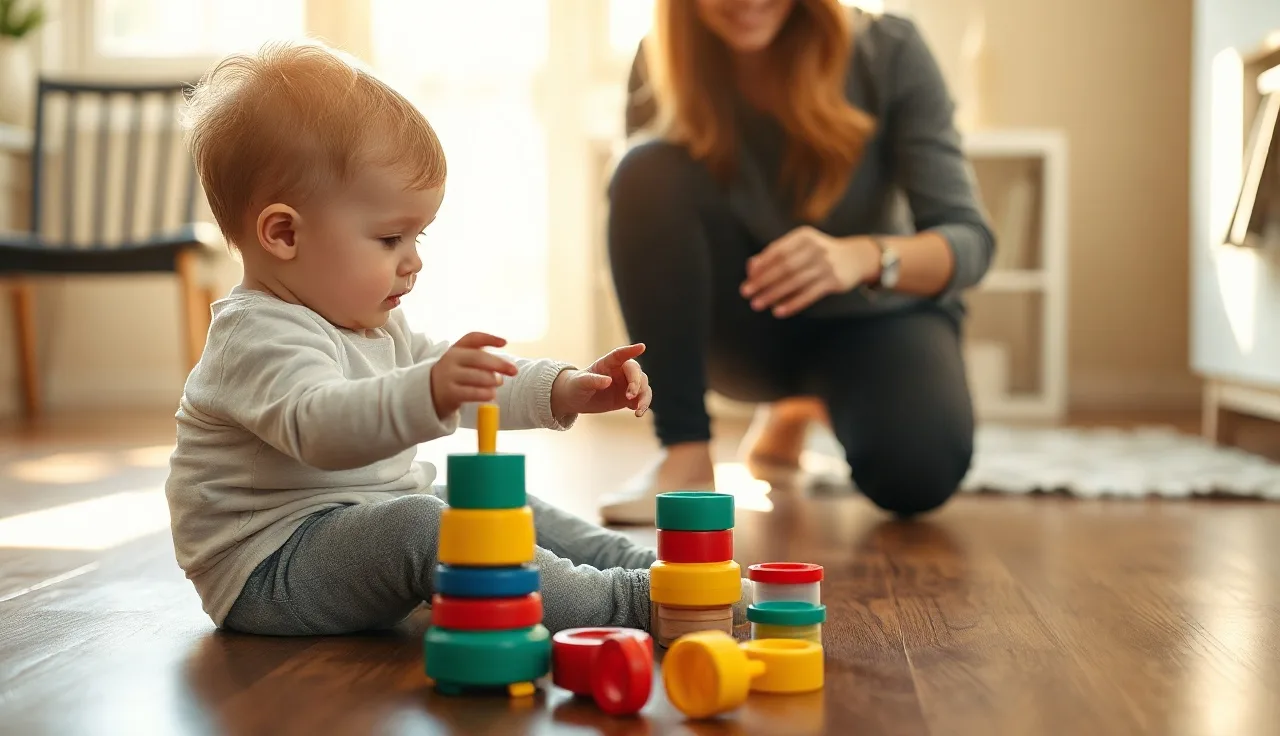
What can parents do at home right now? Plenty, actually. You can't replace a good SLP, but the research on parent-run language strategies is genuinely strong, and there's a lot of room to move the needle between sessions [8]. The technique with the most evidence behind it is following your child's lead. Watch what they're looking at, name it simply, then add one step. If they're stacking blocks, you say "block. block up. block fall." You're modeling language just one step ahead of what they can produce, not quizzing or demanding, just modeling. Cut back on questions, too. Most parents of language-delayed kids ask too many: "What's that? What do you want? Can you say it?" That piles pressure on a child who already knows they can't quite perform. Trade questions for comments instead: "Oh, the dog. The dog is running. Big dog." Slow down and leave a pause. Kids with speech delays often need longer to process and respond, so pausing three to five seconds after you speak, just waiting with a calm face, gives your child room to start. It feels awkward. Do it anyway. When your child says something, even just a sound or a fragment of a word, respond to the meaning and hand the correct form back naturally. If they say "buh" while reaching for a ball, you say "ball! You want the ball." Reading together helps too, but skip the school-style quizzing. Don't grill them on the pictures: point, label, make sounds, let them turn the pages, follow where their eyes go. Shared reading like this is one of the best settings for building vocabulary [8]. And whenever your child communicates, whether it's a gesture, a point, or just a sound, respond with real enthusiasm. Communication is communication, and you want more of it in whatever form it comes. If you want structured, SLP-informed activities to use between sessions, Little Words can support that practice at home, and the quiz at littlewords.ai/start is a good place to start figuring out where to focus first.Should I consider AAC for a 2-year-8-month-old who isn't talking?
Yes, and probably sooner than you'd think. Augmentative and alternative communication (AAC) doesn't replace speech or take away a child's drive to talk. That worry is common, but the research doesn't support it [9].
AAC ranges from picture boards and sign language up to high-tech speech-generating devices. For a 32-month-old with very little spoken language, putting core words on a simple picture board or an app gives them a way to get their message across right now, while therapy works on building actual speech. Kids who can't communicate get frustrated, and that frustration shows up as behavior and big emotions. Reducing it is part of the treatment, not separate from it.
ASHA states plainly that AAC should be considered for any child who can't meet their communication needs through speech alone [9], and that's most kids at 32 months with a significant speech delay. Your SLP can help you sort through device choices, and our guide to AAC devices lays out the options.
Sign language counts as AAC too. Many families with late talkers who aren't autistic use a handful of functional signs, things like more, eat, help, all done, and see good results. It doesn't get in the way of speech developing.
What speech therapy looks like at 32 months
Nothing about it resembles a classroom lesson. At this age, good sessions are mostly play: the therapist creates openings for communication, models language, and spends time teaching parents what to do between visits. Sessions typically run 30 to 60 minutes, once or twice a week, though the right frequency depends on the child's profile and how severe the delay is.
Parent coaching is now recognized as one of the most effective ways to deliver toddler language intervention [8]. A good chunk of session time actually goes to the SLP watching you play with your child and coaching your technique in real time. That's deliberate: it moves the real work into the thousands of minutes you spend with your child between sessions, which count for far more than the hour with the therapist.
Kids suspected of having CAS get a different approach: motor-based practice with heavy repetition of specific targets, often through programs like the Nuffield Dyspraxia Programme or Dynamic Temporal and Tactile Cueing. For autistic children, autism spectrum speech therapy tends to focus on social communication and joint attention, and may introduce AAC right from the start.
Private sessions typically run $100 to $350 each [10]. Going through early intervention, costs follow state sliding-scale rules and may end up free. After age three, services through schools are free under IDEA Part B if the child qualifies. Insurance coverage varies by state and plan, though the ACA requires most plans to cover habilitative services, which includes speech therapy for developmental delays [10]. For a broader look at what sessions involve and how to get started, our speech therapy guide covers it in more detail.
Why the split between understanding and talking matters
Expressive language is what a child produces: words, sentences, gestures. Receptive language is what they understand. These two skills can develop at very different rates, and which one is lagging tells you a lot about what's going on.
A child who understands well but struggles to produce words, one who follows multi-step directions and points to named pictures reliably, has a different profile than a child who's behind on both fronts. The one with a purely expressive delay is more likely to catch up once therapy targets speech production. A child who's also behind on understanding usually has a longer road ahead, and the picture is more complicated overall.
At 32 months, receptive milestones include following two-step directions ("get your shoes and put them by the door"), understanding basic spatial words like in, on, and under, and identifying objects by function ("which one do we use to eat?") [1]. If your child can't do these things yet, tell the evaluating SLP directly. It changes the whole assessment.
Parents often think their child understands more than they do, because toddlers are remarkably good at reading context. If you always ask "want a snack?" while already walking toward the kitchen, your child might respond correctly without having understood a single word you said. A good SLP builds testing that controls for this, so context can't do the work that language is supposed to be doing.
What happens if we wait until age 3?
Waiting is the most common mistake I see families make, and it comes with real costs.
The brain is most receptive to language learning in the first three years, and the research on this is settled. Working with a child inside that window brings faster, bigger gains than starting the same work at four or five [11]. Older kids can still make progress, but earlier really does beat later.
There's also a timing issue built into the system. Part C of IDEA covers children from birth to age three. The moment your child turns three, everything shifts: early intervention ends, and eligibility moves to the school district under Part B, which applies different, often stricter, standards. Plenty of kids who qualified easily at two get turned away, or offered thinner services, under the school-based rules. If your child is 32 months old, starting the Part C process now gives you roughly four months of federally guaranteed access to evaluation and services, and it's worth using [3].
Speech delays left untreated at this age tend to snowball. Language underpins literacy, social skills, self-regulation, and learning in general, so a child who starts kindergarten with a significant delay is facing a steep climb. Dealing with it at 32 months is a much easier job than dealing with it at five.
When should I go back to my pediatrician, and what should I say?
Go now. Don't wait for the next scheduled well-child visit, and don't wait for anyone's permission to be concerned.
Pediatricians are supposed to screen for autism at 18 and 24 months using a validated tool, usually the M-CHAT-R/F [5]. If that screen already happened and came back negative, treat it as one piece of information rather than a final answer. It doesn't rule out autism, and it doesn't rule out other reasons for a delay. The M-CHAT has real false-negative rates, especially for girls and for children with stronger cognitive skills, so a clean screen at 18 months doesn't mean much by itself once you have new concerns.
When you call the office, be specific rather than general. Something like: "My 32-month-old has fewer than X words and isn't combining words yet. I want a referral for a speech-language evaluation and an audiology check, and I'd like to talk about a referral to a developmental pediatrician too." Naming numbers and asking for the actual referrals matters, because a vaguer version of the worry sometimes gets answered with "let's watch it until the three-year visit," and at this age that's not the right response.
If your pediatrician downplays what you're seeing and suggests waiting it out, you don't have to accept that. You can self-refer to your state's early intervention program directly, no physician referral required, and you can call a speech-language pathologist yourself to set up a private evaluation. Nothing about getting your child seen requires a doctor's sign-off first.
What if my child used to say words and stopped?
Losing words a child once had is a different situation from simply developing slowly, and it deserves its own kind of attention. Loss of words between 18 and 24 months in particular is a red flag linked to autism spectrum disorder, though it can show up in other conditions as well [5].
If your 32-month-old had words before and lost them, bring this up early, and make sure every evaluator hears it clearly. Be specific about when it happened, how many words disappeared, and whether anything else changed around the same time. That history shapes both what the evaluation should look for and how quickly things need to move.
None of this is a reason to panic. It's a reason to act sooner rather than later.
Frequently asked questions
My 2-year-8-month-old doesn't talk but seems to understand everything. Is that a good sign?
Strong understanding is genuinely a positive sign. Children with good comprehension and a purely expressive delay tend to respond better to therapy and are more likely to catch up than kids delayed in both areas. Still, a receptive-only profile needs evaluation and therapy at 32 months. Understanding language and producing it are separate skills, and one doesn't automatically pull the other along without support.
Could my toddler's speech delay be caused by too much screen time?
Screen time gets blamed often, and there's some evidence that very heavy exposure in infancy crowds out the back-and-forth interaction language needs. But screen time alone is unlikely to cause a significant delay in an otherwise typical child. Reducing it and replacing it with face-to-face time is a good move. Don't let that distract you from getting an actual evaluation of what's driving the delay.
We are raising our child bilingual. Could that cause the speech delay?
Bilingualism does not cause speech delay. Bilingual children may carry somewhat smaller vocabularies in each single language, but their combined total across both languages is usually age-appropriate. If a bilingual child's total word count across both languages sits below expected levels, that's a real delay and needs the same evaluation as any other. Tell the SLP your child is bilingual so testing is done the right way.
How do I get early intervention services for my 32-month-old?
Contact your state's early intervention program directly. No physician referral is required under IDEA Part C. Searching "[your state] early intervention" finds the right agency. Request a free evaluation right away. At 32 months you have roughly four months before your child turns three and ages out of Part C. Most states must complete the evaluation within 45 days of your request, so call today.
What's the difference between a speech delay and autism?
Speech delay is a symptom, not a diagnosis. Autism is a neurodevelopmental condition that often includes speech and language differences but also involves social communication differences, restricted interests, and sensory processing patterns. A child can have a speech delay without autism, and can be autistic without a significant speech delay. A full evaluation by an SLP plus a developmental pediatrician or psychologist is what separates the two.
My child says words sometimes but not consistently. Does that count as having those words?
Generally a word counts if a child uses it spontaneously and meaningfully, even if not every day. But inconsistency at 32 months, producing a word once and then not using it reliably, can itself flag childhood apraxia of speech. Inconsistency is one of its signatures. Tell your SLP exactly which words you hear, how often, and in what situations. That detail changes the assessment.
Is it too late to start early intervention at 32 months?
No. Four months of Part C services can make a real difference, and starting now beats starting at three. After your child turns three, services continue through the school system under IDEA Part B with an IEP (Individualized Education Program). The transition requires a fresh evaluation and eligibility decision. Starting EI now also makes that handoff smoother.
At what point should I be worried about childhood apraxia of speech?
Consider CAS if your child has very little speech output relative to how much they understand, makes inconsistent sound errors, does better on automatic speech like counting or singing than on spontaneous speech, and had limited babbling as a baby. CAS is fairly uncommon but often missed. It needs motor-speech-specific therapy rather than general language stimulation. An SLP with CAS experience can assess for it directly.
What if my child uses a lot of echolalia? Is that language?
Echolalia, repeating words or phrases heard elsewhere, is a form of communication and a stage many children pass through. It's especially common in autistic children but shows up in non-autistic late talkers too. Immediate echolalia (repeating just-heard speech) and delayed echolalia (repeating phrases from TV or routines) carry different meaning. A good SLP assesses whether the echolalia is functional and works with it rather than against it. See our guide to echolalia for more.
How long does speech therapy take to work for a 32-month-old?
There's no honest single answer, because it hinges on the cause, the severity, how often therapy happens, and how much you practice at home. Many families see meaningful progress within two to three months of consistent weekly therapy. Children with apraxia, or with both expressive and receptive delays, usually need longer, sometimes one to two years or more. Progress should be measurable, and your SLP should be tracking it formally.
Does my child need to be diagnosed with something before starting speech therapy?
No. A diagnosis is not required to receive speech therapy. An SLP can evaluate and treat based on clinical presentation alone. A diagnosis helps you understand the underlying cause and unlock certain funding streams, but don't wait for one before starting therapy. Early intervention services under IDEA Part C are built to serve children with delays whether or not a diagnosis exists yet.
My 2 years 3 months old toddler isn't talking much. Should I already be worried?
At 27 months, the 24-month milestone has just passed. If your 2-year-3-month-old has fewer than 50 words or isn't combining two words, that's already past the typical threshold and warrants evaluation now, not more watching. Contact your state's early intervention program and ask your pediatrician for a speech therapy referral. You're not being anxious. You're being appropriately proactive at exactly the right time.
What questions will the speech-language pathologist ask at the evaluation?
Expect detailed questions about your child's communication history: when they first babbled, first said words, whether they've ever regressed, how they signal wants and needs, what words or sounds they produce now, how much they understand, how they interact socially, their play skills, feeding history, and any family history of language or learning difficulties. Bring notes. Time is limited, and specific details matter more than general impressions.
Sources
- American Speech-Language-Hearing Association (ASHA), Speech and Language Developmental Milestones: ASHA milestones for vocabulary size, sentence structure, and intelligibility by age
- CDC, Learn the Signs. Act Early. Developmental Milestones: By 24 months, children should have at least 50 words and be combining two-word phrases
- U.S. Department of Education, IDEA Part C (Infants and Toddlers with Disabilities): IDEA Part C provides free evaluation and services for children from birth to age three with developmental delays; no physician referral required
- Reilly S et al., Evidence base of the Late Talker classification, Pediatrics 2010: 10-20% of toddlers are late talkers; approximately half still show language weaknesses at school age even after apparent catch-up
- American Academy of Pediatrics (AAP), Autism Spectrum Disorder Surveillance and Screening: AAP recommends autism screening at 18 and 24 months; about 1 in 36 U.S. children receives an ASD diagnosis; speech regression between 18-24 months is a red flag
- National Institute on Deafness and Other Communication Disorders (NIDCD), Speech and Language Developmental Milestones: Hearing loss, including mild or fluctuating loss from ear infections, is among the most common causes of speech and language delays in toddlers
- ASHA, Bilingual Children and Language Development: Bilingualism does not cause language delays; total vocabulary across both languages in bilingual children is typically age-appropriate
- Roberts MY & Kaiser AP, The effectiveness of parent-implemented language interventions: a meta-analysis, American Journal of Speech-Language Pathology, 2011: Parent-implemented language strategies (following child's lead, modeling, recasting) produce significant expressive and receptive language gains in toddlers with delays
- ASHA, Augmentative and Alternative Communication (AAC) overview: ASHA supports AAC use for any child who cannot meet communication needs through speech alone; AAC does not suppress verbal speech development
- National Scientific Council on the Developing Child, Harvard Center on the Developing Child, Brain Architecture: The brain's plasticity for language acquisition is highest in the first three years; early intervention produces larger and faster gains than later intervention