Last updated 2026-07-09
Kids with apraxia of speech know exactly what they want to say. The trouble is their mouth won't reliably carry out the motor sequence needed to say it. AAC gives them a way to communicate while speech therapy does the slower work of building those motor patterns. High-tech speech-generating devices, sturdy low-tech boards, and combinations of the two all have research behind them, and which one fits best depends on the child's motor skills, how much language they've already developed, and how much verbal speech they currently have to work with.
Why apraxia changes the picture
Apraxia of speech is a motor planning problem. The brain knows exactly what it wants to say, but it struggles to plan and sequence the precise movements the mouth, tongue, and jaw need to produce sounds reliably. That's a different problem from not knowing words or not understanding language.[1]
This matters when you're choosing AAC. A child with a language delay usually needs help building vocabulary and grammar. A child with childhood apraxia of speech (CAS) often has normal or near-normal receptive language, with an age-appropriate vocabulary already sitting in their head. What breaks down is the path from intention to sound. So AAC for apraxia isn't really about teaching language. It's about giving the child a reliable way to communicate while speech motor skills develop, and for some kids that support sticks around permanently.
The American Speech-Language-Hearing Association describes CAS as involving "inconsistent errors on consonants and vowels in repeated productions of syllables or words, lengthened and disrupted coarticulatory transitions between sounds and syllables, and inappropriate prosody."[1] None of that points to a vocabulary gap. It points to a coordination gap.
That's also why a good AAC system for a child with apraxia should support verbal attempts made alongside device use rather than instead of them. The most effective approaches to CAS pair motor speech therapy with a communication system that runs next to speech. A child who taps a symbol while also attempting the word out loud gets extra motor practice out of the interaction. A child who taps and then goes quiet doesn't get that benefit. For more background, see our articles on apraxia of speech and childhood apraxia of speech.
Will a device slow down speech?
No. That's the honest answer to the worry almost every parent brings to this conversation, and the evidence lines up firmly on one side.
A 2006 review published in the American Journal of Speech-Language Pathology found no evidence that AAC use suppresses verbal speech, and pointed to several studies showing it actually supports it.[2] The worry made sense before anyone checked it against data: if a child can always reach for a device, why bother working to talk? But that's not what happens. A reliable way to communicate cuts down on frustration, frustration is what drives shutdown and refusal, and less of that means more chances for a child to attempt speech on their own.
With apraxia, the case is even more straightforward. The child already wants to talk. Apraxia gets in the way of that, not the child's drive to communicate, so giving them another way to be understood doesn't touch that drive. What it does remove is the shame and behavioral spiral that build up after enough failed attempts.
Apraxia Kids, an organization that maintains a clinical resource library reviewed by SLPs, states that "AAC can support communication while the child is developing speech" and recommends using it alongside motor speech therapy rather than in place of it.[3]
Nobody has solid long-term controlled trial data comparing outcomes for kids with CAS who use AAC against those who don't. What we have instead comes from single-subject studies and clinical case series, and they consistently show neutral or positive effects on speech development. No study has turned up harm.
The main types of devices
AAC breaks down into unaided options like sign language and gestures, and aided options, which is anything external to the body. For kids with apraxia, aided systems are where most families end up, partly because many kids with CAS also have fine motor challenges that make consistent signing difficult. Some families still use key word signing as a bridge alongside a device.
Aided systems tend to fall into three practical tiers. At the simple end are low-tech boards and books: paper or laminated symbol boards, PECS binders, core vocabulary boards. There's no battery and nothing to charge or break, and a good SLP can put one together for under $20. It's slower to navigate than a device, but it's reliable and always within reach, which makes it a solid backup or a first step while a formal device assessment is underway.
One step up are mid-tech devices: simple speech-generating buttons and single-message recorders (a BigMack button is the classic example). Vocabulary is limited, but they're useful for specific, repeated messages like "I need a break," "my turn," or "help," and some kids with severe apraxia keep using them long-term just for those high-frequency requests. These run roughly $20 to $300.[4]
At the top end are high-tech speech-generating devices (SGDs), the dedicated devices most people picture when they hear "AAC device": Tobii Dynavox, PRC-Saltillo (Unity/LAMP), Lingraphica, and others. They show symbol grids or text and produce synthesized or recorded speech, and this is the tier most insurance-covered devices fall into. Before insurance, cost usually lands somewhere between $5,000 and $10,000.[4]
Within high-tech devices, two approaches get the most attention for CAS: LAMP (Language Acquisition through Motor Planning) and full-language grid systems such as SNAP Core First or TouchChat HD. LAMP was built partly around motor learning principles, which lines up closely with what CAS therapy already targets.
Here's a rough sense of common aided AAC options and how they fit apraxia:
| System type | Approximate cost | Motor demand | Vocabulary ceiling | Notes for apraxia |
|---|---|---|---|---|
| Low-tech core board | $0-$20 | Low | Limited | Good bridge; always available |
| PECS binder | $50-$150 | Low-moderate | Moderate | Requires physical exchange |
| Simple SGD (mid-tech) | $20-$300 | Low | Very limited | Context-specific use |
| High-tech SGD (LAMP) | $5,000-$10,000 | Moderate | Full language | Motor-learning aligned |
| High-tech SGD (grid-based) | $5,000-$10,000 | Moderate | Full language | Strong vocabulary access |
| App on iPad | $200-$350 for device + $0-$350/yr app | Moderate | Full language (app-dependent) | Flexible; less durable |
Sources: ASHA AAC overview [4], device manufacturer published pricing.
Why LAMP comes up so often for CAS
LAMP stands for Language Acquisition through Motor Planning. Caroline Musselwhite and Lori Geist developed it, and it's now distributed mainly through PRC-Saltillo on their devices.[5]
The idea is that consistent motor patterns for reaching words help children who struggle with motor planning build responses that become automatic and reliable. Each word gets a single, fixed motor pathway on the device, so a child isn't hunting through pages and sub-pages every time. They learn one sequence of touches for "want," another for "more," and practice each until it becomes second nature. That's essentially what CAS therapy is trying to build in spoken speech too: consistent, automatic motor programs for sequences of sounds.
The research base on LAMP itself is still thin. Most of what's published is clinical case series and program evaluations that haven't gone through peer review, and PRC-Saltillo has funded some of this work, which is worth keeping in mind. Independent researchers have written up positive case reports, but there are no large-scale randomized trials yet. That gap isn't unique to LAMP: AAC research generally lags behind clinical practice, partly because trial design is genuinely hard when every child's presentation looks different.
Where LAMP does hold up well is in theory: its motor-learning framework lines up closely with the deficits seen in CAS. Many speech therapists who specialize in motor speech disorders reach for it first with children who have moderate to severe CAS, and parents in the Apraxia Kids community often mention it favorably.[3]
If you're weighing other options, it's worth asking your SLP about SNAP Core First and TouchChat HD with WordPower vocabulary. Both use grid-based navigation and are well-supported, though neither shares LAMP's explicit motor-planning design.
How is an AAC device prescribed and funded for a child with apraxia?
The process takes months and moves through several distinct stages, so it helps to know the path before you're stuck in the middle of it.
It starts with a formal AAC evaluation by a licensed SLP who specializes in augmentative communication, not a general speech evaluation. This SLP looks at the child's language comprehension, motor abilities, vision, and literacy, then trials several device types before landing on a recommendation. Medicaid and most private insurance won't fund a device without this evaluation on file.[6]
From there, the SLP writes a detailed report along with a Letter of Medical Necessity, explaining why this particular device is medically necessary, why speech alone won't meet the child's communication needs, and why cheaper alternatives won't do the job. This single document tends to determine whether the insurance claim succeeds.
Medicaid coverage for speech-generating devices is fairly solid, thanks to the EPSDT provision (Early and Periodic Screening, Diagnostic and Treatment) for children under 21. Federal law requires states to cover any medically necessary service under EPSDT, including these devices, once the evaluation backs it up.[6] Private insurance is much less predictable from plan to plan. The AAC-RERC (Rehabilitation Engineering Research Center on Communication Enhancement) keeps state-by-state insurance guidance if you want to check what's typical where you live.[10]
If the insurer denies the claim, appeal it. First-level denials happen often and get reversed once the SLP strengthens the Letter of Medical Necessity. State protection and advocacy organizations can walk you through the appeal for free.
Families who can't sit around waiting on insurance have other options. Many device manufacturers run loaner or trial programs, some schools provide devices under IDEA (Individuals with Disabilities Education Act) though those are typically for school use only,[7] and state assistive technology programs often run lending libraries too. If you want to go deeper on how the school and state system fits together, our early intervention guide covers it in more detail.
What does research say about AAC outcomes for kids with apraxia?
Research specific to childhood apraxia of speech (CAS) and AAC is thin. The wider AAC literature has more to offer, so much of what clinicians rely on gets borrowed from studies of other populations.
A 2008 systematic review in the journal Augmentative and Alternative Communication looked at speech-generating device (SGD) use in children with autism and found consistent evidence that SGDs increased communicative acts without reducing natural speech attempts.[8] CAS wasn't pulled out as its own subgroup in most of the studies covered.
For CAS specifically, a 2019 paper in the American Journal of Speech-Language Pathology by Murray, McCabe, and Ballard looked at the intensity of motor speech intervention and noted that AAC supports kept communication participation going during periods of intensive speech therapy.[9] That matches what clinicians generally believe: AAC isn't competing with speech therapy, it's what keeps a child communicating while the speech skills are still being built.
Here's what we can say with more confidence: children who have a reliable way to communicate show fewer frustration-driven behavior problems, engage more with books and literacy activities, and take part more fully in social interaction.[2] Those conditions tend to support language and speech development down the line.
The real gap in the research is long-term data on whether early AAC use in CAS changes the eventual ceiling a child's verbal speech can reach. Clinically, people notice that children who get early AAC alongside intensive motor speech therapy tend to do well. But "do well" is hard to measure against a version of that child's life where AAC was never introduced, and that comparison simply doesn't exist in the data.
At what age can a child with apraxia start using an AAC device?
Earlier than most parents expect, and there's no minimum age. ASHA states plainly that there are no prerequisite skills for AAC candidacy: if a child has a communication need that natural speech can't meet, AAC is appropriate no matter how young they are.[4]
In practice, many SLPs start low-tech AAC (core vocabulary boards, simple SGD buttons) with toddlers as young as 12 to 18 months once early signs of motor speech difficulty show up. High-tech speech-generating devices tend to come in around age 2 to 3, with vocabulary and interface adjusted to where the child actually is developmentally.
Getting access early matters because communication development doesn't pause while a family waits for a device to arrive. A 2-year-old who goes six months without a reliable way to communicate loses six months of social and language interaction. That's the real cost of waiting, not some abstract risk.
The barrier here isn't whether a child is "ready." It's the evaluation and funding timeline, which is exactly why a low-tech bridge matters so much. While a family waits for an SGD to be approved and delivered, a process that can easily take three to six months or more, a laminated core board keeps the child talking in the meantime. Our article on getting services started sooner walks through that timeline in more detail.
Can kids with apraxia use an iPad app instead of a dedicated device?
Yes, and many families start there. But the tradeoffs are real.
AAC apps like Proloquo2Go, TouchChat HD, LAMP Words for Life, and Snap Core First run on standard iPads, and their vocabulary and symbol systems are often identical to what a dedicated SGD offers. A full app subscription plus an iPad costs roughly $500 to $1,200 depending on the device and app, versus $5,000 to $10,000 for a dedicated SGD.[4]
Dedicated SGDs have their own advantages: they're ruggedized, have louder and clearer speakers, often have better mounting options for wheelchairs and positioning equipment, and are purpose-built so the child can't tap over to YouTube. Insurance will generally fund a dedicated device and not an iPad, because iPads count as consumer electronics rather than medical devices.
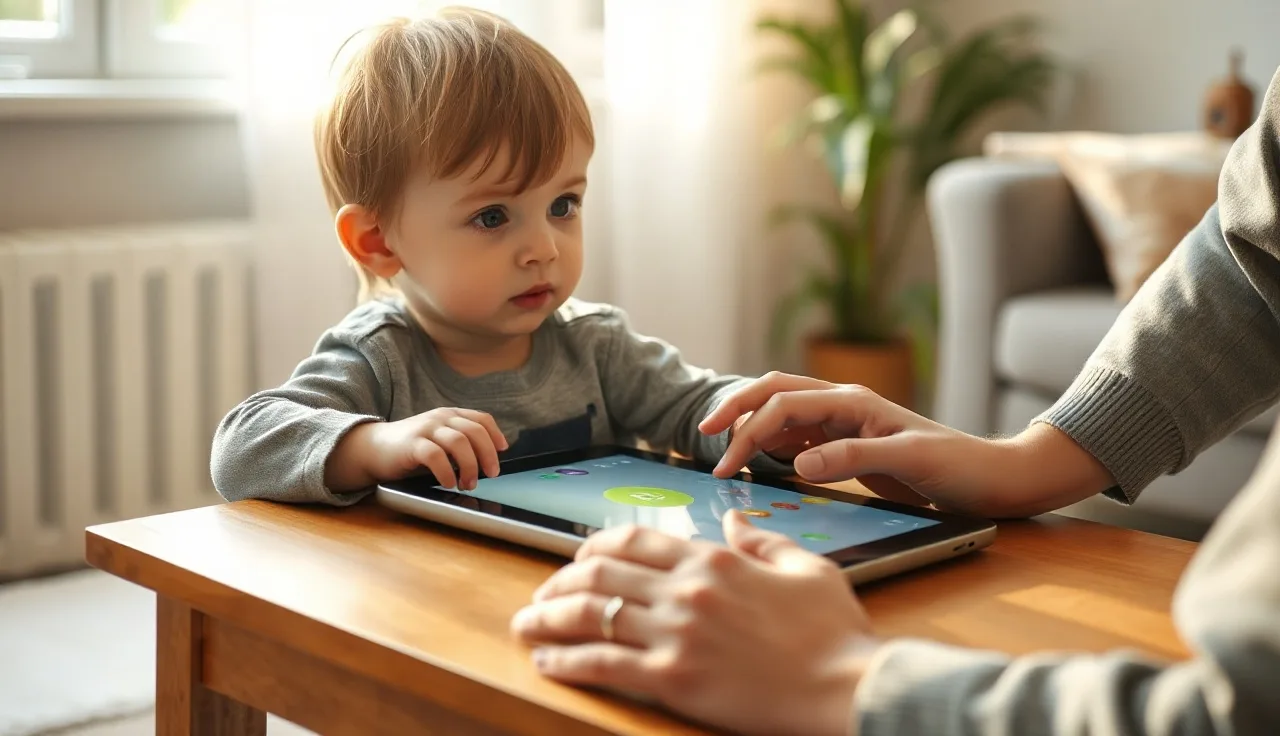
For apraxia specifically, the app-on-iPad route makes sense as a starting point if the dedicated device evaluation is already underway, if the family wants to practice before committing to a specific system, or if the child's motor speech is mild enough that a dedicated device may never be needed.
If you want a starting point for low-cost daily practice, apps built around core vocabulary and motor consistency are worth exploring. The Little Words app (/start) uses a short quiz to build a practice routine around your child's specific profile, which some families run alongside formal AAC systems.
One real risk of app-only setups is that the child's communication system lives on a shared family device. Notifications, screen time battles, and accidental deletions are all genuine problems. A dedicated device, even a mid-tech one, is always the child's and always available.
How does AAC work alongside motor speech therapy for apraxia?
AAC and motor speech therapy aren't rivals for a child's time. They're meant to work as a team.
The gold-standard approach for CAS is intensive, frequent motor speech therapy using evidence-based protocols. Dynamic Temporal and Tactile Cueing (DTTC), the Nuffield Dyspraxia Programme (NDP3), and Rapid Syllable Transition Treatment (ReST) all have published evidence behind them.[9] These approaches ask a lot of a child: repeated attempts at specific sound sequences, patience through failed tries, and steady engagement with a therapist.
AAC keeps that kind of therapy workable in two ways. The first is simple: it gives the child a way to communicate outside sessions. Without it, every hour that isn't therapy risks becoming an hour of frustration and failed attempts to be understood. With AAC in place, the child can still reach family members, ask for things, and share how they feel, which takes pressure off and helps prevent burnout from the harder work of therapy itself.
The second way is more direct. Certain AAC systems build motor practice right into daily use. LAMP, for instance, encourages the child to vocalize while touching the device, so each symbol tap becomes a cue to attempt the spoken word at that same moment. That turns ordinary communication into extra motor repetitions, on top of whatever happens in formal sessions, and over time those add up.
The SLP running the motor speech therapy and the one managing the AAC system, whether that's one person or two, need to be talking to each other about the child's progress. If they aren't, it's worth asking why. Our article on speech therapy and what a speech therapist does goes into more detail on how these sessions are typically structured.
Choosing an AAC system for a child with apraxia should come out of the evaluation itself, not a manufacturer's brochure. Still, there are a few things worth raising while that evaluation is happening. One is whether the system supports vocalizing while it's being used. For CAS, a device that encourages the child to attempt speech alongside it is a better fit than one that just replaces speech outright. Another is how consistent the motor pathway is. When a child is working through motor planning difficulties, having every word sit in the same spot every time cuts down on the effort of hunting for it. Systems that reshuffle vocabulary or bury words several menus deep just add motor planning work the child doesn't need. Physical access matters too. Most kids do fine with direct touch, but some children with CAS have broader motor difficulties and need switch access, eye gaze, or head tracking instead, and the evaluation should actually test whichever method might apply to your child. Vocabulary size is worth checking as well: a 42-location core board opens up far more expressive range than a 12-location one, so the SLP should trial a few grid sizes and see how quickly the child learns to find their way around each. Support behind the device matters as much as the device itself. SLPs need training on that specific system, not just general AAC background, and that training can come through the manufacturer, active online communities (the LAMP Facebook community is large and active), or a device specialist. And it's worth asking upfront what happens if this particular system doesn't pan out. A solid evaluation builds in a trial period, and if the child still isn't progressing after a genuine stretch of real use, going back for reassessment is the right move. AAC shows up across a wide range of diagnoses, including autism, cerebral palsy, ALS, traumatic brain injury, and Down syndrome, and the devices often look nearly identical from one child to the next. What differs is the goal behind the device and the therapy built around it. For many autistic children who are minimally verbal, the AAC system has to do two jobs at once: give them a way to communicate now, and help build their language from scratch. That means real time spent on vocabulary instruction, aided language stimulation, and helping the child grasp what symbols actually mean. Our autism spectrum speech therapy article goes into more depth on this. A child with CAS but no autism diagnosis usually starts from a different place. Language understanding and vocabulary are typically fine; what's broken is the motor side, getting the mouth to reliably execute speech, not the knowledge behind it. So the AAC work looks different: less time on what symbols mean, more time building fluency with the system and coordinating it with motor speech therapy. Some kids fall into both categories, CAS alongside autism or CAS alongside intellectual disability, and their plan needs to work on both fronts at once. A good SLP will be clear about which goals target motor planning and which target language growth, rather than blending the two and hoping for the best. Echolalia complicates the picture in an interesting way. A child who repeats speech (common in autism) has already shown their mouth can produce sequences of speech sounds; the real question is whether that speech is functional and intentional. A child with CAS is trying to produce intentional speech from the start and simply can't sequence the movements reliably yet. The two can look alike from the outside, but they're different problems, and sometimes both show up in the same child. Our echolalia and echolalia meaning articles cover more on how repeated speech relates to communication development. As for what to expect once a child starts using AAC for apraxia: most children with CAS make meaningful progress with intensive motor speech therapy, but severity varies a lot from child to child. Some reach near-typical verbal communication. Others still need AAC support as adults. Early on, there's no reliable way to predict which path a given child will take.[3] A few things do seem to tilt the odds toward better outcomes: catching the diagnosis early, therapy that's both intensive and frequent (some protocols call for three to five sessions a week during the intensive phase), an AAC system that stays stable instead of getting swapped out repeatedly, and family practice happening outside of sessions too, not just during them. Expect the system to feel clunky before it feels natural. It takes kids months to build vocabulary, learn where things live on the device, and develop the habit of reaching for it instead of giving up. That's not a sign anything's wrong, it's just how long the process takes. The system itself won't stay the same over time either. What a 3-year-old needs from AAC looks nothing like what a 7-year-old needs: vocabulary grows, the grid gets more complex, and literacy support gets layered in as the child develops. A good speech-language pathologist checks back in periodically and adjusts the setup instead of leaving it static. If one thing reliably predicts things going badly, it's abandonment. A device sitting uncharged in a backpack, one that's too complicated for daily use, or one nobody at school knows how to support isn't going to help anyone. It tends to be the support around the system, not the device itself, that decides whether AAC actually works.[8]Frequently asked questions
Is AAC appropriate for a child with mild apraxia?
Yes. How severe the apraxia is doesn't really decide this. If a child's speech is unreliable enough that communication breaks down regularly, AAC helps even in mild cases. Sometimes that means a simple core board or a low-tech backup rather than a full high-tech device. The goal is always to cut down on communication failure, since that's what drives frustration and pulls kids out of engaging with therapy.
Will insurance cover an AAC device for apraxia?
Often, yes, but you'll need a formal AAC evaluation and a Letter of Medical Necessity from a licensed SLP. Medicaid covers speech-generating devices for children under 21 under the EPSDT mandate, while private insurance depends on the plan. First-level denials happen a lot, and they get reversed on appeal just as often. The evaluation and the LMN documentation are what any successful claim rests on.
What is the LAMP method, and is it the best AAC approach for apraxia?
LAMP (Language Acquisition through Motor Planning) builds a consistent motor pathway for each word, which lines up well with the motor learning principles behind CAS therapy generally. It's a strong theoretical fit, and SLPs who specialize in motor speech disorders recommend it often. That said, the published research is still thin and mostly made up of case reports. Think of it as a leading option rather than the only one.
Can a child use AAC and continue speech therapy at the same time?
Yes, and doing both is actually the recommended approach. AAC and motor speech therapy work together rather than against each other, and research consistently shows AAC doesn't suppress speech development. The device gives a child a reliable way to communicate right now, while therapy keeps building the verbal motor skills underneath. Many protocols, LAMP included, actually encourage the child to vocalize while using the device, which supports motor practice.
What is the difference between a dedicated SGD and an iPad app for apraxia?
A dedicated speech-generating device is built to take a beating: louder speakers, mounting options always at hand, no distracting apps competing for attention. An iPad with an AAC app costs less up front and feels familiar to families, but insurance won't fund it, and notifications or a sibling grabbing the tablet can derail things. For long-term serious use, a dedicated device is usually the better bet, though an app is a reasonable way to get started while the evaluation and funding process plays out.
How do I get an AAC evaluation for my child?
Start by asking your child's SLP for a referral to someone who specializes in AAC. If you don't have an SLP yet, your pediatrician can refer you, or you can reach out to your local school district if your child is school-age. ASHA's ProFind directory (asha.org) lets you search for AAC specialists directly, and children under 3 can be referred through early intervention programs in your state.
What vocabulary should a child's AAC device start with for apraxia?
Most systems begin with core vocabulary: roughly 200 to 400 words that cover the bulk of everyday communication no matter the topic, words like "more," "want," "stop," "go," "help," "I," "you," "no." Research across different communication populations keeps showing that core vocabulary gives the best communicative payoff per word. Fringe vocabulary, the topic-specific words, gets layered in over time, and an SLP determines the starting grid size and word set as part of the AAC evaluation.
Does AAC help with the frustration and behavioral issues that come with apraxia?
Clinicians and parents both report that it consistently does. Not being able to get words out when you have something to say is genuinely maddening for a child, and a lot of the meltdowns tied to severe CAS ease up once there's a reliable alternative channel available. This is one of the strongest practical reasons to introduce AAC early, even before the speech outcome data settles the bigger questions.
My child's school says they don't qualify for a device. What can I do?
Request an IEP meeting and ask specifically for an AAC evaluation as part of the assessment plan. Under IDEA, schools have to consider AAC when building a child's IEP if it's needed for the child to access their education. If the school won't evaluate, put the request in writing; if they still deny it, you have the right to an Independent Educational Evaluation at the district's expense. State Parent Training and Information Centers can offer free guidance through this process.
At what age should a child with apraxia get an AAC device?
There's no minimum age. ASHA is clear that there are no prerequisite skills required for AAC candidacy. Most SLPs recommend starting low-tech AAC as soon as motor speech concerns show up, often in the toddler years, and high-tech devices are routinely introduced at age 2 to 3. The real question isn't whether the child is ready, it's how fast you can get an evaluation done and a system in place.
Is apraxia of speech the same as apraxia with autism?
Childhood apraxia of speech can show up with or without autism. When both are present, the AAC system has to address motor planning deficits and any language learning needs together. A child with CAS alone usually has intact receptive language, while a child with CAS and autism may not. The evaluation and therapy plan should sort out which communication struggles come from motor planning and which come from language or social communication.
How long does a child with apraxia typically need to use AAC?
This varies a lot. Some children with mild CAS lean on their device less and less as verbal speech becomes reliable, sometimes within a year or two of intensive therapy. Children with severe CAS may use AAC long-term or for life. There's no dependable way to predict this early on, so the clinical approach is simply to keep the device available and let the child's own verbal progress decide how much they use it over time.
What is aided language stimulation, and should I be doing it at home?
Aided language stimulation means the parent or caregiver also touches the child's AAC device while talking naturally, modeling what real communication with it looks like. Research backs this up as a way to speed up device learning. Your SLP should walk you through how to do it correctly during sessions, and it's genuinely one of the most useful things families can do at home to help AAC stick.
Can online speech therapy work for apraxia and AAC?
Evidence-based motor speech therapy for CAS, including DTTC and ReST, has been delivered effectively through telehealth, and ASHA considers telepractice equivalent to in-person care for many services. AAC evaluation and training can happen remotely too, though some access method trials are trickier to run online. For families in rural areas or without local specialists nearby, online therapy is a real, often effective option.
Sources
- ASHA, Childhood Apraxia of Speech (Practice Portal): CAS is characterized by inconsistent errors on consonants and vowels, lengthened coarticulatory transitions, and inappropriate prosody; it is a motor speech disorder
- Millar, Light & Schlosser (2006), American Journal of Speech-Language Pathology, 'The impact of augmentative and alternative communication intervention on the speech production of individuals with developmental disabilities': Systematic review found no evidence AAC suppresses speech; several studies showed AAC supported natural speech
- Apraxia Kids, AAC and CAS resource page: AAC can support communication while the child is developing speech; recommended as complement to motor speech therapy
- ASHA, Augmentative and Alternative Communication (Practice Portal): ASHA states no prerequisite skills required for AAC candidacy; overview of AAC types and device cost ranges
- Medicaid.gov, EPSDT Early and Periodic Screening: EPSDT requires states to cover any medically necessary service for children under 21, including speech-generating devices when evaluation supports need
- U.S. Department of Education, IDEA Individuals with Disabilities Education Act: IDEA requires schools to consider AAC devices and services in IEP development; school-provided devices are typically for school use
- Schlosser & Wendt (2008), Augmentative and Alternative Communication, 'Effects of augmentative and alternative communication intervention on speech production in children with autism': Systematic review of SGD use found increased communicative acts and no reduction in natural speech attempts; device abandonment identified as primary predictor of poor outcomes
- Murray, McCabe & Ballard (2019), American Journal of Speech-Language Pathology, motor speech intervention intensity in CAS: AAC supports maintained communication participation during intensive CAS speech therapy; noted as sustaining therapy engagement
- AAC-RERC, Rehabilitation Engineering Research Center on Communication Enhancement: State-by-state insurance guidance for AAC device funding; resource for appeal processes
- ASHA, Telepractice overview: ASHA supports telepractice as equivalent to in-person delivery for many speech-language services including motor speech therapy and AAC