Last updated 2026-07-09
TL;DR
Childhood apraxia of speech (CAS) needs motor-based, high-repetition speech therapy, not language therapy. The two most evidence-backed approaches are DTTC and ReST. Most children need two to four sessions per week, plus daily home practice. The wrong approach leaves kids stuck. The right one moves many children to fully intelligible speech.
If your child has childhood apraxia of speech, the therapy that helps is motor-based, not the kind of speech-language work aimed at vocabulary or grammar delays. That one distinction shapes nearly everything else about what good treatment looks like.
CAS isn't a language problem. The child usually knows exactly what they want to say; the breakdown happens in the motor planning pathway, the sequence of muscle commands the brain sends to the lips, tongue, and jaw. When that planning misfires, words come out wrong, and inconsistently wrong, in ways that confuse the child as much as anyone listening to them [1]. Regular articulation therapy, built around drilling individual sounds and giving feedback, helps a lot of kids but doesn't do enough here on its own. What actually works is therapy grounded in motor learning: heavy repetition, varied practice, movement-based feedback, and shaping whole sequences of movement rather than isolated sounds [2]. ASHA backs motor-based intervention for CAS specifically and separates it from phonological or language-based approaches [1]. If your child has a CAS diagnosis and sessions still center on language or articulation drills, that's worth raising with the therapist directly. It's worth reading apraxia of speech for the fuller diagnostic picture, and if you're still sorting out whether your child even has CAS, childhood apraxia of speech walks through how that diagnosis gets made.
The approaches with the strongest evidence
Four approaches have real peer-reviewed evidence behind them, though they're not equally supported and they suit different ages and severity levels. Dynamic Temporal and Tactile Cueing (DTTC) is the most studied option for moderate-to-severe CAS. Edythe Strand developed it at Mayo Clinic. It uses a cueing hierarchy that starts with the therapist saying the word at the exact same moment as the child, then gradually pulls back support as the child succeeds. It's slow and repetitive by design, and it works: a 2006 study by Strand and colleagues found significant gains in motor speech accuracy using DTTC in children who hadn't responded to other treatments [3]. Rapid Syllable Transition Treatment (ReST), developed at the University of Queensland, targets multisyllabic words and the smooth movement between sounds. A 2015 randomized controlled trial by Murray, McCabe, and Ballard found children using ReST made significantly greater gains, in both treated and untreated words, than a control group [4]. It tends to suit children with mild-to-moderate CAS who already have some intelligible speech. Nuffield Dyspraxia Programme (NDP3) is common in the UK and parts of Canada. It builds from single sounds up through words and phrases using pictures and structured hierarchies. Its evidence base is smaller than DTTC's or ReST's, but clinicians still use it with younger children and more severe cases. PROMPT (Prompts for Restructuring Oral Muscular Phonetic Targets) uses tactile-kinesthetic cues, where the therapist physically guides jaw, lip, and tongue movements. It has evidence across several populations, including CAS and motor speech disorders layered on top of other conditions [5]. A 2023 systematic review in the American Journal of Speech-Language Pathology found DTTC and ReST carry the strongest evidence specifically for CAS, though it noted that direct comparisons between approaches are still thin [6].
| Approach | Best for | Setting | Evidence level |
|---|---|---|---|
| DTTC | Moderate-severe CAS | Clinic + home practice | Strongest |
| ReST | Mild-moderate CAS | Clinic | Strong (RCT) |
| NDP3 | Young/severe CAS | Clinic | Moderate |
| PROMPT | CAS + motor issues | Clinic | Moderate |
How often therapy needs to happen
Frequency matters more than almost any other factor parents actually control once they've found the right approach. Motor learning research keeps landing on the same point: new motor skills need frequent, high-repetition practice to stick, whether that's piano, throwing a ball, or producing speech movements. For CAS, most clinicians and researchers recommend two to four sessions a week during an intensive learning phase [2]. ASHA's practice portal on CAS notes that treatment intensity, both how often sessions happen and how many practice trials fit into each one, is a key variable in outcomes [1]. Some DTTC protocols aim for 100 or more practice trials in a single session, which is a very different thing from a typical 30-minute session that hops between several sounds. Once a child reaches a maintenance phase, frequency can drop back down. But dropping to once a week while still in active acquisition is one of the most common reasons progress stalls. School-based services often run once a week, which usually isn't enough on its own for a child actively working through CAS. That doesn't make school services useless, it means the school SLP and any private SLP need to coordinate, with home practice filling the gap in between. If school services are all your child has, ask the SLP exactly how to run practice trials at home between sessions.
What a session actually looks like
A well-run CAS session looks nothing like what most parents picture when they hear "speech therapy." There's not much talking about sounds or explaining rules. The child produces the same word or phrase over and over, and the therapist adjusts the level of support after each attempt. In DTTC, that might mean starting by saying the word at the same time as the child, then shifting to saying it a beat ahead of them, then finally waiting to see if the child starts on their own. Success gets reinforced quickly. Errors send the child back to more cueing rather than a lecture on what went wrong. Feedback works on two levels: knowing whether you got it right, and knowing what your mouth actually did. Early on, kids benefit from feedback after nearly every attempt. As they improve, the therapist backs off and asks the child to judge their own attempts, which builds the kind of internal monitoring needed for real conversation [2]. Sessions typically run 30 to 45 minutes, and longer isn't better, since fatigue works against motor learning. Some intensive programs split the day into two shorter sessions rather than one long one. Whatever the format, you should walk away each time with a written target list, notes on the cueing level used, and clear instructions for home practice.
Materials worth using at home
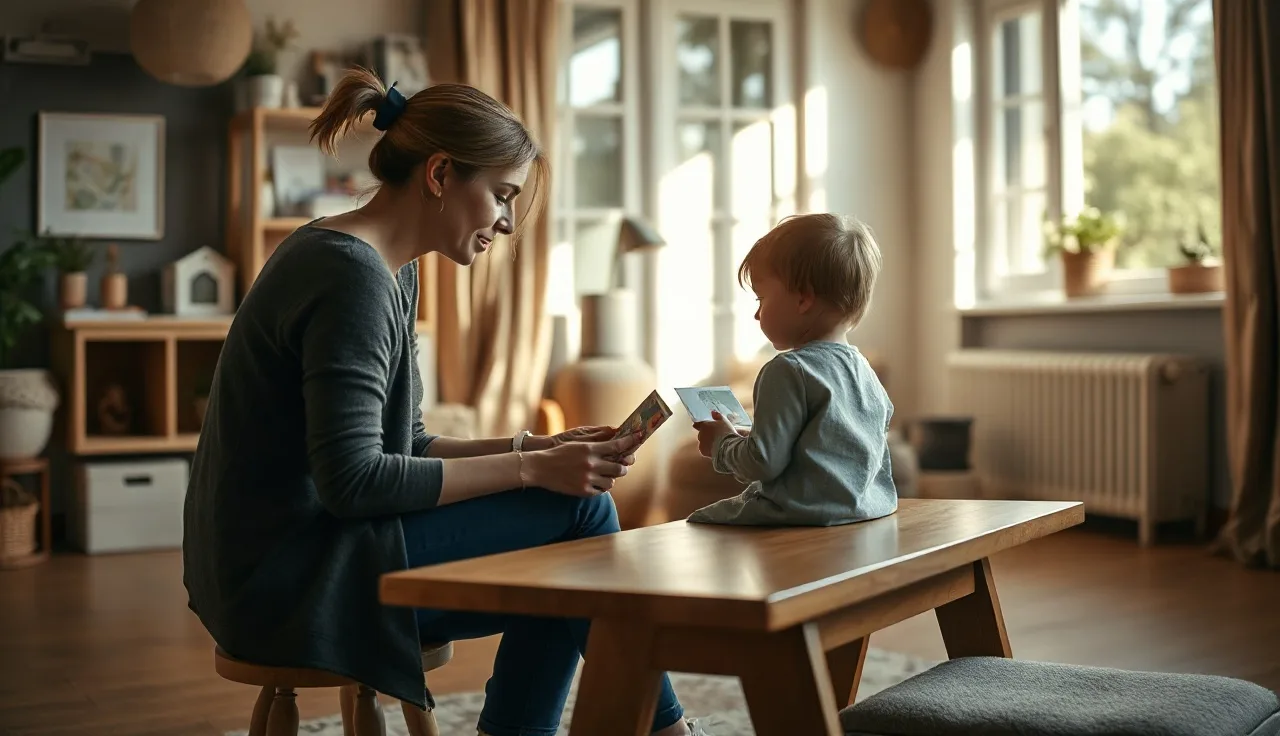
Home practice is where the repetition really piles up, but the materials only help if they match the therapy approach. Ask your SLP for the exact target words or phrases at your child's current level before buying or building anything. Practicing words the child can't yet attempt, or words so easy they coast through them, doesn't drive motor learning the way working right at the edge of their ability does. Simple laminated picture cards, one clear image per card, work well and can be homemade, printed from Teachers Pay Teachers packs built for CAS, or bought as prebuilt sets. Apraxia Kids (formerly CASANA) keeps a resource library of materials vetted by SLPs [7]. Many SLPs also use printed syllable and word-shape hierarchies that climb from CV (consonant-vowel, like "go") to CVC to CVCV to multisyllabic words, and having that as a visual reference helps parents see where their child stands and resist jumping ahead. A mirror costs nothing and does real work here: watching their own mouth while producing a target word adds visual feedback to the motor learning loop. A few tablet or phone apps are built specifically for CAS home practice, with models and repetition structures already worked in; look for a clear auditory model, slow playback, and trial tracking. If your child also uses augmentative communication, AAC devices serve a different purpose but can carry communication while speech skills develop. Little Words (littlewords.ai), an AI speech companion for neurodivergent kids, can support home practice between sessions too, though it works best as a supplement rather than a stand-in for therapist-guided work. For young kids grinding through 50 to 100 trials, a simple sticker chart or token board gives them a reason to keep going, as long as the reward comes fast and the system stays simple. What's worth skipping are flashcard apps that just flash a picture and expect the child to label it with no cueing built in. That's expressive language practice, not motor speech practice, and the structure of the practice matters just as much as which words you're using.
Can parents run apraxia therapy at home without a speech therapist? Home practice matters, but for moderate or severe CAS it rarely becomes the thing that moves the needle on its own. CAS needs cueing that changes in real time based on how the child responds, and reading each attempt correctly takes real training. Parents who try to copy DTTC at home without guidance sometimes reinforce errors by accident, or push their child to harder levels too soon. What parents can do well is run practice trials at the exact targets and cueing level the therapist sets. If the SLP says "simultaneous production for all targets this week," that means saying the word at the same moment the child does, every single trial. That's fully replicable at home, and thirty trials a day, five days a week, adds real volume. For families who can't get to frequent in-person sessions, online speech therapy with a CAS-trained SLP is a legitimate option, and one that's getting more research support. Teletherapy for CAS has shown outcomes comparable to in-person care for school-age children in several studies, though the evidence for kids under three is thinner. Speaking of which, early intervention for children under three is free in the US under IDEA and can get a child working with an SLP before a formal CAS diagnosis is even confirmed [11]. The earlier the motor learning starts, the more flexible the system tends to be. As for timelines: it depends on severity, frequency, and age at start, but most families see some movement within eight to twelve weeks of intensive, correctly delivered therapy. Severity is the biggest variable. A child with mild CAS who already has a few intelligible words may progress quickly. A child with severe CAS and limited functional communication may need two to three years of consistent treatment to reach functional intelligibility. Age matters too, since the motor learning system is most flexible early on. A child starting correct therapy at two or three has a different trajectory than one starting at seven, though gains happen at any age. Frequency predicts the rate of progress more than almost anything else a parent controls: a 2011 study of production frequency in CAS found that children who got more practice trials per session and more sessions per week reached targets faster and generalized more broadly [8]. Early progress usually looks like more attempts at more targets, even imperfect ones, and steadier tries at the same word across days. Groping (the visible struggle movements of the mouth before a sound comes out) should lessen. Later, production gets more automatic, cueing needs drop, and the child starts generalizing to words that were never drilled in session. Six months of CAS-specific therapy with no measurable change is a red flag worth a direct conversation with the SLP about whether the approach, intensity, or targets need to shift. CAS and autism co-occur more often than the field used to recognize. Research suggests CAS may be present in a substantial share of minimally verbal autistic children, though estimates vary a lot depending on the diagnostic criteria used [9]. Therapy still needs to be motor-based since the underlying motor planning deficit doesn't go away because autism is also present, but delivery has to account for how autism affects learning. Many autistic children learn differently inside structured drill formats: some thrive on high-repetition practice, others find PROMPT's tactile cueing overwhelming because of sensory sensitivities, and some need much shorter trial blocks with more frequent reinforcement. For minimally verbal autistic children, waiting for speech versus introducing AAC isn't really a choice between two paths. The evidence is clear that AAC doesn't suppress speech development and often supports it [10]. A child who can ask for what they need through AAC while working on motor speech is in a better spot than a child who's frustrated and shutting down. The autism spectrum speech therapy page goes further into this overlap. Some children with autism and CAS also show echolalia, which looks different from the effortful, inconsistent productions typical of CAS. If you're seeing both, it's worth reading about echolalia on its own, since it calls for a different approach. Collaboration between the SLP and any behavioral or developmental providers matters here too: goals, reinforcement systems, and communication targets should be shared, not kept separate. Not every speech-language pathologist has specific CAS training, and that's not a knock on them: CAS is a specialized area, and graduate programs vary widely in how much they cover it. When you call a practice, ask directly whether they've completed training in DTTC, ReST, or PROMPT. You want more than "I treat apraxia." You want to know the specific evidence-based approach they use, how many sessions per week they'd recommend for your child's severity level, how many practice trials they aim for per session, and what they send home after each visit. Apraxia Kids keeps a directory of SLPs who've completed its workshop training, which is a reasonable quality filter [7]. ASHA's Find a Professional tool lets you search by specialty, though it doesn't verify CAS-specific training beyond what providers report about themselves [12]. For families in rural areas or with few local options, a CAS specialist via teletherapy is often more effective than a local generalist, at least once the child is old enough to attend to a screen. Long-term, the picture is genuinely encouraging, with some honest caveats about what "good outcome" means. For children with isolated CAS (no other diagnoses) who get early, frequent, correct therapy, most reach functional intelligibility. A 2015 paper by Terband, Maassen, and van Lieshout described children with CAS who received appropriate treatment as generally continuing to improve through school age, with many reaching age-appropriate speech by adolescence [6]. Outcomes are less certain for children with CAS alongside other conditions, such as intellectual disability, structural differences, or severe autism, but that doesn't make therapy pointless for them. It means success may look like functional communication across several modes rather than spoken words alone. Even kids who become largely intelligible sometimes keep residual effects: rate, prosody (the rhythm and melody of speech), and accuracy under fatigue or stress are usually the last things to normalize. Some adults with a childhood CAS history still notice trouble with new, long words or with speaking while tired. Nobody has strong population-level data on adult outcomes for children diagnosed with CAS in the modern era, and the long-term studies are mostly small. The closest evidence is clinical experience and case series, and they point the same direction: sustained, appropriate therapy predicts good outcomes. Day to day, some of the best practice hides inside ordinary routines rather than formal drill time. Pick a small set of functional words the child actually needs and wants: greetings, requests for favorite foods or activities, family names. Practice them during natural moments, not just at the table, and ask your SLP to prioritize targets that overlap with what your child is already trying to say. Keep sessions short: ten minutes of focused trials beats forty-five minutes of wandering, and for very young or easily tired kids, three five-minute blocks spread across the day often work better than one long stretch. Stick to the cueing level your SLP sets. If your child is at "immediate model" (therapist says it, child repeats right away), don't jump to independent production just because they nailed it twice in a row. Motor learning consolidates through practice at the right level, not by rushing ahead. Celebrate attempts, not perfection, especially with kids who've become aware of their errors and are starting to go quiet. Silence isn't neutral: a child who stops trying is harder to help than one who tries and misses. If you're not sure where to start, Little Words (littlewords.ai/start) has a short quiz that can help you figure out where your child stands and what kind of support fits right now. And for a broader look at working with your child's SLP as a team, see speech therapy speech therapist.Frequently asked questions
What is the difference between apraxia of speech and a speech delay?
A speech delay means a child acquires speech more slowly than peers but follows the normal developmental sequence. Apraxia of speech (CAS) is a motor planning disorder: the brain struggles to sequence the muscle movements for speech, producing inconsistent errors that break the usual delay pattern. A child with CAS may say a word correctly once and miss it entirely the next attempt. That inconsistency points to CAS specifically, not simple delay.
At what age can a child be diagnosed with childhood apraxia of speech?
A confident CAS diagnosis is hard before age two to three, because very young children normally have limited speech. Most specialists make a working diagnosis around age two to three when red flags are clear, and a definitive diagnosis is more reliable by age three. If a younger child shows severe motor speech difficulty and is not responding to typical early intervention, a referral to an SLP with CAS expertise makes sense even before three.
Does childhood apraxia of speech go away on its own?
No. CAS does not resolve without targeted therapy. Children may pick up a few words through sheer repetition, but the motor planning deficit persists, and the gap with peers usually widens without treatment. Early, intensive, correct therapy changes outcomes dramatically. Watchful waiting is not recommended once CAS is suspected.
What is DTTC therapy for apraxia and how does it work?
Dynamic Temporal and Tactile Cueing (DTTC) is a motor-based approach developed by Edythe Strand. The therapist starts by producing words at the same moment as the child, giving maximum support, then fades cues as the child succeeds. It targets movement sequences rather than isolated sounds, uses high trial counts per session, and adjusts support in real time. It carries the strongest published evidence for moderate-to-severe CAS.
Is apraxia of speech therapy covered by insurance?
Most major medical plans cover speech therapy for CAS when it is medically necessary and diagnosed by a qualified provider. Coverage varies by plan, state, and network status. School-based services under IDEA are free but may not offer enough frequency. Medicaid covers speech therapy for eligible children in every state. Verify prior authorization requirements and session limits before starting a new therapy plan.
How many times a week should a child with CAS see a speech therapist?
Most CAS specialists and ASHA guidance recommend two to four sessions per week during active motor learning phases. Once a child is consolidating gains, frequency can drop. Once-a-week therapy is generally not enough as the sole treatment during acquisition. If only once-weekly school services are available, structured daily home practice using therapist-specified targets and cueing levels is essential to make up for the lower frequency.
What home materials actually help with childhood apraxia of speech practice?
The most useful home materials are the exact target word list and cueing instructions from your SLP, simple picture cards for those targets, a mirror for visual feedback, and a consistent motivation system like a token board. Steer clear of general vocabulary apps with no modeling or cueing structure. Apraxia Kids (apraxia-kids.org) keeps a vetted resource list. Materials are only as good as the practice structure around them.
Can a child with apraxia of speech use AAC while learning to talk?
Yes, and the evidence supports it. AAC (augmentative and alternative communication) does not suppress speech development in children with CAS. It cuts the communication frustration that often leads children to stop trying to talk. Most CAS specialists recommend a total communication approach: support every communication mode while working on motor speech at the same time. See the AAC devices article on this site for options.
What is the ReST therapy approach for apraxia?
Rapid Syllable Transition Treatment (ReST) focuses on smooth movement between syllables in multisyllabic words, targeting coarticulation and prosody. Developed at the University of Queensland, it uses nonwords so the child cannot lean on memorized patterns. A 2015 randomized controlled trial found significant gains in treated and untreated words. It fits children with mild-to-moderate CAS who already have some intelligible speech.
Does apraxia of speech therapy work for adults?
Motor-based speech therapy does work for adults with acquired apraxia of speech, usually after stroke or brain injury. The same motor learning principles apply: high repetition, the right cueing, frequent practice. Adults with untreated or undertreated childhood CAS can also benefit from adult-focused motor speech therapy, though plasticity differs from early childhood. A neurologically trained SLP should evaluate adults before starting a protocol.
How do I know if my child's SLP is using the right approach for CAS?
Ask directly: which motor-based protocol do you use (DTTC, ReST, NDP3, or PROMPT)? What training have you completed in it? How many practice trials per session do you target? If the answer is vague, or if the therapist describes only sound correction or language work, that is a signal to find someone with specific CAS training. The Apraxia Kids SLP directory lists providers who completed its workshop training.
Can online speech therapy work for childhood apraxia of speech?
Yes, with caveats. Teletherapy for CAS has shown outcomes comparable to in-person therapy for school-age children in published studies. The main limit is PROMPT, which needs physical contact. DTTC and ReST translate well to video. For children under three, in-person is generally preferred because engagement and feedback are harder to calibrate over video. A CAS specialist via teletherapy often beats a local generalist without CAS training.
What are the early signs that a toddler might have apraxia of speech?
Key red flags: very limited babbling in infancy, few or no words by 18 months, losing words the child previously said, inconsistent production of the same word across attempts, visible groping or struggle movements of the mouth before speaking, understanding language far better than producing it, and limited ability to imitate speech sounds on request. These signs warrant an SLP evaluation. They do not confirm CAS alone, but they do warrant an immediate referral.
Is childhood apraxia of speech related to autism?
CAS and autism co-occur at higher rates than chance. Research suggests CAS may be present in a substantial share of minimally verbal autistic children, though estimates vary. When both are present, therapy still needs to be motor-based for the speech component, but delivery must account for autistic learning styles and sensory profiles. AAC is almost always part of the plan. Neither diagnosis causes the other; they appear to share some genetic and neurological underpinnings.
Sources
- ASHA, Childhood Apraxia of Speech Practice Portal: ASHA states the evidence base supports motor-based intervention for CAS and distinguishes it from phonological and language-based approaches; also notes treatment intensity as a key variable in outcomes
- Maassen B, van der Meulen S. Motor Learning Principles in CAS Treatment, in Murray & McCabe (eds), Apraxia of Speech: From Diagnosis to Treatment, 2016: Motor learning research supports high-repetition, frequent practice, with feedback fading and appropriate cueing hierarchies for CAS
- Strand EA, Stoeckel R, Baas B. Treatment of severe childhood apraxia of speech: a treatment efficacy study. Journal of Medical Speech-Language Pathology, 2006: DTTC produced significant gains in motor speech accuracy in children who had not responded to other treatments
- Murray E, McCabe P, Ballard KJ. A randomized controlled trial for children with childhood apraxia of speech comparing rapid syllable transition treatment and the Nuffield Dyspraxia Programme. Journal of Speech, Language, and Hearing Research, 2015: Children receiving ReST made significantly greater gains in treated and untreated words compared to a control group in a randomized controlled trial
- Rogers SJ, Hayden D, Hepburn S, et al. Teaching young nonverbal children with autism useful speech: a pilot study of the Denver Model and PROMPT interventions. Journal of Autism and Developmental Disorders, 2006: PROMPT has evidence across several populations including CAS and motor speech disorders with co-occurring conditions
- Terband H, Maassen B, van Lieshout P. A model-based interpretation of the remediation of CAS. Folia Phoniatrica et Logopaedica, 2015: Children with CAS receiving appropriate treatment generally showed continued improvement through school age, with many reaching age-appropriate speech by adolescence
- Apraxia Kids (formerly CASANA), SLP Directory and Resource Library: Apraxia Kids maintains a directory of SLPs who have completed workshop training and a resource library of materials vetted by SLPs
- Edeal DM, Gildersleeve-Neumann CE. The importance of production frequency in therapy for childhood apraxia of speech. American Journal of Speech-Language Pathology, 2011: Children receiving more practice trials per session and more sessions per week reached targets faster and generalized more broadly
- Teverovsky EG, Bickel JO, Feldman HM. Functional characteristics of children diagnosed with childhood apraxia of speech. Disability and Rehabilitation, 2009: CAS co-occurs with autism at elevated rates; estimates suggest it may affect a substantial proportion of minimally verbal children with autism
- ASHA, Augmentative and Alternative Communication (AAC) Practice Portal: AAC does not suppress speech development and in many cases supports it; ASHA endorses total communication approaches
- Individuals with Disabilities Education Act (IDEA), U.S. Department of Education: Early intervention services under IDEA Part C are free for children under age three in the US regardless of diagnosis confirmation
- ASHA, Find a Professional tool: ASHA's professional directory allows families to search for SLPs by specialty area