Last updated 2026-07-09
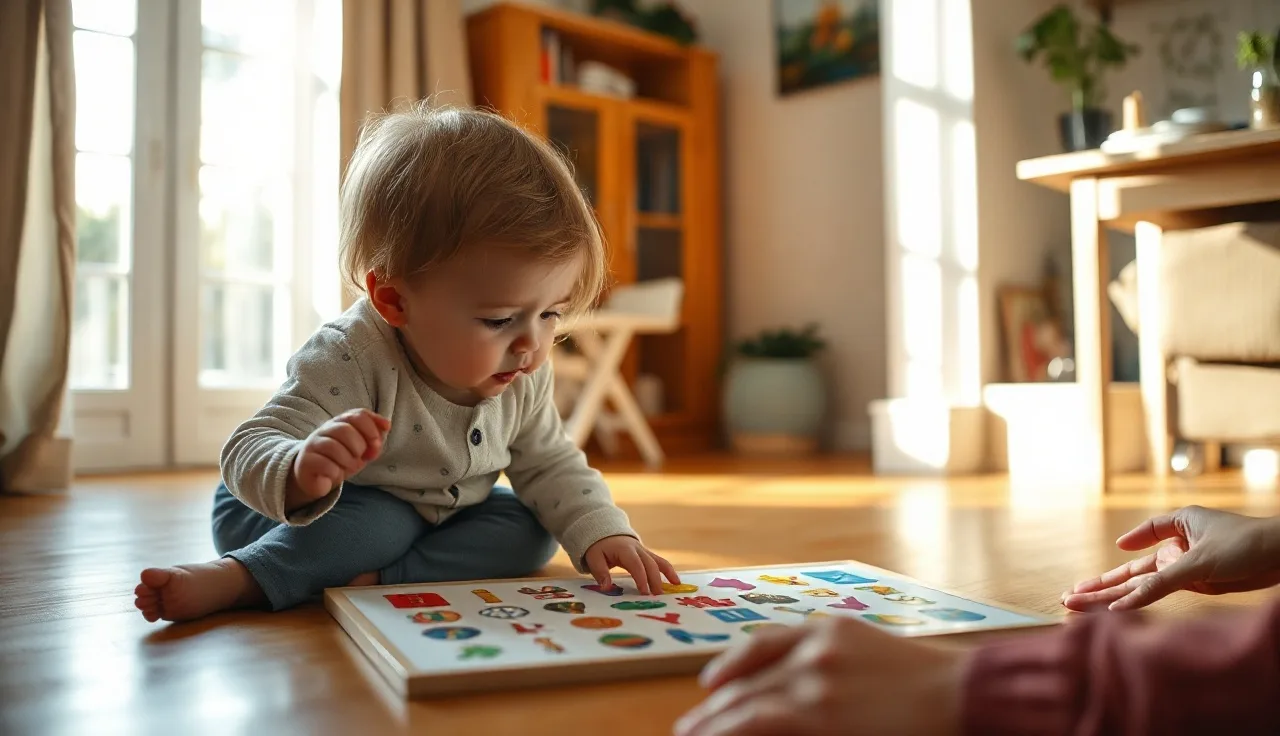
Autistic children communicate differently, not less. The tools with real research behind them include speech-generating AAC devices, visual communication boards, sign language, and structured speech therapy, and about 25-30% of autistic people are minimally verbal. Starting support before age 5 tends to produce the biggest language gains, but no single method fits every child. Most families end up combining several.
Communication in autism covers a wider range than most people expect. Some autistic children speak fluently but struggle to read the unspoken rules of conversation. Others use no spoken words at all. Many land somewhere in the middle, with speech that emerges late, stays inconsistent, or disappears under stress.
The American Speech-Language-Hearing Association (ASHA) describes autism spectrum disorder as affecting "social communication and social interaction across multiple contexts," including both verbal and nonverbal communication [1]. That framing matters: it puts gesture, eye contact, facial expression, and body language on the same footing as words. A child who speaks in full sentences but can't follow the back-and-forth rhythm of conversation has a real communication difference, even if no one would ever call them a late talker.
Research on autism-to-autism communication adds another layer. Autistic people often communicate effectively with each other in ways that look like breakdowns to neurotypical observers. A 2019 paper by Crompton, Hallett, and colleagues found that information passed just as accurately between two autistic people as between two non-autistic people, but dropped when the pair was mixed [2]. That reframes the problem: autistic communication isn't broken, it just runs on different conventions. So the goal isn't to make your child communicate like a neurotypical person. It's to give them every possible tool to say what they need to say, to anyone.
How many autistic people don't use much speech?
Roughly 25-30% of autistic individuals are minimally verbal, meaning they use fewer than 30 functional words or rely on a communication system other than speech [3]. The exact figure shifts depending on the study year and how researchers define the term. A 2012 study in Pediatrics by Anderson and colleagues put the figure at about 28% of school-age autistic children remaining minimally verbal at age 8 [3]. More recent prevalence data from the CDC's Autism and Developmental Disabilities Monitoring (ADDM) Network doesn't break out verbal status at that level of detail; the 2023 ADDM report set overall autism prevalence at 1 in 36 children [4]. Apply the 25-30% estimate to current prevalence and you land at roughly 1 in 120-145 children in the US being minimally verbal and autistic. That's a large group, and one for whom spoken language therapy alone is rarely enough.
Being minimally verbal at age 4 or 5 doesn't predict a nonspeaking life. Research consistently finds that many minimally verbal children go on to develop meaningful speech well into adolescence and even adulthood, especially with intensive AAC and speech therapy support. The old clinical assumption that speech windows "close" in early childhood has been largely abandoned by the field.
Which communication methods actually help?
No single method has the best evidence for every child. What the research supports is giving a child as many channels as possible, then watching which ones they actually use. Here's a plain comparison of the main options:
| Method | Best evidence for | Typical age to start | Requires professional setup? |
|---|---|---|---|
| Speech therapy (verbal) | Children with emerging speech | Any age | Yes |
| AAC devices (SGDs) | Minimally verbal; any verbal level | Any age | Ideally yes |
| Communication boards (PECS, visual) | Early symbolic communication | 18 months+ | Can be parent-led |
| Sign language / total communication | Pre-symbolic to early symbolic | Any age | Minimal training |
| Social skills and pragmatics therapy | Verbal kids with conversation difficulties | School age+ | Yes |
AAC (augmentative and alternative communication) has the strongest evidence base for minimally verbal autistic children. A 2014 systematic review in the American Journal of Speech-Language Pathology found that high-tech AAC devices, specifically speech-generating devices (SGDs), significantly increased both AAC use and natural speech in children with autism [5]. The old worry that AAC would suppress spoken language just hasn't held up in the research.
Sign language and total communication (pairing signs with speech) work well for very young children whose motor control for signing develops before the oral motor control needed for speech does. Many kids use signs as a bridge and drop them gradually as speech comes in.
PECS (Picture Exchange Communication System) is a structured, six-phase program where children learn to hand a picture to a communication partner in exchange for what they want. It starts with a single picture and scales up to full sentence strips. It's been studied extensively and shows good evidence for getting communication started, though its effect on spoken language itself is more variable [6].
If your child is school-age and verbal but struggling socially, speech therapy geared toward the autism spectrum is worth exploring for pragmatic language work: taking turns, staying on topic, reading tone.
Communication boards: what they are and how to use one
A communication board is a low-tech visual tool: a flat surface (paper, laminated card, or tablet screen) covered with pictures, symbols, or words that a child points to. The idea is simple. A child who can't produce a word can still show meaning by pointing.
These boards turn up everywhere: the breakfast table, the classroom, the doctor's office, the car. The simplest version might be four pictures for "eat," "drink," "play," and "sleep." A more advanced board might have 100+ symbols organized by category, covering feelings, activities, people, and needs.
The most widely used symbol set is Boardmaker, which uses PCS (Picture Communication Symbols). PECS boards follow the six-phase PECS protocol specifically. Some families and teachers prefer core vocabulary boards, which prioritize the 20-50 words that show up most often in natural language, like "more," "want," "stop," "help," "go," "that," because those words carry the most communicative power for their number.
How you use the board matters as much as the board itself. The standard guidance from ASHA and most AAC specialists is to model constantly: point to symbols yourself as you speak, every time, so your child learns the board is a real tool for talking rather than something adults point to when they want a performance. This is called aided language stimulation, or AAC modeling.
Most SLPs recommend starting with boards of just 4-6 symbols, then adding more once the child shows understanding. Start with the things they want most: favorite foods, preferred toys, activities they ask for constantly.
Free printable communication boards exist through several reliable sources. The Tobii Dynavox symbol library offers free downloads. Boardmaker Share hosts community-created boards. Many state early intervention programs provide them at no cost too.
AAC devices versus communication boards
A communication board is passive: it holds symbols, and the child points. An AAC device, specifically a speech-generating device (SGD), speaks out loud when the child selects a symbol or types a word. That output changes the social dynamic. Instead of a communication partner having to look at what a child is pointing to, they hear a voice.
SGDs range from simple one-button devices (like a Big Mack that records a single message) to durable tablet-based systems running software like Proloquo2Go, Snap Core First, or TouchChat. Dedicated hardware from companies like Tobii Dynavox and PRC-Saltillo tends to hold up better and mounts easily on wheelchairs or standers. Tablet-based apps cost less but break more easily and carry the distraction risk that comes with any general-purpose device.
ASHA's position on AAC is clear: such systems "are appropriate for individuals who cannot meet their daily communication needs through natural speech," and should be considered at any age when speech isn't enough on its own [7]. There's no minimum age requirement. Many SLPs introduce SGDs to children as young as 12-18 months when there's already a clear developmental concern.
Cost is a real barrier. A dedicated SGD can run $4,000-$10,000 before accessories. Medicaid covers SGDs for eligible children in all 50 states as "medically necessary" durable medical equipment, and most private insurance plans cover them too under the Affordable Care Act's essential health benefits provisions, though you'll likely have to fight for it [8]. The funding process almost always requires a formal evaluation from an SLP and a letter of medical necessity. For more on how these devices work day to day, this guide to AAC devices for autism covers the hardware and software landscape in detail.
Kids with autism make the biggest language gains when intervention starts early, ideally between ages 2 and 5, though progress certainly doesn't stop after that window closes. The evidence behind this is about as solid as anything in developmental pediatrics gets. The American Academy of Pediatrics recommends autism screening at 18 and 24 months and calls early intensive intervention the standard of care for autism spectrum disorder[9]. The National Research Council's 2001 review, still widely cited today, recommended 25 hours per week of structured early intervention for children under 5 with autism, including speech and language services[13]. Newer research backs up the general direction even if the hour counts vary. A 2010 study in Pediatrics found that the Early Start Denver Model, an intensive approach delivered starting at 18-30 months, produced significant gains in IQ, language, and adaptive behavior compared to children who didn't receive it[10]. This is part of why it's worth pushing your local school district or state program for early intervention speech and language therapy as soon as you suspect a delay: the returns are simply highest when you start young. In the US, Part C of IDEA entitles children from birth to age 3 to free early intervention services, including speech-language pathology, if they have a developmental delay or established condition[8]. At 3, services shift to Part B through the public school system. Neither program requires a medical diagnosis just to start an evaluation, though eligibility rules differ by state. And waiting for services to kick in doesn't mean sitting on your hands: research on parent-implemented approaches, particularly the JASPER model and Hanen's More Than Words program, shows real language gains when parents learn to run structured communication strategies at home. **What therapy sessions actually involve** Speech therapy for autistic children rarely looks like a kid drilling sounds at a table. For young minimally verbal children, it's often play-based: a therapist follows the child's lead, comments on what they're doing, and creates openings for communication without forcing it. For children working on functional communication, sessions might target requesting ("I want"), protesting ("no" or "stop"), commenting ("look"), and asking questions, the practical functions of language that tend to matter more day to day than isolated vocabulary lists. For verbal children with pragmatic difficulties, therapy looks more like structured conversation practice: starting and ending a conversation, repairing misunderstandings, matching tone to context, noticing when a listener is lost. Sessions typically run 30-60 minutes, and ASHA recommends matching treatment intensity to the severity of need, so there's no single standard session count since needs vary so widely. Coverage is generally decent: IDEA and most state Medicaid plans cover speech-language pathology for eligible children, and private ACA-governed plans must cover habilitative and rehabilitative services (which includes speech therapy), though prior authorization and session limits create real friction[8]. Telehealth has expanded fast since 2020. ASHA now recognizes it as appropriate for most speech-language services, and several studies have found outcomes comparable to in-person therapy for verbal autistic children, which also helps families dealing with rural distances or transportation barriers through options like online speech therapy. If you want something that fits between formal sessions and nothing at all, apps like Little Words use structured prompts and modeling to support practice at home; their quiz can tell you whether it fits your child's profile. **Free communication boards worth knowing about** You don't need to spend money to get started with visual supports, and the free options out there are genuinely solid. Tobii Dynavox's Symbol Library (dynavoxtech.com) offers a free download of PCS symbols, the same ones used in paid Boardmaker software. Boardmaker Share is the community platform where users upload boards for free download; quality varies, but there are thousands sorted by activity, setting, and skill level. Teachers Pay Teachers isn't always free, but plenty of SLPs post no-cost boards there if you search "autism communication board free" and filter by price. Tar Heel Shared Reader, from the University of North Carolina, offers free accessible books using AAC symbols, good for pairing literacy with AAC practice. Your state's early intervention program may also hand out free materials to enrolled families, so ask your service coordinator. And Autism Speaks has free downloadable visual supports and social stories on its site, including boards built for medical visits, travel, and daily routines. If you're printing boards, laminate anything you'll use repeatedly. A $25 laminator and a box of velcro dots gets you a portable, durable system for under $40. Mount symbols in a ring binder so a child can flip through categories, or use a manila folder for a two-panel board that folds flat for travel. What free printables can't give you is the voice output of a speech-generating device, and for many autistic children, especially out in public, having the device speak for them takes real pressure off the act of communicating. Free boards are a great starting point and a solid long-term supplement, but they're not a swap for a high-tech device when a child genuinely needs one. **Picking the right system** Honestly, you usually need an SLP with AAC expertise to make this call well, but there are signals worth knowing. Children who already point intentionally or understand pictures tend to move quickly with PECS or a simple board. Kids with significant motor coordination challenges may do better with larger symbols or eye-gaze technology. Highly visual, tech-oriented kids often take to tablet-based AAC fast. None of these are hard rules, though. What matters most is what the child already does to communicate: pointing, reaching, vocalizing, crying, pushing things away, leading someone by the hand. All of that counts as communication, and a good system builds from there rather than starting at zero. An AAC assessment typically involves feature matching, where the clinician lines up the child's motor, visual, cognitive, and language profile against what different systems offer. It's not about the most popular device, it's about fit. For kids who already have some speech, the real question is usually whether to add AAC at all, and the research almost always says yes, at least as a backup. A reliable backup system cuts down on frustration and the behavioral fallout from communication breakdowns, and often speeds up spoken language development too, which surprises a lot of parents. If you're heading into an evaluation and want a sense of what to expect first, pediatric speech therapy covers the basics. **Social communication in verbal kids** Verbal autistic children have real communication challenges that are easy to miss because they sound fine in one-on-one conversation. The trouble shows up in group settings, in reading other people's emotions, in knowing how much to say about a special interest, in catching sarcasm, in all the unwritten social scripts neurotypical people pick up without ever being taught them. This is called social communication or pragmatic language. ASHA's Social Communication Disorder criteria list difficulties "using communication for social purposes (e.g., greeting, sharing information)" and "following rules for conversation and storytelling"[1]. Autistic children often qualify for therapy targeting this even when their vocabulary and grammar are exactly where they should be for their age. Approaches here include Social Thinking (developed by Michelle Garcia Winner), PEERS (the Program for the Education and Enrichment of Relational Skills, from UCLA), and various social stories methods built on Carol Gray's original work. PEERS has the strongest randomized controlled trial evidence of the group, with improvements shown in social skills knowledge and social responsiveness among adolescents with autism[11]. One thing worth holding onto: the goal here shouldn't be teaching an autistic child to mask or perform neurotypical behavior. It should be giving them skills they can choose to use. A growing body of autistic self-advocacy writing argues that therapies aimed at the appearance of normalcy, rather than actual communicative effectiveness and wellbeing, do harm. That's a genuine tension in the field, and a thoughtful SLP takes it seriously. If your child's school is providing this kind of support, you have the right under IDEA to ask for data on whether it's working: request baseline measures and progress data at every IEP meeting.How do you support autism communication at home every day?
Communication support matters most when it's woven through the whole day rather than confined to therapy sessions. A few strategies here actually have evidence behind them.
Start by following the child's lead. When you join in with what your child is already doing and comment on it rather than steering them somewhere else, you open up more natural chances for communication. This is the basis of the JASPER approach, and it shows up again and again in studies of parent-delivered intervention.
Narrating without demanding a response helps too: describe what you're doing and what the child is doing in simple language, no reply required. "You're rolling the ball. Ball! Ball goes fast." This is sometimes called parallel talk, and it puts language in front of the child at exactly the right moment, without the pressure of a question hanging over it.
You can also build in small communication temptations. Put a desired toy in a clear container they can't open on their own. Pause a favorite activity and just wait. Hand over a small portion of a snack and wait before giving more. These moments create a real reason to communicate, which tends to work better than drilling.
If your child uses a communication board or device, use it yourself throughout the day too. Point to "eat" at mealtimes, "play" before play starts, "done" when something ends. Watching adults use the system is how children come to understand it's a genuine tool for talking, not just an exercise.
Finally, respond to every attempt at communication, whether it's a point, a sound, pushing something toward you, or a symbol. Treat it like a spoken word. That response is what teaches a child that communicating gets results.
A tool like Little Words can help structure practice at home between therapy sessions, especially for families who want guided activities but can't get to frequent in-person therapy; their quiz can show you whether it fits your child's current stage. And if you want the wider picture of what parent-supported practice looks like across different settings, speech therapy for kids goes into the home practice side in more depth.
What does the research say about long-term outcomes?
The long-term data is genuinely encouraging, though there are honest limits to what we actually know.
A 2013 study in the Journal of Child Psychology and Psychiatry followed 535 children with autism diagnoses into adolescence and found that nearly half of those who were minimally verbal at age 5 had developed phrase speech or better by adolescence [12]. Higher nonverbal IQ, early imitation skills, and more intensive early intervention all predicted better language outcomes. For children who remain nonspeaking or minimally verbal into adulthood, AAC can still produce real gains in communicative competence well into the adult years. Research on adult AAC users consistently shows that communication skills keep developing with ongoing support, just more slowly than they do in childhood. What the research can't untangle cleanly is how much of the improvement comes from therapy itself versus a child's natural developmental path. Randomized controlled trials are difficult to run in this population, since withholding treatment wouldn't be ethical. The honest summary is that intensive, early intervention across multiple modes is linked to better outcomes, but there isn't a clean causal story that applies to every child. For adults who are minimally verbal or dealing with acquired communication difficulties, speech therapy for adults lays out what services look like beyond childhood and how to find them.
Common questions about autism and communication, answered
At what age should I start worrying?
The AAP recommends autism-specific screening at 18 and 24 months. Watch for no babbling by 12 months, no single words by 16 months, no two-word phrases by 24 months, or any loss of language skills at any age. Any of these warrants a call to your pediatrician for a referral to a speech-language pathologist and an early intervention evaluation. Earlier is always better.
Will AAC or a communication board stop my child from talking?
No, and this myth causes real harm. A 2014 systematic review in the American Journal of Speech-Language Pathology consistently found that AAC use does not suppress spoken language and often supports it. Giving a child a way to communicate cuts down frustration and keeps them engaged in the back-and-forth of communication, which is exactly what grows language.
PECS versus a regular communication board: what's the difference?
PECS (Picture Exchange Communication System) is a structured six-phase protocol where a child hands a picture to a partner in exchange for what they want. A standard communication board works differently: the child points to show what they want, with no exchange involved. PECS specifically teaches initiation, which is harder to build through pointing alone. Both rely on picture symbols, but PECS follows a defined teaching sequence.
How do I get insurance to cover an AAC device?
You'll need a formal AAC evaluation from a speech-language pathologist and a letter of medical necessity. Medicaid covers speech-generating devices in all 50 states as durable medical equipment, and private insurance plans under the ACA must cover habilitative services, which includes AAC. Expect prior authorization, and sometimes a denial you'll need to appeal. Your state's Assistive Technology program offers free advocacy help with funding.
What is core vocabulary, and why does it come up so much?
Core vocabulary is the roughly 200-400 words that make up about 80% of everything people say day to day: words like "want," "go," "more," "help," "stop," "that," and "not," which show up constantly no matter the situation. AAC systems built around this vocabulary give users the most communicative power for the fewest symbols. Fringe vocabulary, specific nouns like "banana" or "Minecraft," matters too, but core vocabulary is what makes communication flexible.
Are there free communication board apps?
Yes. LetMeTalk (Android) is free and open-source and uses ARASAAC symbols. CommunicoTot has a free version, and Snap Core First and Proloquo2Go offer free trials. CBoard is a free, open-source browser-based option. Most premium AAC apps run $200-$300 as a one-time tablet purchase, far cheaper than a dedicated speech-generating device, though you trade off some durability and deal with more on-screen distractions.
What is aided language stimulation, and how do I actually do it?
Aided language stimulation, also called AAC modeling, means using your child's communication system yourself during everyday activities, without expecting a response. If their board has a "help" symbol, point to it and say "help" when you're struggling to open a jar. If they use an SGD, activate symbols as you talk. Research consistently shows children pick up AAC systems faster when caregivers model them regularly.
Does my child's school have to provide AAC?
Under IDEA, public schools must provide a free appropriate public education, including related services like speech-language pathology, when a child's disability requires it. If the IEP team decides AAC is necessary for your child to access their education, the school must provide it at no cost to you. Ask that AAC be written into the IEP with specific goals, device access throughout the school day, and staff training requirements.
What does autism-to-autism communication research show?
Research by Crompton, Hallett, and colleagues (2019) found that information passed just as accurately between two autistic people as between two non-autistic people, but dropped significantly when the pair was mixed. That points to autistic communication differences being partly about mismatched styles rather than a deficit in ability itself, which raises a real question about interventions aimed at making autistic people sound more neurotypical: they may be solving the wrong problem.
How many speech therapy sessions per week does an autistic child need?
There's no single answer. The National Research Council's often-cited figure is 25 hours per week of structured intervention for children under 5, though that covers all intervention, not speech therapy alone. Minimally verbal children with significant needs often get 2-5 speech therapy sessions per week in early intervention, while school-age kids with milder needs might get just 1-2. Frequency should match the severity of need and be spelled out in the IEP or treatment plan.
Can a nonspeaking 8-year-old still develop meaningful speech?
Yes. A 2013 study in the Journal of Child Psychology and Psychiatry found that nearly half of autistic children who were minimally verbal at age 5 developed phrase speech by adolescence. More recent clinical literature pushes that optimism further, documenting meaningful language gains in people who were nonspeaking into their teens. Ongoing, intensive AAC and speech therapy support tends to bring continued progress at any age.
Is the PEERS program evidence-based?
PEERS (Program for the Education and Enrichment of Relational Skills) is a 16-week structured social skills program developed at UCLA, mainly for adolescents with autism, delivered in group format with parent coaching. Multiple randomized controlled trials have found improvements in social skills knowledge, social responsiveness, and friendship quality, making it one of the few social communication programs backed by real RCT evidence rather than case reports alone.
How do I find a speech therapist who specializes in autism?
Start with ASHA's Find a Certified SLP directory at asha.org, which lets you filter by specialty, including augmentative communication and autism. Ask directly whether the therapist has AAC experience and has worked with minimally verbal children if that fits your child. Your school district's special education coordinator can also point you to SLPs with autism experience, and state autism societies often keep local provider lists.
Speech delay or autism communication differences: how do you tell them apart?
A speech delay usually means a child is following the expected path of spoken language development, just more slowly. Autism communication differences run broader: they involve the social use of language, nonverbal communication, and often qualitative differences in how communication is initiated, not just timing. Some autistic children have no speech delay at all but still show significant communication differences. A formal evaluation by an SLP and a developmental pediatrician can sort out which is which.
Sources
- ASHA, Autism Spectrum Disorder practice portal: ASHA describes ASD as affecting social communication and social interaction across multiple contexts, including verbal and nonverbal communication
- Crompton CJ et al., Autism (2019), 'Autistic peer-to-peer information transfer is highly effective': Information passed equally accurately between two autistic people as between two non-autistic people, but dropped when the pair was mixed (one autistic, one non-autistic)
- Anderson DK et al., Pediatrics (2012), minimally verbal status in school-age autistic children: Approximately 28% of school-age autistic children remained minimally verbal at age 8
- CDC ADDM Network, Morbidity and Mortality Weekly Report (2023), autism prevalence surveillance: CDC ADDM Network set overall autism prevalence at 1 in 36 children in the United States as of the 2023 report
- Ganz JB et al., American Journal of Speech-Language Pathology (2014), systematic review of high-tech AAC in autism: High-tech AAC devices significantly increased both AAC use and natural speech in children with autism; AAC does not suppress spoken language development
- Bondy A, Frost L, PECS overview and evidence base, published in ASHA Leader: PECS has extensive study and shows good evidence for initiating communication, with more variable effects on spoken language
- ASHA, Augmentative and Alternative Communication (AAC) practice portal: ASHA states AAC systems are appropriate for individuals who cannot meet daily communication needs through natural speech and should be considered at any age
- U.S. Department of Education, IDEA Individuals with Disabilities Education Act overview: Part C of IDEA entitles children from birth to age 3 to free early intervention services including speech-language pathology; Medicaid covers SGDs as medically necessary durable medical equipment
- American Academy of Pediatrics, autism patient care and screening guidance: AAP recommends autism screening at 18 and 24 months and states early intensive intervention is the standard of care for ASD
- Dawson G et al., Pediatrics (2010), Early Start Denver Model randomized controlled trial: ESDM delivered at ages 18-30 months produced significant gains in IQ, language, and adaptive behavior compared to community controls
- Laugeson EA et al., Journal of Autism and Developmental Disorders (2012), PEERS RCT evidence: PEERS showed improvements in social skills knowledge and social responsiveness in adolescents with autism in randomized controlled trial
- Pickles A et al., Journal of Child Psychology and Psychiatry (2013), language outcomes in autism into adolescence: Nearly half of autistic children who were minimally verbal at age 5 had developed phrase speech or better by adolescence
- National Research Council, 'Educating Children with Autism' (2001), National Academies Press: Recommended 25 hours per week of structured early intervention for children under age 5 with autism, including speech and language services