Last updated 2026-07-10
TL;DR
AAC devices give nonspeaking and minimally verbal children a reliable way to communicate, cut frustration, and don't hold back natural speech. Research links AAC use to gains in both speech and language, plus faster social participation, fewer behavior problems, and stronger literacy foundations. Any child who needs help getting a message out can benefit, whatever their age or diagnosis.
AAC stands for augmentative and alternative communication, and it covers every tool or technology that helps someone get their message across when speech alone isn't enough. That spans low-tech picture boards all the way to high-tech speech-generating devices (SGDs) with synthesized voices, and everything in between. The American Speech-Language-Hearing Association defines AAC as "all of the ways that someone communicates besides talking," and points out it helps people across the lifespan, not just children with severe disabilities [1]. That matters because parents often assume AAC is a last resort. It isn't. A child with 20 spoken words can still benefit, since the goal is functional communication, not replacing speech. Kids who use AAC include late talkers, children with autism, those with childhood apraxia of speech, cerebral palsy, Down syndrome, and plenty of others. There's no diagnosis required. What matters is a gap between what a child wants to say and what they can actually say out loud. ASHA estimates that about 1.3 percent of Americans have a complex communication need severe enough to limit daily participation [1], roughly 4 million people in the United States alone.
Does AAC actually help kids communicate better?
Yes, and the evidence backing this up is strong. A 2014 meta-analysis in the American Journal of Speech-Language Pathology reviewed 24 studies of SGDs with school-age autistic children and found statistically significant improvements in communication across every outcome measure, with medium-to-large effect sizes [2]. That held up even across a mixed population.
Newer reviews point the same direction. A 2019 review in the Journal of Autism and Developmental Disorders looked at 23 single-case studies of AAC in minimally verbal autistic children and found that 91 percent of participants increased their communicative acts after AAC was introduced [3].
In practice, that improvement shows up as more spontaneous requests, more commenting and social back-and-forth, longer conversational turns, and a real drop in the frustration that fuels a lot of hard behavior. Parents usually notice the behavior change first, since it's the most visible piece. The logic behind it isn't complicated: when a child has a reliable way to get a message out, they have a reason to keep trying. Take that away, and the motivation to communicate fades.
Does using AAC delay speech?
This is the question parents ask most, and the research answer is clear: AAC doesn't suppress speech, and for many children it actually speeds it up [4].
The worry makes a certain kind of sense on the surface. If a child can press a button to get what they want, why work through the harder job of talking? But speech was never only about getting stuff. Children want to use whatever sound-making systems they have, and AAC seems to lower the mental load of communicating enough that a child can work on phonology and motor speech at the same time.
A widely cited review by Millar, Light, and Schlosser, published in the American Journal of Speech-Language Pathology in 2006, looked at 27 studies. In 89 percent of cases, introducing AAC was followed by maintenance or growth in natural speech [4]. Not one participant showed a speech decrease that could be traced back to AAC use.
Both the American Academy of Pediatrics and ASHA support introducing AAC early, since waiting until a child has "exhausted" speech therapy has no evidence behind it [5]. Clinical guidance often uses the phrase "no prerequisite skills": a child doesn't need to prove readiness before getting access to AAC.
What AAC does for autistic children specifically
Autism is the most common diagnosis tied to childhood AAC use, so this is where the research runs deepest, and the benefits sort into a few clear groups.
Communication frequency is the most studied piece. Children who use full-vocabulary AAC systems, meaning systems large enough to express a real range of meanings, make more communicative attempts per hour. A 2020 study in Augmentative and Alternative Communication found that minimally verbal autistic children who received AAC intervention over an average of 32 sessions showed a mean increase of 4.2 communicative acts per 10-minute observation window [6].
Behavior is the second major benefit. Plenty of hard behaviors, especially self-injury and aggression, work as a form of communication. Once a child has a faster way to say "I'm overwhelmed" or "I want a break," the behavioral version of that message often fades. This is the functional communication training model, and it's backed by hundreds of single-case studies.
Joint attention and social back-and-forth tend to improve as well, which matters because joint attention is a foundation for language. AAC systems that make commenting easy, not just requesting, seem especially useful here. For families weighing options, autism spectrum speech therapy goes deeper on the evidence for communication interventions in autistic children, and early intervention covers why starting before age 3 compounds these gains.
Literacy is another area worth mentioning. Children who use AAC with text-based components, including letter-by-letter spelling boards, tend to show stronger phonological awareness and earlier reading skills than their spoken output alone would predict. Steady exposure to print is a likely reason why.
Which type of AAC device is right for a child?
AAC runs from no-tech to high-tech, and cost roughly tracks that line, though not perfectly.
| Type | Examples | Approximate cost | Best for |
|---|---|---|---|
| No-tech (unaided) | Sign language, gestures, facial expression | Free | All users; often combined with other AAC |
| Low-tech (aided) | PECS binders, printed picture boards, alphabet boards | $0 to $200 | Early learners, backup systems |
| Mid-tech SGD | Single-message buttons, step-by-step communicators | $100 to $600 | Early AAC, cause-and-effect learning |
| High-tech SGD (dedicated) | Tobii Dynavox, PRC-Saltillo devices | $5,000 to $15,000 | Users who need full vocabulary access |
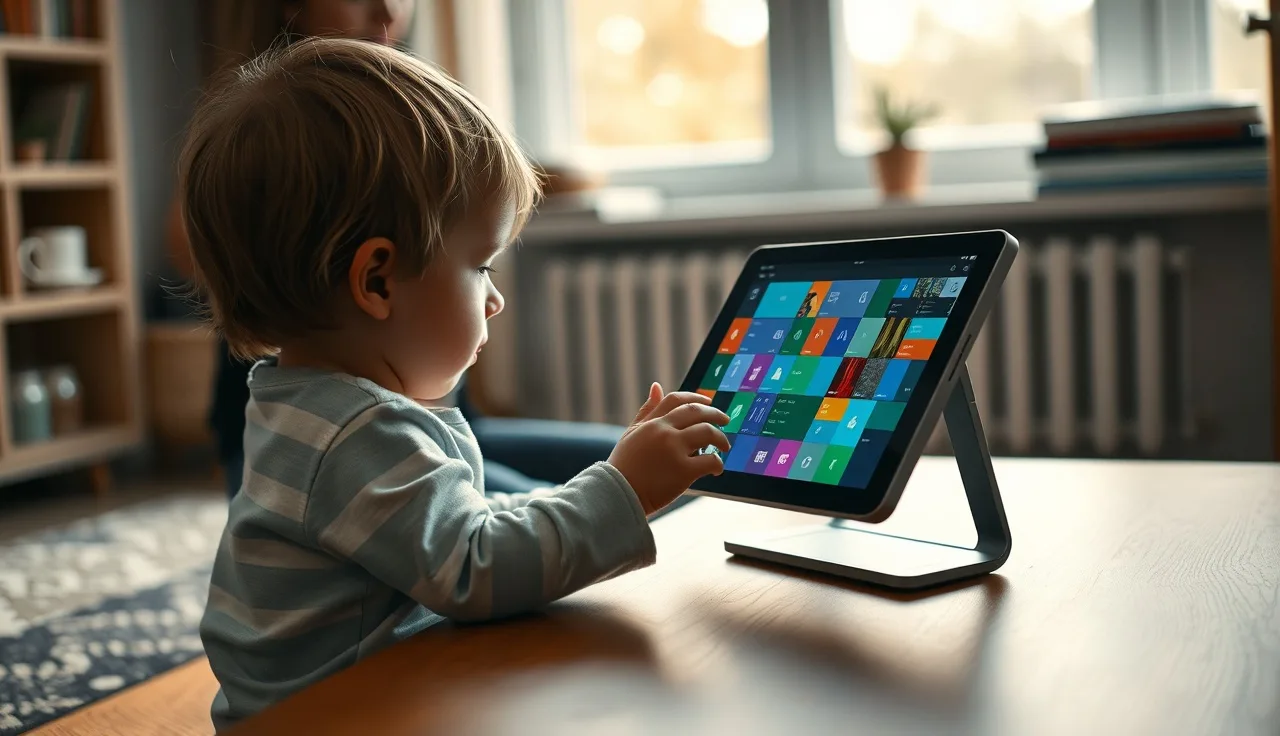
| High-tech SGD (tablet-based) | Proloquo2Go, TouchChat, LAMP WFL on iPad | $200 to $900 for app; $300 to $800 for device | Broad range; good entry point |
Dedicated SGDs have the biggest vocabularies and the sturdiest hardware, and insurance often covers them when a speech-language pathologist prescribes one. Tablet-based systems cost far less and are usually easier to try out before committing. Neither option is objectively better; the right fit depends on the child's motor skills, vision, cognitive profile, and communication goals.
The Picture Exchange Communication System (PECS) is a low-tech protocol built around printed pictures a child physically hands to a communication partner. It has its own solid evidence base, especially for early requesting in young autistic children, though its vocabulary ceiling sits lower than a full SGD. For a closer look at the hardware itself, the AAC devices overview walks through specific models, vocabulary systems, and how to trial one before buying.
At what age should a child start using AAC?
There's no minimum age, and no evidence that waiting helps anyone. ASHA's position is that AAC should be considered for anyone who doesn't yet have functional speech or writing as their main way to communicate, and that applies regardless of age [1].
In practice, SLPs introduce low-tech tools (single symbols, simple choice boards) with children as young as 12 to 18 months who show communication delays. Research on aided language stimulation, where the adult points to symbols while speaking, suggests children as young as 2 can start building vocabulary on full AAC systems.
The early intervention window, birth to age 3, comes up constantly because early language exposure shapes brain wiring. But AAC has shown real benefits when introduced in adolescence and adulthood too. A late start beats no start.
One delay parents describe over and over: waiting for a formal diagnosis before pursuing AAC. That wait is rarely necessary. Under IDEA (Individuals with Disabilities Education Act), children from birth to age 3 qualify for free early intervention if they have a developmental delay, communication delays included, no specific diagnosis required [7].
Hard behavior in nonspeaking or minimally verbal children is often communication wearing a different costume. A tantrum, a bite, a head-bang: the function behind it is frequently "I need something and I can't tell you what." That's not a guess. Functional behavior assessment, a standard clinical tool, routinely finds communication at the root of behaviors that look purely disruptive.
AAC gives the child a different behavior to reach for instead. The technical term is functional communication training (FCT), developed by Carr and Durand in 1985 and replicated hundreds of times since. Teach the child a faster way to send the same message, and the slow, often dangerous version tends to drop off. A 2009 meta-analysis in Research in Developmental Disabilities looked at 11 studies of FCT using AAC and found challenging behavior fell by a mean of 90 percent across participants when FCT was carried out with high fidelity [8]. That's a striking number, and the effect holds across diagnoses.
So AAC ends up being more than a communication tool. It works as a behavioral intervention, a stress valve, and a way to repair the relationship between a frustrated child and their family. Parents who watch meltdowns drop off after a device arrives aren't imagining it.
Will insurance or Medicaid pay for a device?
Often, yes. Medicaid must cover speech-generating devices (SGDs) that are medically necessary under the Early and Periodic Screening, Diagnostic and Treatment (EPSDT) benefit for children under 21, so states can't categorically deny AAC coverage for this age group [9]. CMS has issued guidance confirming SGDs count as durable medical equipment under this benefit.
Private insurance varies a lot by state and plan. Some states have autism insurance mandates requiring coverage of AAC-related therapy and devices, though the mandates differ in what they actually demand. As of 2023, all 50 states have some form of autism insurance mandate, ranging from narrow therapy-only coverage to broad device coverage [10]. Medicare covers SGDs as durable medical equipment for adults who meet specific criteria, mainly a severe expressive speech disorder.
The usual path to coverage runs through a formal AAC evaluation by an SLP, which generates the clinical justification, followed by a prescription and a letter of medical necessity. ASHA keeps funding resources at asha.org [1], and many AAC manufacturers have funding specialists who work the insurance process at no cost to families, so it's worth asking about directly. School funding runs through a separate channel: under IDEA, if AAC is written into a child's Individualized Education Program, the district may be required to provide the device during school hours [7].
Can AAC help a child who already talks some?
Yes. AAC isn't only for nonspeaking children. Most AAC users communicate through several channels at once, mixing speech, AAC, and gesture, and they don't drop speech when a device enters the picture. They add a channel they can count on.
A child with 50 spoken words who can't reliably reach them under pressure, which is common in apraxia of speech and autism, benefits from AAC because it gives a steady output when motor speech fails. AAC lowers the stakes of talking, and that often frees up more spoken words. SLPs sometimes call this the pressure valve effect. There isn't one clean study isolating it, but the pattern shows up across the clinical literature and parent reports often enough to count as a mainstream view.
When a child's speech breaks up or vanishes under stress, what parents of autistic children often call "losing words," AAC gives that child a floor. They're never completely cut off from communication, and that reliability carries consequences well past speech itself. For how therapy fits alongside AAC, speech therapy and speech therapists covers what an SLP actually does in a session.
What happens to AAC users over the long run?
Long-term follow-up is hard in this field. Technology changes fast, intervention quality varies, and nonspeaking people have long been underrepresented in research. Still, what we have is encouraging. A 2022 review in Disability and Rehabilitation: Assistive Technology followed AAC users for two or more years and found sustained AAC use linked to greater community participation, higher rates of employment or supported employment, and stronger family-reported quality of life compared with similar people who hadn't received full AAC intervention [11].
A literacy finding from shorter studies seems to hold up over time too: nonspeaking AAC users who reach functional literacy have much better adult outcomes on every measure studied, including independence, employment, and relationships. That's one reason SLPs push hard on phonological awareness and alphabet access even when a child's spoken output is tiny.
Predicting any one child's path is still hard, though. Some children who start with AAC as their main mode go on to develop functional speech and rely on AAC less over time. Others stay primarily AAC communicators into adulthood. Both paths can lead to full, connected lives. The point was never to manufacture speech. It's to build communication.
Daily practice at home matters here too. Apps like Little Words extend practice between therapy sessions, which is where the real repetitions add up.
How do you actually get started?
The entry point is almost always an SLP with AAC experience. Not every SLP specializes in it, so ask directly whether they've worked with your child's population (autistic children, children with motor speech disorders, and so on) and whether they can run a formal AAC evaluation.
That evaluation looks at the child's communication needs, motor abilities (for access method: touch, eye gaze, switch scanning), vision, cognitive profile, and vocabulary needs. It ends in a device recommendation and, if you're pursuing insurance coverage, the clinical documentation that process requires. If SLP access is limited, some states run AAC lending libraries through assistive technology programs, often based at state universities or disability agencies, where families can borrow devices to trial before buying or filing for coverage. The Assistive Technology Act of 1998 requires states to run AT programs that include device demonstrations and short-term loans [12].
At home, the most evidence-backed thing you can do is aided language stimulation: use the AAC system yourself while you talk to your child, pointing to symbols as you say the words. You don't need to make the child respond. Input comes before output, exactly as it does in typical language development.
Online speech therapy has widened access a lot since the pandemic, and some platforms work specifically with AAC-using children, which helps families starting from scratch. And if your child shows any sign of speech delay, the sooner you start exploring, the more options stay open: early intervention services before age 3 are free under federal law and include AAC assessment.
AAC questions parents ask most
Giving a child an AAC device will not stop them from learning to talk. A 2006 review in the American Journal of Speech-Language Pathology looked at 27 studies and found that 89 percent of participants kept their existing speech or gained more of it after AAC was introduced, and none showed a drop in speech because of it. What actually happens is that AAC takes some of the pressure off communication, which tends to make spoken attempts easier rather than harder.
There's no minimum age for starting, either. ASHA sets no age floor in its official position, and speech-language pathologists often introduce simple symbol systems to children as young as 12 to 18 months once a delay shows up. Under IDEA, children from birth to age 3 can get free early intervention, including an AAC assessment, without a formal diagnosis first.
Low-tech and high-tech AAC solve different problems, and most families end up needing to understand both. Low-tech options such as printed picture boards, PECS binders, and alphabet boards cost anywhere from nothing to around $200 and work well as a starting point or a backup. High-tech AAC covers dedicated speech-generating devices from companies like Tobii Dynavox ($5,000 to $15,000) and tablet apps such as Proloquo2Go ($200 to $900), and it opens up a much larger vocabulary.
On cost: Medicaid has to cover medically necessary speech-generating devices for children under 21 through the EPSDT benefit. Private insurance is less predictable and depends on your state and plan, though all 50 states now have some kind of autism insurance mandate as of 2023 (coverage scope still varies a lot). Either way, you'll need a formal SLP evaluation and a letter of medical necessity to get things moving.
AAC can also cut down on meltdowns, often by a lot. Much of the difficult behavior in nonspeaking children is really an attempt to communicate, so giving a child a quicker way to send the same message tends to reduce the behavior that was standing in for it. A 2009 meta-analysis of functional communication training found it cut challenging behavior by a mean of 90 percent across participants.
If you're looking at apps, Proloquo2Go (around $300) and TouchChat with LAMP Words for Life (around $150 to $300) are the two most widely used, both on iPad, both built around grid-based symbols with synthesized speech. The app itself matters less than how the vocabulary inside it is organized, which is why it helps to have an SLP involved in setup.
PECS is not the same thing as a full AAC system. PECS (Picture Exchange Communication System) is a specific low-tech protocol where a child hands over picture cards to request something, and it has solid evidence for teaching early requesting in young autistic children. High-tech devices offer more vocabulary and spoken output and tend to generalize better across settings, so PECS often ends up being a stepping stone toward a full speech-generating device rather than a permanent solution.
A child who already has some speech can still use AAC: it's meant to add to speech, not replace it. Kids whose talking is inconsistent, or who lose access to words under stress, benefit from having a reliable backup, and this shows up a lot with apraxia and autism. Most AAC users are actually combining several modes at once, mixing speech, device output, and gesture rather than relying on just one.
Aided language stimulation just means modeling the device while you talk. If you ask "want juice?" you also point to or activate the juice symbol yourself, without requiring your child to respond. This builds understanding of the system before your child ever uses it to speak, the same way children absorb spoken language by hearing it before producing it.
An AAC evaluation is done by an SLP trained in AAC, who looks at communication needs, vocabulary level, how the child will physically access the device (touch, eye gaze, switch scanning), vision, and cognitive profile. It usually takes one to three sessions and ends with a device recommendation plus documentation for insurance, after which the SLP programs the vocabulary and trains the family.
Nonspeaking children who use AAC can learn to read, and AAC exposure may actually help. Kids using text-based AAC components tend to show stronger phonological awareness than you'd expect from their spoken output alone, and systems with alphabet access support the letter-sound knowledge reading depends on. That's a big part of why literacy gets so much attention in AAC intervention.
If a school says a child isn't "ready" for AAC, that criterion has no evidence behind it and no reputable clinical guideline supports it. ASHA is explicit that there are no prerequisite skills a child needs before getting AAC access. Parents facing this can request an independent educational evaluation or point to ASHA's position statement in IEP meetings.
Results take different amounts of time for different children. Some show more communication attempts within weeks of consistent use, others take months. A 2020 study found meaningful gains in minimally verbal autistic children after an average of 32 intervention sessions. What seems to matter most is consistency across home and school, more than any single feature of the device or method.
Bilingual and multilingual families are still underserved here, and the research is limited. Some AAC apps do support multiple languages or allow custom vocabulary in any language, and ASHA recommends that AAC reflect a child's home language rather than defaulting to English. It's worth asking for an SLP experienced with bilingual AAC users, or one willing to work alongside a bilingual community interpreter.
Sources
- American Speech-Language-Hearing Association (ASHA), AAC topic page: ASHA defines AAC as all of the ways that someone communicates besides talking; sets no age or diagnostic prerequisite for AAC introduction; approximately 1.3% of Americans have complex communication needs
- Ganz et al. (2014), American Journal of Speech-Language Pathology, meta-analysis of SGDs in children with autism: Meta-analysis of 24 studies found statistically significant improvements in communication outcomes for school-age children with autism using SGDs, with medium-to-large effect sizes
- Alzrayer et al. (2019), Journal of Autism and Developmental Disorders, systematic review of AAC in minimally verbal autistic children: 91 percent of minimally verbal autistic participants in 23 single-case studies showed increases in communicative acts after AAC introduction
- Millar, Light, and Schlosser (2006), American Journal of Speech-Language Pathology, review of AAC and speech production: In 89 percent of cases across 27 studies, AAC introduction was followed by maintenance or growth in natural speech; no participants showed a speech decrease attributable to AAC
- American Academy of Pediatrics (AAP), early childhood care section: AAP endorses early AAC introduction; waiting until a child has exhausted other speech therapy is not evidence-based
- Kasari et al. (2020), Augmentative and Alternative Communication, AAC intervention in minimally verbal autistic children: Minimally verbal autistic children receiving an average of 32 AAC intervention sessions showed a mean increase of 4.2 communicative acts per 10-minute observation window
- U.S. Department of Education, Individuals with Disabilities Education Act (IDEA), Part C and Part B: IDEA requires free early intervention services for children birth to age 3 with developmental delays without requiring a specific diagnosis; school districts may be required to provide AAC devices included in a child's IEP
- Kurhn and Matson (2009), Research in Developmental Disabilities, meta-analysis of functional communication training: Meta-analysis of 11 FCT studies using AAC found challenging behavior decreased by a mean of 90 percent across participants when FCT was implemented with high fidelity
- Centers for Medicare and Medicaid Services (CMS), EPSDT benefit guidance: Medicaid EPSDT benefit requires coverage of medically necessary speech-generating devices for children under 21; states cannot categorically deny AAC coverage for this age group
- Autism Speaks, advocacy and state insurance mandates page: As of 2023, all 50 states have some form of autism insurance mandate, though coverage scope varies significantly by state
- McNaughton and Light (2022), Disability and Rehabilitation: Assistive Technology, long-term AAC outcomes review: Sustained AAC use was associated with greater community participation, higher rates of employment or supported employment, and stronger quality of life over two or more years