Reading & Books for Speech

Best Books for a Speech-Delayed Toddler: An Honest List

If you searched for best books speech delayed toddler, this page gives you the parent-level answer: what the concern usually means.
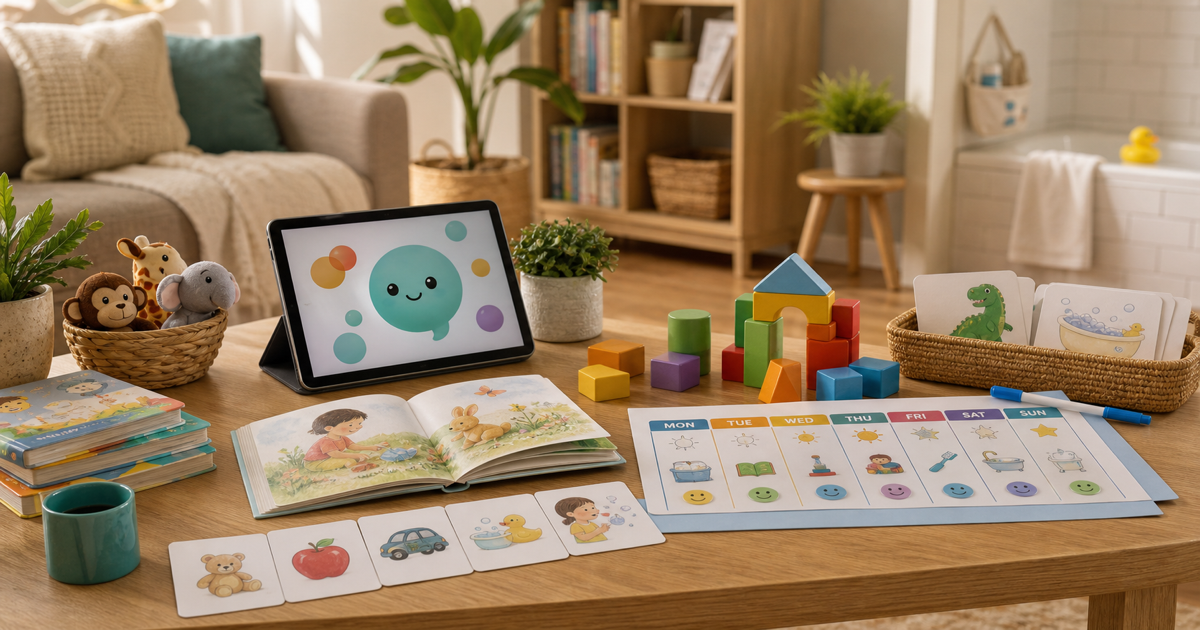
If you're searching for the best books for a speech-delayed toddler, you're probably not after a lecture. You want to know whether this is normal, whether you should act, and what you can actually do without turning story time into a test. Here's the practical version: watch how your child communicates across real routines, try a few small things this week, and loop in an SLP, pediatrician, early intervention team, or school team if the pattern sticks around. The more useful question isn't "how do I get my child to talk right now?" It's "what is my child already communicating, and what would make the next step a little easier for them?" That shift matters. It keeps the relationship relaxed, and it gives any professional you eventually talk to better information to work with. Watch across several moments, not just one rough afternoon. Notice how your child gestures, points, imitates, plays pretend, responds to their name, handles frustration, uses scripts or AAC, attempts sounds, and whether they understand more than they can say out loud. A pattern across different routines tells you far more than a single moment ever will. For books specifically, repetitive text works well for toddlers with speech delays: the predictable phrasing gives them something to anticipate and eventually join in on. Be honest with yourself about which books actually hold your child's attention and which ones you're pushing because they seem educational. The ones that work are the ones your child wants to open again. To put this into practice this week, pick one routine you already do daily, maybe book time, bath time, or snack. Model one useful word, phrase, AAC button, or gesture inside that routine, then pause long enough for your child to respond in whatever form they can manage. A grunt, a sign, a point, a scripted line from a show, a button press on a device: all of that counts as communication. And if the moment starts to turn into a battle, stop. That's not what this is for. If what you're seeing fits into a bigger pattern beyond books and language, it's worth asking for help sooner rather than later. You can request a hearing check, an early intervention evaluation, a private SLP evaluation, a school-based evaluation, or a developmental assessment. Asking early isn't overreacting: it's making sure your child has access to the communication support they need. For more on building these moments into daily life, the Daily Speech Routines hub has practical ideas, and the Parent Guides collection covers similar ground for other everyday concerns. Little Words is meant to support home practice, not to diagnose or treat. It isn't a medical device or a replacement for AAC, and it doesn't substitute for a licensed speech-language pathologist, pediatrician, early intervention program, school team, or a full developmental evaluation.
Worried about a late talker? See what Buddy would practice.

Little Words is a voice-first app where your child talks and plays with Buddy, building first words through gentle games you can start today. It is free to download.

See your child's planor download on the App Store