Reading & Books for Speech

Dialogic Reading Explained (And Why It Works)

If you searched for dialogic reading, this page gives you the parent-level answer: what the concern usually means, what to watch.
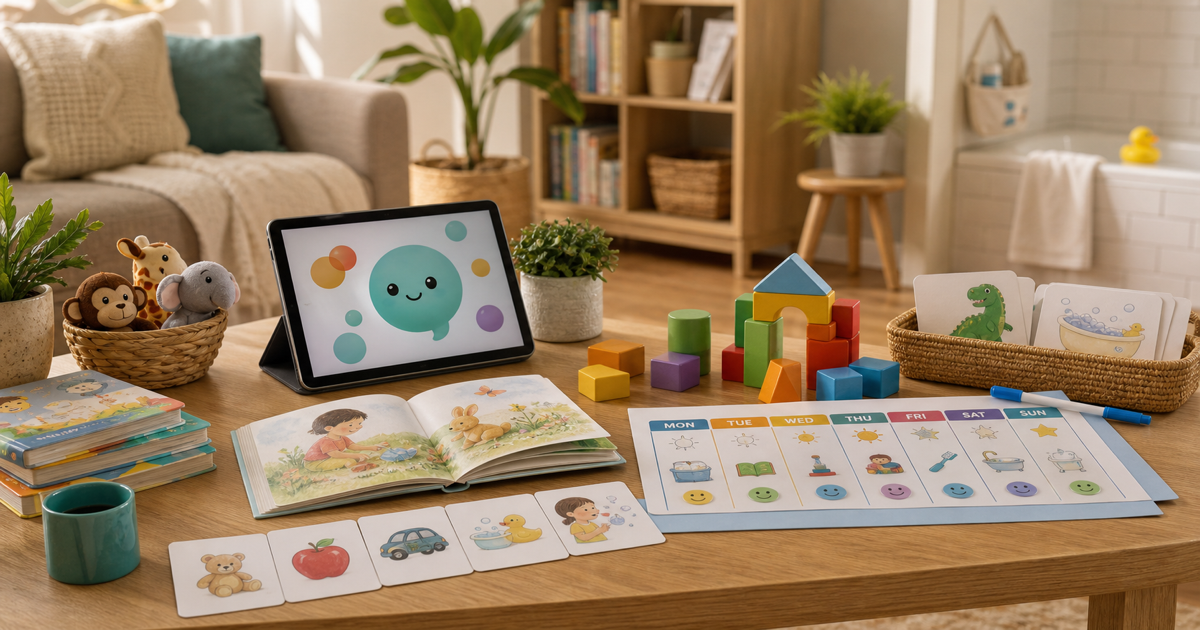
If you looked up dialogic reading, here's the short version: it means reading with your child in a way that turns the book into a conversation instead of a one-way performance, and researchers have found it makes a real difference in how much language kids pick up. Instead of asking how to get your child talking right this second, a more useful question is what they're already communicating and what kind of modeling would make the next step a little easier. That mindset keeps the experience low-pressure for your child and also gives an SLP, pediatrician, early intervention team, or school team better information if you ever need their help. When you're watching for this, don't judge things off one rough afternoon. Pay attention across several reading sessions and other routines too: how your child points or gestures, whether they imitate words or sounds, whether they understand more than they can say back to you, and how they use scripts, AAC, or approximations to get a point across. It's the pattern over time that tells you something, not any single moment. A good place to start this week is a book or routine you already do daily. As you read, name pictures, ask open questions, and then wait, really wait, for your child to respond in whatever form that takes: a word, a sign, a point, a sound. Expand on what they give you rather than correcting it, and stop before the reading turns into a struggle. Two frameworks are worth knowing if you want to go deeper: PEER and CROWD, both used in dialogic reading research, help explain why this approach has been shown to triple language gains compared to standard reading aloud. If what you're seeing during reading time is part of a bigger pattern, don't wait to ask for support. A hearing check, an early intervention evaluation, a private SLP evaluation, or a school-based developmental assessment are all reasonable next steps. Getting ahead of it isn't overreacting: it just means your child gets access to the support they need sooner rather than later. If you want more everyday strategies, the Daily Speech Routines hub has other ideas for folding language practice into the day, and the Parent Guides section covers a wide range of related topics. Little Words is meant as educational support for practice at home. It isn't a medical device, an AAC replacement, or a stand-in for a licensed speech-language pathologist, pediatrician, early intervention program, school team, or formal developmental evaluation.
Worried about a late talker? See what Buddy would practice.

Little Words is a voice-first app where your child talks and plays with Buddy, building first words through gentle games you can start today. It is free to download.

See your child's planor download on the App Store