Last updated 2026-07-11
TL;DR
Graduated exposure means slowly turning down the anxiety behind speaking in feared situations, starting from whatever a child can already manage and building up in small steps. Parents can run this at home between therapy sessions, and most children respond well when the practice stays consistent, low-pressure, and built around warm interactions rather than demands to talk.
Selective mutism isn't shyness
Selective mutism is an anxiety disorder, not defiance and not a speech or language problem. A child with it can speak fluently in comfortable settings, usually at home with close family, but consistently fails to speak in specific social situations where speaking is expected: school, shops, unfamiliar adults. That gap between fluent and silent is the defining feature.
Shyness fades once a child warms up over a few minutes. Selective mutism doesn't work that way. A child can attend the same school for a full year and still never speak to their teacher [1]. The silence is an anxiety response, no different from another child crying or bolting for the door. The brain has flagged certain speaking situations as dangerous, and mutism is what happens when that threat response wins out.
The DSM-5 requires the failure to speak to last at least one month (not counting the first month of school) and to interfere with schooling or social life [2]. It often shows up alongside social anxiety disorder, and quite a few children with selective mutism meet criteria for other anxiety disorders too. Some autistic children show similar patterns, though the underlying mechanism differs enough that it's worth getting an assessment before starting a home program. A licensed psychologist or a speech-language pathologist who knows selective mutism can help sort out the picture if you're unsure. This matters for graduated exposure because you're not teaching a child to speak. You're lowering the anxiety that's blocking speech that's already there.
Why graduated exposure works
Graduated exposure (older textbooks call it systematic desensitization) is a core piece of cognitive behavioral therapy. Anxiety drops when someone faces a feared situation at an intensity they can tolerate without fleeing. Over time the brain decides the situation is safe and the threat response quiets down. For selective mutism, the treatments with the best evidence lean heavily on exactly this: a ranked hierarchy of speaking situations that a child works through one rung at a time [3].
The mechanism doing the work is habituation. A child sits in a mildly uncomfortable speaking situation, nothing bad happens, and the anxiety drops a notch. Repeat that enough times and the situation stops triggering the response at all. Escape has the opposite effect: the relief of getting away confirms to the brain that the threat was real, and the fear grows. Parents are in a good position to run this at home. You control the environment, you can invite whoever you need, and you're already the person your child speaks to freely. That's your starting point.
Building a speaking ladder
A speaking ladder ranks speaking tasks from almost no anxiety up to maximum anxiety. Build it with your child when you can. Just knowing they have a say in the plan lowers the threat response before you've even started.
Start by naming where your child sits right now. Most parents know this instantly: full voice at home with them, frozen everywhere else. That's rung one, the floor. Then name the top: a full conversation with a teacher or peer at school. Everything in between is the actual work.
A typical ladder for a school-age child might look like this:
| Rung | Situation | Voice type |
|---|---|---|
| 1 | Talks to parent alone at home | Full voice |
| 2 | Talks to parent with one sibling in the room | Full voice |
| 3 | Talks to parent with a grandparent nearby | Whisper OK |
| 4 | Grandparent asks yes/no question, child nods then whispers | Whisper |
| 5 | Child whispers an answer to grandparent in a familiar place | Whisper |
| 6 | Child speaks one word to grandparent in a familiar place | Quiet voice |
| 7 | Familiar adult visits home; child speaks to parent while that adult is nearby | Any voice |
| 8 | Child speaks one word directly to the familiar visiting adult | Quiet voice |
| 9 | Child orders at a food counter with parent right beside them | Any voice |
| 10 | Child speaks briefly to a peer at a low-pressure playdate | Any voice |
The rungs need to be smaller than most parents first plan. If your child can't manage rung 5, that's not a failure, it's information: rung 5 is too big a jump. Add a rung between 4 and 5. The fine grain is the whole point.
A 2014 study by Oerbeck and colleagues in the Journal of Anxiety Disorders found that children with selective mutism who got exposure-based treatment showed real drops in anxiety and gains in speech across settings [3]. The authors noted that parent-run exposure was a key part of how gains carried over to new settings, meaning a lot of the real change happens at home, between sessions.
What a session at home actually looks like
Pick one rung. Just one. Don't try to cover three rungs in a session because you're feeling optimistic that day.
A session usually runs 10 to 20 minutes, though the exposure moment itself might last 30 seconds. Setting it up takes longer than the exposure does.
Here's what rung 7 looks like in practice (a familiar adult present while the child talks to a parent). You invite your child's aunt over for dinner. You don't tell your child they have to talk to her. You just have your normal conversation with your child while she's there, asking which sauce they want on their pasta. Your child answers you. The aunt is sitting right there. Nothing bad happens. That's the whole session.
End on success, not on struggle. If your child freezes when the aunt asks them something directly, don't push it. Step in gently, answer for them, and move on without commenting on the freeze. Letting it pass without comment matters a lot here: drawing attention to the silence adds shame, shame adds anxiety, and anxiety makes the next attempt harder.
Afterward, celebrate the attempt privately, not the speech itself. "You stayed at the table the whole time. That was brave." Reward charts with small, concrete rewards, like stickers, extra screen time, or a chosen activity, work well for younger children. ASHA's guidance on selective mutism supports positive reinforcement aimed at approach behavior rather than at speech output itself [4]. Aim for three to five sessions a week. Once a week isn't often enough for habituation to take hold.
Sliding in: bringing a new person into the circle
Sliding in is a specific technique from the selective mutism literature, and it's the most practical tool parents have for carrying speech from home out to a new person.
The setup: your child is already talking freely with you. A second person, ideally someone familiar but not someone your child speaks to freely yet, enters the scene gradually. They don't ask for speech, and at first they don't even look at the child directly. They just join whatever's already happening.
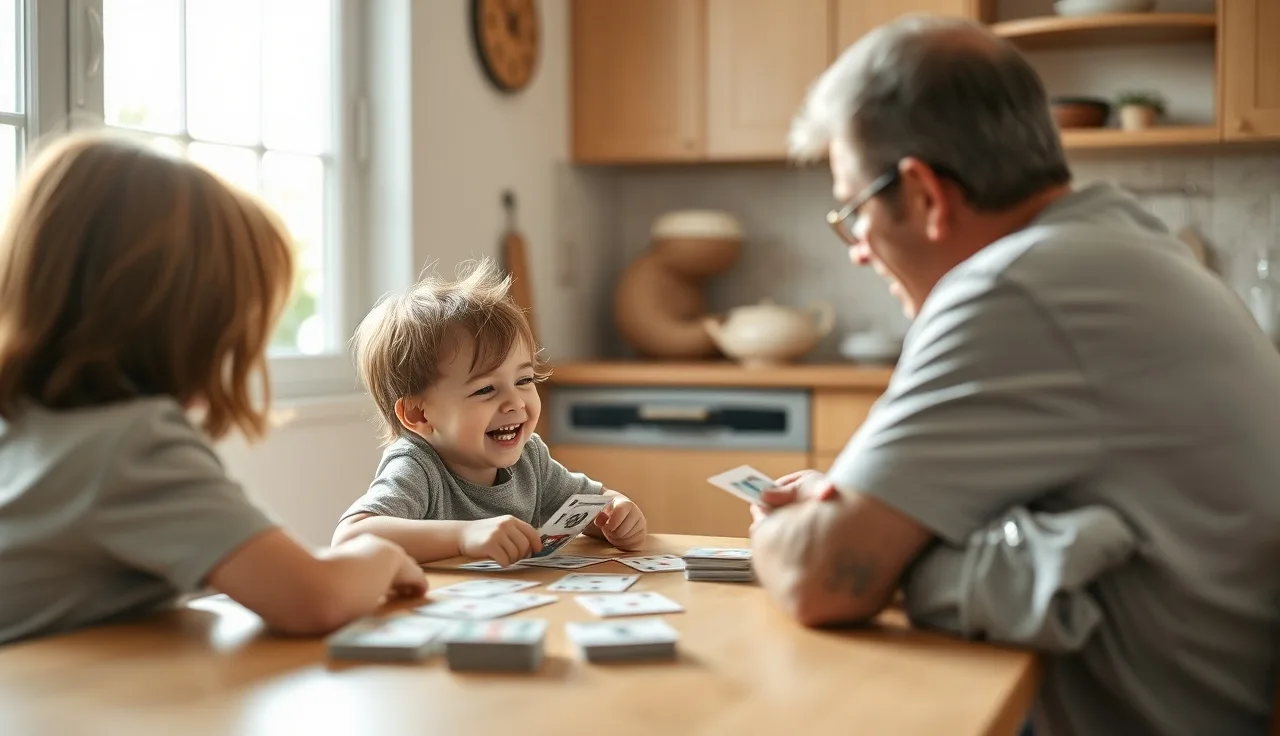
Say you're playing a card game with your child, who's talking and laughing and calling out numbers. Your neighbor comes in and sits nearby, seemingly absorbed in their phone. After five minutes, the neighbor picks up a card from the pile without saying a word. The game keeps going. A few sessions later, the neighbor starts commenting on the game quietly, not directly to the child, more into the air. Eventually your child's voice stretches to include the neighbor too.
The key is zero pressure and proximity that builds gradually. You're not tricking your child here. Most kids with selective mutism sense exactly what's going on and cooperate once they trust the plan, so being honest about the goal, in age-appropriate terms, is fine. Many actually feel relief once they understand the exposure is planned and has an end point. For school-age kids, the same idea works at a park when a classmate turns up, or at a playdate built around something low-demand like a video game or a craft.
When a child shuts down instead of speaking, the first thing to check is whether you climbed the ladder too fast. Shutdown almost always means the step was too big, so lower it. Don't force the moment either: pushing for speech spikes anxiety and turns the whole exchange into a power struggle that locks the mutism in place further. The goal is always approach, not compliance, so a child who walks into a room where a feared person is present has done something real, even if not a word came out. Timing matters more than parents expect. Trying exposure work right after school, when a child is already running on empty, is much harder than the same task on a rested weekend morning. Hunger and fatigue both raise anxiety, so those windows aren't the time to push a rung. It's also worth asking whether something sensory or situational is quietly making a task harder than it looks on paper. Some children with selective mutism are also autistic or sensory-sensitive, and a loud room or an unpredictable social script adds a layer most ladders don't account for. If that's your child, build it into the plan directly: a playdate at your house with a familiar peer is a genuinely easier rung than the same playdate somewhere new. If refusal stretches past two or three weeks with no movement, bring in a professional. A licensed psychologist or SLP who knows selective mutism can tell whether something else is going on, and speech therapy or early intervention through the school or a private provider can add real support to what's happening at home. Parent instinct and research pull in different directions here, and it's worth naming that. Many caring parents slide into what clinicians call the accommodation trap: they quietly stop expecting speech at all, answer for the child automatically, and shield them from any prompting. It comes from a good place, but full accommodation keeps the anxiety alive instead of shrinking it [5]. Some prompting does help, as long as it's structured. Asking "why won't you just say hi?" is pressure and it backfires. A planned, low-stakes chance to speak, with a reward for trying, is a different thing entirely. Clinicians call this shaping: you reward pointing first, then mouthing a word, then a whisper, then a quiet voice, building toward full speech in small steps instead of demanding it all at once. Accommodation that's a deliberate, planned rung on the ladder is not the same as accommodation that's really just giving up on a step, and it's worth being honest with yourself about which one you're doing before each session. Nobody can hand you a firm timeline without knowing your child, but the research gives a rough shape. Intensive outpatient programs that run five to eight hours a day for a full week report measurable change in many children within about five days [6], which is obviously nothing like home practice. For parent-led exposure done three to five times a week alongside professional support, clinicians more often see movement within six to twelve weeks, and movement here means progress up the ladder, not a solved problem. Younger children and milder cases tend to move faster; older children, longer histories of mutism, and co-occurring anxiety or autism tend to take more time. A review by Cohan and colleagues in Psychological Medicine found behavioral interventions for selective mutism ran a median of about 20 sessions in research settings, with roughly 68% of children reaching clinically significant improvement [7]. That number comes from therapist-led treatment, so treat it as closer to a ceiling than a guarantee for home work alone, but it's still an honest benchmark. Expect the progress itself to be uneven: a plateau after early gains, then another jump, with regression during stressful stretches like school transitions or illness. That's normal, not a sign the approach has failed. School is almost always too hard to use as early practice ground: too many peers, too many variables, and the stakes feel high to the child. Most of the early ladder work happens at home and in semi-controlled settings like playdates. A one-on-one playdate with a single peer, at your house, doing something low-demand the child already loves, is often the best bridge between speaking at home and speaking to a peer. It's familiar, you're close by, and the activity carries the interaction so the child isn't stuck generating conversation from nothing. Choose the peer on purpose: someone the child likes and has history with, even without ever having spoken to them at school. A naturally chatty kid who doesn't fixate on the silence works better than a peer who goes quiet too and makes things awkward. In the middle rungs, a pet can help some families: the child talks to the animal while a visitor is in the room, which gets vocalization happening in a social space without direct speaking pressure. It's a small thing, but small things are the whole point of graduated exposure. Home and school need to be running the same plan, or close to it. A child cruising through rung 6 at home can be stuck on rung 2 at school for months, simply because the environments are so different, which means the school team needs to know the ladder exists and should be working their own version of it. Under the Individuals with Disabilities Education Act (IDEA) and Section 504 of the Rehabilitation Act, children whose selective mutism affects school performance may qualify for accommodations or an IEP [8], usually under emotional disturbance or other health impairment categories depending on the district. An IEP or 504 plan can formalize a reduced-pressure speaking schedule, build in speech therapy, and keep the child out of graded participation requirements that effectively punish anxiety. Bring a written copy of your home ladder to the school meeting and ask the SLP or school psychologist to line up their classroom plan with it: consistency across settings speeds up generalization. ASHA's practice portal notes that SLPs "may collaborate with psychologists and other professionals in the treatment of selective mutism," with a role that includes facilitating communication across settings [4]. Some families use an app for low-pressure speaking practice at home as a warm-up before a harder rung; something like Little Words, built for neurodivergent kids, can work well because the digital context strips out some of the social threat since the child isn't speaking directly to a person. Just watch that it doesn't quietly become its own avoidance strategy. The most common mistake, by a wide margin, is moving too fast. A child succeeds on rung 5 once, the parent jumps straight to rung 8, the child shuts down, and the parent concludes the approach doesn't work. It was working. They just skipped rungs. Second most common: praising the speech itself rather than the attempt. "Great job talking!" puts a spotlight on the speech and can raise self-consciousness, while "you stayed right there and tried, that was brave" reinforces the approach behavior instead. Don't drag out a failed attempt either: if the child freezes, end the session calmly and soon, rather than extending the discomfort hoping for a breakthrough. That's not how habituation works, and it burns trust. Never turn exposure into punishment ("if you don't say hi, no dessert") since that's coercion, not exposure, and it makes speaking feel more dangerous, not less. Watch the child's basic state too: tired, hungry, or coming off a hard school day is not the time to push a rung. And keep the frequency up: three to five times a week is what the research supports, and once a week at Sunday dinner isn't really a program. Finally, check yourself every few weeks for accommodation creep. Are you answering for your child in moments where you used to wait? Have you quietly stopped inviting people over because it's easier? It happens gradually, and it slows progress more than most parents realize.Home exposure works alongside professional treatment, not instead of it, and there are a few clear signals that it's time to bring in a specialist. If the mutism has gone on for more than six months, if your child is nearing school age and hasn't spoken at school at all, or if home exposure keeps triggering panic-level reactions instead of gradual progress, that's your cue to get an evaluation. The same goes if you're seeing significant social withdrawal, rigid behavior, or sensory issues alongside the mutism, since that picture may call for an autism spectrum speech therapy specialist on the team as well. The American Academy of Pediatrics recommends that pediatricians screen for anxiety at well-child visits and refer out when behavioral signs impair function [9]. If your pediatrician waves off your concerns about selective mutism, you don't need a referral to go find a child psychologist or a speech-language pathologist who specializes in it yourself. Cost and availability of private therapy for selective mutism vary a lot. Online speech therapy has opened up access over the past few years, and some telehealth therapists work specifically with selective mutism. A good therapist won't just treat your child in isolation: they'll send you home with a ladder and coach you through running it, which is what actually produces results that carry over into daily life. It's worth not letting this drag on. The longer selective mutism goes untreated, the more it settles in as part of how a child sees themselves. Children treated before age 7 generally do better than those treated later, according to a review by Muris and Ollendick in the Clinical Child and Family Psychology Review [10].Frequently asked questions
Can graduated exposure make selective mutism worse?
Done well, no. Done poorly, forcing speech or skipping ahead too fast can spike anxiety and make a child even more avoidant. Start lower than you think you need to and move slowly. If distress isn't easing within a session, drop back a rung and get a professional to help recalibrate the plan.
What age is best to start graduated exposure for selective mutism?
Earlier tends to work better. Children treated before age 7 tend to show stronger outcomes, though graduated exposure can be adapted for toddlers through teens. The mechanics shift with age: younger kids do well with play-based exposure and parent-led activities, while teens usually respond better to a straightforward explanation of how anxiety works and more say in building their own ladder.
Is selective mutism the same as autism-related communication differences?
No, though the two can show up together. Selective mutism is an anxiety disorder: speech is intact but blocked by a threat response in specific situations. Autism-related communication differences tend to involve different speech, language, or social processing across every setting, not just the feared ones. A child can have both, which makes assessment trickier and often means the ladder needs to account for extra sensory or social factors.
How do I explain graduated exposure to my child in a way they'll understand?
Keep the language simple and give them a picture to hold onto, like an "anxiety thermometer" or "fear ladder." Something like: "Your brain thinks talking to some people is dangerous, but it's wrong. We're going to practice tiny steps so your brain can learn the truth. You're in charge of how fast we go." For younger kids, a sticker chart with the ladder rungs drawn out makes the whole plan visible and motivating.
What if my child only speaks in a whisper and won't progress to a full voice?
Whispering counts as real progress, not a stall. The jump from no voice to a whisper is a meaningful shift. Over time, ease your child into situations where a whisper doesn't quite cut it, like a noisy playdate or something slightly louder. Full voice usually shows up on its own once a child notices whispering isn't getting the message across, rather than being asked for directly.
Should I tell my child's teacher about the home exposure plan?
Yes. Keeping home and school consistent helps the progress carry over. Share the ladder with the teacher and ask them to set up similar low-pressure speaking opportunities at school. An IEP or 504 plan can make this official, and under IDEA, selective mutism that gets in the way of a child's education can qualify for services. A teacher who knows what's going on and holds off calling on the child publicly while exposure work is underway makes a real difference.
How is graduated exposure for selective mutism different from just waiting for the child to grow out of it?
Waiting does nothing but give the anxiety time to settle in. Selective mutism rarely resolves on its own, especially once a child hits school age, and reviews of untreated cases find many kids still meet criteria well into adolescence. Graduated exposure actively rewires the threat response through repeated safe experience. Waiting doesn't offer any equivalent mechanism.
Can video calls and technology be used as a step on the exposure ladder?
Yes. Many clinicians place screen-based communication a few rungs below in-person talking, since the social threat feels smaller. A child might manage a video call with a grandparent before speaking to them face to face, and that's a legitimate step. Just keep an eye on whether technology is becoming a permanent workaround instead of a bridge toward in-person progress.
What if my child speaks at home but is also very quiet with me in certain situations?
Some kids with selective mutism have a narrower safe zone than others. If your child talks freely with you at home but goes silent even with you in public, your ladder starts at speaking to you at home, and the next rung is speaking to you in a familiar public place with few people around. The approach is the same no matter where the starting point sits.
Are there medications that help selective mutism alongside exposure therapy?
SSRIs are sometimes prescribed for children with severe anxiety-driven selective mutism, generally fluoxetine (Prozac) in the child psychiatry literature. Medication isn't a first-line treatment; it's usually considered when behavioral approaches alone aren't moving the needle. That decision belongs to a child psychiatrist or pediatric psychologist, not to a home program.
How do I track progress so I know the exposure is actually working?
Keep it simple: log the date, the rung you tried, what happened, and your child's anxiety level on a 0-10 scale. Look back over it weekly. Progress usually looks like moving up a rung every one to four weeks, or the same rung feeling easier over repeated tries. If the log stays flat for four weeks or more, that's a sign to adjust the ladder or bring in a consultant.
What is the difference between a fear hierarchy for selective mutism and one used for general anxiety?
The structure is the same, but the content is specific to speaking. A general anxiety hierarchy might cover dogs, doctors, or dark rooms. A selective mutism hierarchy is built entirely around speaking situations: who's present, how well the child knows them, how many people, how directly they're expected to speak, and how public the setting is. That narrow focus on speaking is what makes it treatment for selective mutism rather than generic anxiety work.
Sources
- American Speech-Language-Hearing Association (ASHA), Selective Mutism practice portal: Children with selective mutism may attend school for extended periods without speaking to teachers or peers despite being able to speak fluently at home.
- American Psychiatric Association, DSM-5 diagnostic criteria summary: DSM-5 requires failure to speak to last at least one month, excluding the first month of school, and to interfere with education or social functioning.
- Oerbeck B et al., Journal of Anxiety Disorders, 2014, exposure-based treatment for selective mutism: Exposure-based treatment produced significant reductions in anxiety and improvements in speech across settings; parent-implemented exposure was a key component of generalization.
- ASHA, Selective Mutism scope of practice guidance: ASHA states SLPs may collaborate with psychologists in treating selective mutism and recommends positive reinforcement targeting approach behavior; the SLP role includes facilitating communication across settings.
- Kearney C, Vecchio J, Behavior Therapy, accommodation and selective mutism: Full parental accommodation of selective mutism maintains anxiety rather than reducing it; systematic reduction of accommodation is a component of effective behavioral treatment.
- Bergman RL et al., Behavior Therapy, intensive treatment for selective mutism: Intensive behavioral programs running roughly five days show measurable gains in speaking behavior for children with selective mutism.
- Cohan SL et al., Psychological Medicine, review of selective mutism treatment outcomes: Behavioral interventions for selective mutism showed a median treatment length of approximately 20 sessions in research settings, with about 68% of children achieving clinically significant improvement.
- U.S. Department of Education, Individuals with Disabilities Education Act (IDEA) overview: Under IDEA and Section 504, children whose selective mutism interferes with educational performance may qualify for IEP services or accommodations under emotional disturbance or other health impairment categories.
- American Academy of Pediatrics (AAP), anxiety screening recommendations for well-child visits: The AAP recommends pediatricians screen for anxiety disorders at well-child visits and refer when behavioral signs impair functioning.
- Muris P, Ollendick TH, Clinical Child and Family Psychology Review, treatment timing and selective mutism outcomes: Children treated for selective mutism before age 7 generally show better outcomes than those treated later; untreated selective mutism often continues into adolescence.