Apraxia of Speech (CAS)

Apraxia Therapy Intensity: How Much, How Often

If you searched for apraxia speech therapy frequency, this page gives you the parent-level answer: what the concern usually means.
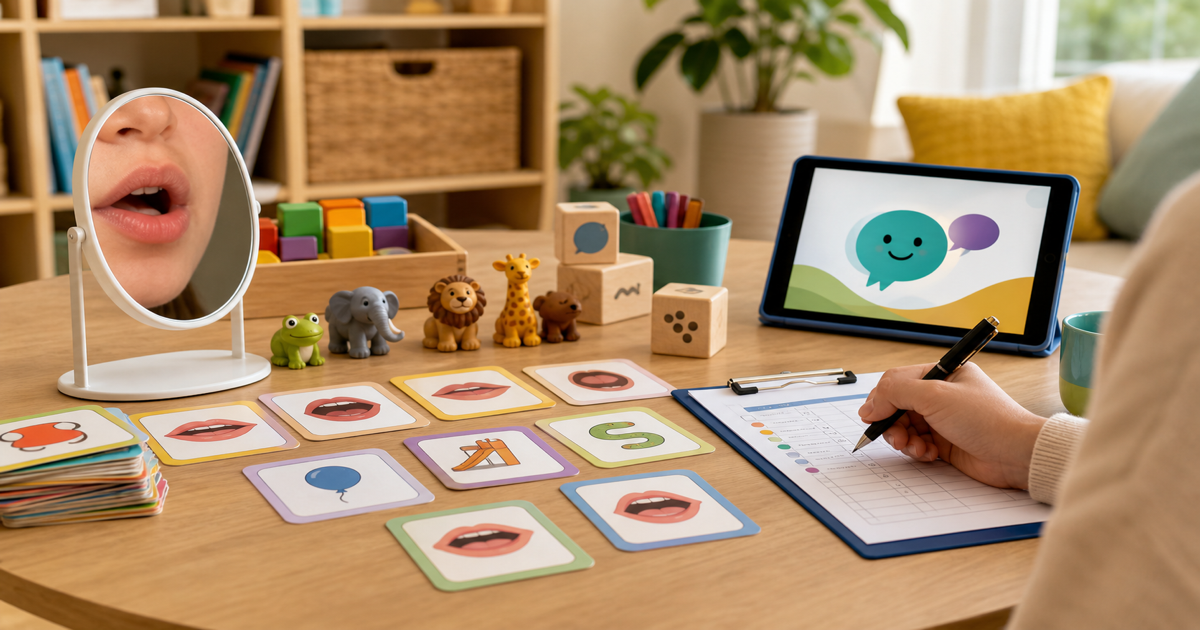
If you're asking how often apraxia therapy should happen, the short answer is: more often than most families start out with, and the research backs that up. Studies on motor planning point to 3 to 5 sessions a week as the range that actually moves the needle for kids with Childhood Apraxia of Speech (CAS), because this is a motor learning problem, not just an articulation one, and motor learning needs repetition close together to stick. Once a week is the default many families get handed by insurance or scheduling, but for true apraxia it's often not enough to build the speech motor patterns your child needs. That said, frequency is only useful in context. The better question underneath "how much therapy" is usually "what is my child already communicating, and what would make the next step easier for them?" That framing keeps you observing rather than testing your child, and it gives whoever you're working with, whether that's an SLP, pediatrician, early intervention team, or school team, better information to act on. Watch your child across several different moments rather than judging one hard afternoon. Gestures, pointing, imitation attempts, scripts, sound approximations, AAC use: all of it counts as communication, and patterns across routines tell you more than any single moment does. If your child understands far more than they can say, that's worth noting too. For this week, pick one routine that already happens daily and use it as practice ground. Model one useful word, phrase, gesture, or AAC button in that moment, then pause long enough for your child to respond in whatever form they have available. Take the approximation, the sign, the point, the script, the button press, as a real answer. And stop before it turns into a struggle. If frequency is the piece you're stuck on, particularly if your current plan is once a week and progress feels slow, it's worth pushing back. You can ask your provider directly why the plan is set at that pace, and if insurance is the obstacle, ask about appealing the authorized number of sessions or supplementing with a private evaluation. None of this means panicking. It means making sure your child has real access to the therapy intensity that motor planning problems typically require. A hearing check, an early intervention evaluation, or a developmental assessment are all reasonable next steps if you're not sure where things stand. For more on the condition itself, this plain-English guide to Childhood Apraxia of Speech is a good starting point, and if you want to understand a specific treatment approach, DTTC for Apraxia and PROMPT Therapy both walk through how those methods work. Families dealing with related communication questions might also find the guide on delayed echolalia, how to respond when your child echoes you, or the honest take on whether echolalia is a problem useful, and for broader context there's the AAC for Autism hub, a look at Montessori for speech-delayed kids, thoughts on choosing a preschool for an autistic toddler, and the wider library of parent guides. Little Words is meant as educational support for practice at home. It isn't a medical device, an AAC replacement, or a stand-in for a licensed speech-language pathologist, pediatrician, early intervention program, school team, or developmental evaluation.
Apraxia takes a lot of practice. Buddy turns it into a game.

Little Words is a voice-first app where your child plays and talks with Buddy, getting the repeated sound and word practice apraxia needs, without the pressure of hearing 'say it again.' It is free to download.

See your child's planor download on the App Store