Stories from Real Families

How My Daughter Found Her Words: A Dad's Story

If you searched for speech delay success story, this page gives you the parent-level answer: what the concern usually means, what.
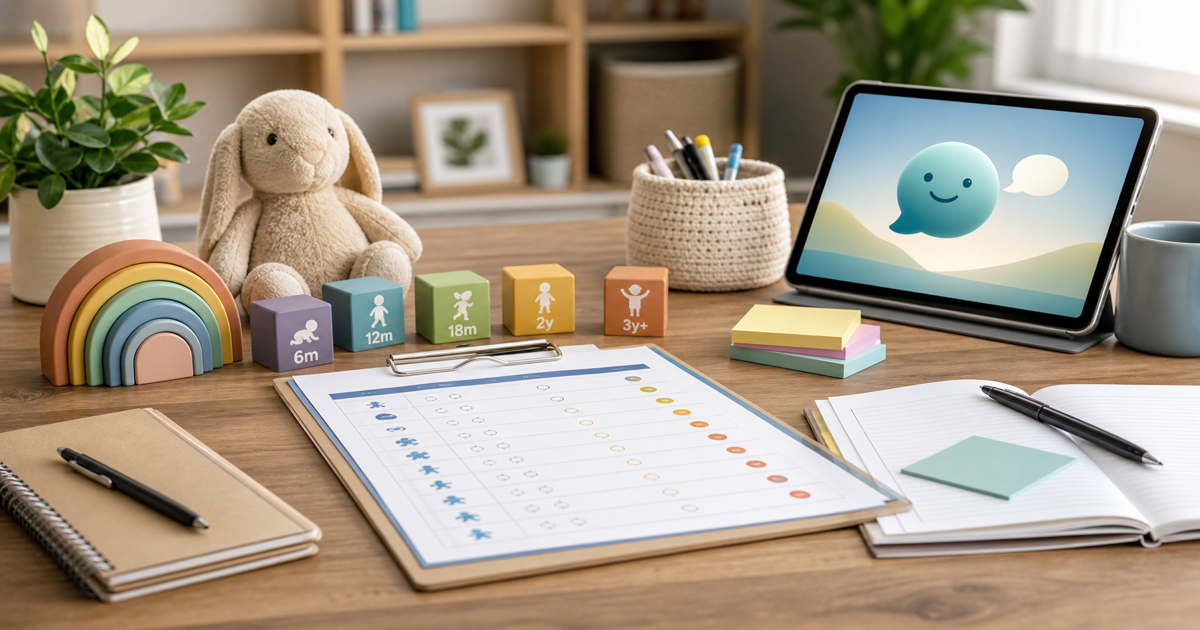
If you're reading a speech delay success story right now, you're probably not looking for a lecture. You want to know whether what you're seeing is normal, whether you should do something about it, and what that something looks like without turning your kid into a project. That's what this piece is for. The question worth asking isn't "how do I get my child to talk right now." It's closer to "what is my child already communicating, and what would make the next step a little easier for them." That shift matters for two reasons: it protects your relationship with your child, and it gives you better information to bring to an SLP, pediatrician, early intervention team, or school team if you get there. Watch across several different moments rather than judging by one rough afternoon. Pay attention to whether your child understands more than they can say, how they respond to their name, whether frustration builds when they can't get a message across, and how they use gestures, scripts, or AAC to fill the gap. A pattern that shows up across routines tells you a lot more than a single hard day does. For something to try this week: pick one routine that already happens daily anyway (snack time, bath, the drive to school) and model one useful word, phrase, gesture, or AAC button inside it. Then pause, longer than feels natural, and let your child respond in whatever form they have available. A point, a sign, an approximation, a button press: all of that counts as communication. And if the moment starts turning into a battle, that's your cue to stop for the day. Two things worth knowing here: this is drawn from Will's own founder story, and it's one of the pieces meant to carry the brand for years rather than fade after a news cycle. If a speech delay success story is one piece of a bigger pattern you're noticing, don't wait to ask for help. A hearing check, an early intervention evaluation, a private SLP evaluation, a school-based evaluation, or a developmental assessment are all reasonable next steps. Getting ahead of it isn't overreacting. It just means your child gets access to communication support sooner rather than later. For more, the Parent Resources hub and the full Parent Guides collection cover related ground, and you may also find it useful to read about the overlap between ADHD and speech, what it's really like being an autism dad, expressive language disorder, making speech practice work for an ADHD child, one engineer's story of building his daughter an AI friend, late talkers who turned out fine, receptive language delay, and how sensory processing connects to speech. Little Words is meant as educational support for practice at home. It isn't a medical device, an AAC replacement, or a substitute for a licensed speech-language pathologist, pediatrician, early intervention program, school team, or developmental evaluation.
Little Words is a talk-with-Buddy app built for kids like yours.

Buddy is a voice-first speech companion your child actually talks to, made for late talkers and neurodivergent kids. It is free to download and takes 30 seconds to try.

See what Buddy can door download on the App Store