Last updated 2026-07-09
TL;DR
Communicating well with autistic people means slowing down, using plain and literal language, respecting alternative communication like AAC or echolalia, quieting the sensory environment, and following the person's lead. There is no single script. The flexibility you bring as the non-autistic partner does more good than any checklist you could memorize.
Why does communication with autistic people sometimes feel hard?
The gap you feel is usually a mismatch in style, not a missing ability on either side. Autism changes how the brain handles language, social signals, and sensory input. It does not mean a person has nothing to say. The American Speech-Language-Hearing Association (ASHA) describes autism spectrum disorder as affecting "social communication and social interaction across multiple contexts" as a core feature, not as a lack of desire to connect [1].
About 25 to 30 percent of autistic people are minimally verbal or nonspeaking, meaning spoken words are not their most reliable channel [2]. That range comes from work by Tager-Flusberg and Kasari, which refined older estimates. More recent studies vary because researchers define "minimally verbal" differently. Nobody has perfect data here. But the share is large enough that assuming speech will always work is a mistake.
The other 70 percent or so do use speech. They may process it differently, though. Long sentences, implied meaning, sarcasm, figures of speech, and fast back-and-forth all pile on processing load. That does not mean you should oversimplify. It means you should be precise.
Sensory factors sit underneath all of this. A loud room, flickering fluorescent light, or background music can eat so much attention that a person who holds a detailed conversation in a quiet office seems unreachable at a birthday party. Context is not decoration. It is part of the message.
What communication styles do autistic people actually use?
Autistic people use the full range of human communication, and most switch modes depending on the day and the setting.
Speech is the most common. Many autistic speakers repeat phrases they have heard before instead of building brand-new sentences from scratch. This is called echolalia, and it is a real communicative act, not noise. A child who says "Do you want a cookie?" when they want a cookie is borrowing a familiar frame to express a genuine need [3].
Augmentative and alternative communication (AAC) runs from low-tech picture boards to high-tech speech-generating devices. ASHA and the American Academy of Pediatrics (AAP) both back AAC as a valid, evidence-based method that does not sap a person's drive to talk [1][12]. Parents sometimes fear that offering AAC will make their child stop trying to speak. The research does not support that fear. A reliable way to communicate cuts the frustration that gets in the way of spoken language. You can read more at aac devices.
Writing and typing work better than speaking for some autistic people, including some who are largely nonspeaking in live conversation. Text strips out the real-time pressure of a spoken exchange.
Gesture, pointing, and physical guidance (like taking your hand and leading you somewhere) are legitimate communication. If someone uses these with you, respond to them instead of demanding a spoken version.
Stimming and body language carry meaning too, though not always the meaning neurotypical people expect. Looking away does not mean tuning out. Rocking or hand-flapping mid-conversation does not mean the person stopped listening.
A good communicator treats all of these as real and answers what is being expressed, not how it looks.
How do you adjust your own language to communicate more clearly?
The changes that help most are simple. None of them require a course.
Use literal, direct language. Idioms like "break a leg," "it's raining cats and dogs," or "keep your eye on the ball" can genuinely confuse when taken at face value. Say what you mean. "Good luck" instead of "break a leg."
Shorten sentences when processing seems effortful. One idea per sentence lands better than a compound sentence stuffed with qualifiers. "We're leaving at two" beats "I was thinking maybe around two, give or take, we could probably head out."
Give processing time. The typical social pause between a question and its expected answer runs about one to two seconds in neurotypical talk. Many autistic people need longer. Response latency is longer for autistic speakers even when comprehension is fully intact [5]. Jumping back in with a reworded question before they have answered the first one adds load instead of clearing it. Count silently to ten before you try again.
Skip indirect questions when a direct one works. "Are you hungry?" beats "I wonder if anyone could go for a snack." Hints and implied requests are harder to decode.
Say what happens next. Transitions and surprises are often dysregulating. "We're going to leave in five minutes" costs nothing and can head off a lot of distress.
Match your vocabulary to the person. Some autistic people have sophisticated language and find oversimplification insulting. Others need shorter words and familiar phrases. The person in front of you is the calibration tool, not a checklist.
One habit to drop: talking about an autistic person in the third person while they are right there, even when they do not seem to respond. Understanding often runs ahead of speech. Assume the person tracks everything you say.
How should you respond when someone uses AAC or nonverbal communication?
Treat a message from an AAC device the way you would treat a spoken sentence. Answer the content. Don't remark on the device. Don't slow your own reply to a crawl, as if the delivery method changes the mind behind the message.
If someone points to a picture symbol, answer that message straight. "You want water? Sure, I'll get it." Not "Can you show me again?" or "Use your words." The picture was the word.
Physical modeling helps if you are supporting a child learning an AAC system. You touch the symbols too, so the device reads as a normal part of talking. Speech-language pathologists call this "aided language input" or "aided language stimulation." ASHA endorses it as part of AAC implementation [1].
For people who type, give them time to finish a full thought before you jump in. Interrupting a typed message partway is the same as talking over someone mid-sentence.
If you work with or care for a nonspeaking person and you have not yet explored aac devices or reached out to an autism spectrum speech therapy provider, that is the highest-leverage step you can take. Earlier access to communication tools produces better long-term outcomes [6].
How does the environment affect communication?
Most people who have not lived it underrate this completely. Change the room before you change your script.
Autistic people are often more sensitive to sensory input than neurotypical people. Fluorescent lights that flicker imperceptibly, background music, overlapping conversations, strong smells, scratchy clothing, and unexpected touch all pull attention that would otherwise go toward processing language and forming a reply.
When a conversation is going badly, move to a quieter space. Dim or swap the lighting. Hand the person something to hold or fidget with. Cut the number of people in the room.
This is not a special favor. It is removing obstacles that never needed to be there.
Temperature and physical comfort count too. A child who needs the bathroom, is overheated, or is in pain cannot put communication first. Same goes for adults. When talking suddenly gets harder, check basic comfort before anything else.
What should you know about processing differences and response time?
Auditory processing differences are common in autism. Information arriving through the ears can take longer to decode into language than the same information delivered as text or a picture. This has nothing to do with intelligence.
A few things follow from that:
Written instructions or a visual schedule alongside spoken instructions usually produce better understanding than speech alone. Tell someone the plan, then write it down or show a picture sequence, and you give two processing routes instead of one.
Repeating a question word for word the first time beats rephrasing it right away. A reworded version introduces new words to decode. If there is no response after a real wait, a calm second repeat is fine. If there is still nothing, a visual prompt or a written version often breaks through.
Some autistic people experience delayed processing, where they answer a remark or question minutes or even hours later. This is real, not evasion. A reply that lands 20 minutes on is still a reply.
Stressful or emotional content makes processing harder for most people, and the effect runs stronger for many autistic people. Deliver difficult news, make requests, or work through conflict in a calm, low-stimulation setting, and the conversation has a far better chance of landing.
How do you communicate with an autistic child specifically?
Most of the principles above hold at any age. A few points are worth saying straight to parents and caregivers.
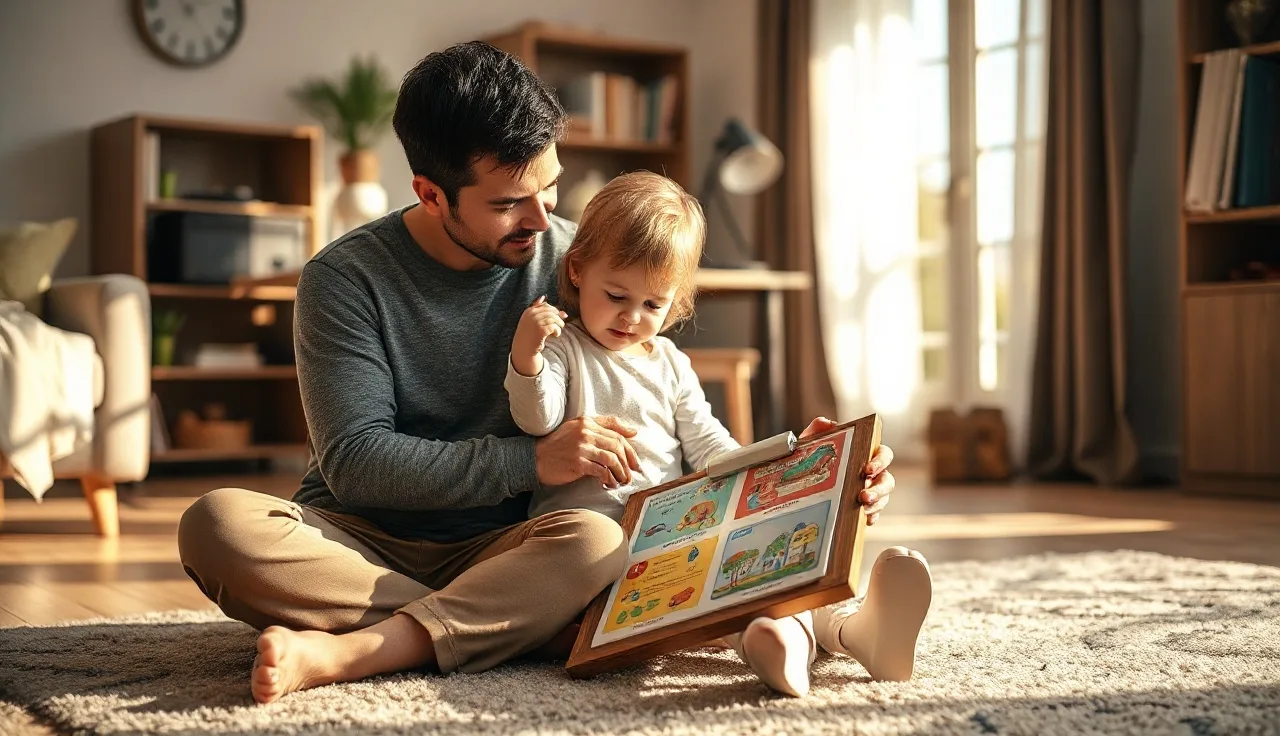
Follow the child's lead. Joint attention, shared focus on the same object or activity, is one of the building blocks of early language. If the child watches a spinning wheel, talk about the spinning wheel. If they line up cars, get down on the floor and talk about the cars. Steering their attention toward what you want to discuss can interrupt the exact moments when language learning happens.
Repeat and expand. If a child says "car," you say "red car" or "the car goes fast." You are not correcting. You are showing the next step in language, just above where they are now. This technique, called modeling or expansion, has solid evidence behind it [7].
Ask fewer questions. It sounds backward. But parents who ask fewer direct questions and instead narrate and comment tend to draw out more talk from their kids. "I see the dog" invites a response more naturally than "What is that?"
Look at early intervention if your child is under three and you have concerns. Services under IDEA Part C are free for eligible families, and earlier intervention before age three generally produces better outcomes than starting later [6].
For kids who use repeated phrases and scripts, don't shut that down. Echolalia meaning is real communication, and suppressing it strips away a tool the child depends on. A speech-language pathologist can help you spot which scripts carry intent and how to build from them.
If you want structured practice between therapy sessions, tools like Little Words give kids more daily reps in the language-rich activities that support communication. The start quiz matches the approach to where your child actually is.
What about communicating with nonspeaking or minimally verbal autistic adults?
Adults who are minimally verbal or nonspeaking have often spent years around people who misread their attempts or waved them off. Start by learning how the person actually communicates, from them or from people who know them well, instead of assuming speech is the only door in.
AAC is more than for children. Speech therapy for adults that includes AAC evaluation and support is an evidence-based service, though access stays uneven. An SLP with AAC experience can figure out which system fits a person's motor abilities, thinking, and communication needs.
Assume competence from the start. That means treating a person as understanding more than their expressive behavior suggests, not less. Clinical and experiential evidence shows that minimally verbal autistic people often understand far more than they can output [8].
Direct questions with yes/no options, or a choice between two concrete things, reach more people than open-ended questions. "Do you want the blue cup or the red cup?" beats "What do you want to drink?"
Patience is not optional. If you feel rushed, the person across from you usually senses it, and that pressure makes communication harder.
Should you use person-first or identity-first language?
The honest answer is: ask, or follow the person's lead. Person-first language says "a person with autism." Identity-first language says "an autistic person."
Many autistic adults, especially those in the autistic self-advocacy community, prefer identity-first language and find person-first othering, as if autism were something separate from and worse than the self.
A 2020 survey in Autism in Adulthood found that autistic adults preferred identity-first language, while parents of autistic children and professionals more often preferred person-first [9]. Neither preference is universal. The same survey found most respondents wanted the other party to ask before choosing.
For families, the practical rule is to use whatever the person uses themselves, or whatever their family uses when the person has not stated a preference. Don't guess. Ask.
This matters for communication because language is part of respect, and respect shapes the environment where communication either happens or doesn't.
What are common mistakes people make when communicating with autistic people?
Talking too fast and too much is the most common one. When a conversation feels awkward, neurotypical people tend to fill the silence with more words. That piles more processing load on the person who is already working harder than you are.
Demanding eye contact. Eye contact can be effortful and uncomfortable for many autistic people, and it can cut comprehension by dragging cognitive resources toward a social performance. The Autistic Self Advocacy Network, among others, argues that forcing eye contact backfires [10]. A person looking slightly away is not ignoring you.
Changing the subject before the person has answered the first one. Autistic conversation partners often prefer to close one topic before opening another. Topic-hopping can feel disorienting.
Reading literal answers as rude. "Do you like my haircut?" answered with "No" is honest. It is not an attack. Ask a direct question and you will likely get a direct answer.
Missing the communication that is actually happening while you wait for the kind you expected. A child who grabs your hand and pulls you toward the kitchen is telling you they're hungry. A person typing one word a minute is saying something worth waiting for.
Treating an autistic person as less intelligent because they communicate differently. This is worse than unkind. It leads to undersupport, low expectations, and missed connection.
How does speech therapy support communication for autistic people?
Speech-language pathologists are the main clinical experts on communication for autistic people. ASHA says SLP services for autistic people cover "spoken language, AAC, social communication, literacy, and feeding and swallowing" depending on the individual's needs [1].
Approaches vary. Some focus on functional communication, getting core vocabulary reliable through whatever channel works. Some target social communication, the rules and rhythms of conversation that many autistic people find opaque. Some work through play, especially for younger children. A good SLP tells you what they are doing and why, and pulls caregivers into the plan.
A few red flags: approaches that lean on compliance or suppressing autistic behavior (including stimming) at the expense of actual communication are not best practice. The point of communication therapy is that the person can express themselves reliably and understand others, not that they look more neurotypical.
For families weighing options, autism spectrum speech therapy and online speech therapy are both real paths. Access through IDEA (for children under 21 in schools) or Medicaid waiver programs can cut cost sharply. If cost or access is the barrier, early intervention services under IDEA Part C are free for eligible children under three [6].
For older children and adults, speech therapy speech therapist directories help you find someone with real autism experience, which matters more than general SLP credentials alone.
What does the research say actually works?
A handful of approaches carry the strongest evidence.
Naturalistic developmental behavioral interventions (NDBIs), a family of approaches that pair behavioral principles with following the child's lead in natural settings, have the most consistent research support for improving communication in young autistic children. A 2019 meta-analysis in JAMA Pediatrics found NDBIs produced significant positive effects on language and communication outcomes [7].
AAC, again, does not slow speech development and often supports it. A 2006 review in the American Journal of Speech-Language Pathology found no evidence that AAC hinders verbal development and substantial evidence of communication gains [4].
Parent-mediated interventions, where SLPs train caregivers to use responsive strategies at home, show strong effects, especially when direct therapy is hard to get. A 2019 Cochrane review found moderate-quality evidence that parent-mediated early intervention improved child language and interaction [11].
Weaker evidence sits behind strict Applied Behavior Analysis focused purely on verbal imitation drills, especially when those drills suppress other forms of communication. Facilitated communication, where a facilitator physically supports a person's hand or arm to help them type, has been rejected by ASHA and the AAP as lacking validity [1][12].
One honest caveat: autism communication research still over-samples younger, higher-support-needs, white, American children. Findings may not generalize across age, race, co-occurring conditions, or country. Replications in more diverse samples are ongoing.
Frequently asked questions
How do you start a conversation with an autistic person?
Start with a clear, direct opener about a concrete topic you both can see or share. Skip openers like "How are you?" if you don't actually want the answer, since they can feel confusing or obligatory. A specific question works better than a general one. Give plenty of time after you speak before expecting a reply. Let them set the pace once things are moving.
Is it rude to ask someone if they are autistic?
It depends heavily on relationship and context. Asking a stranger at a party is intrusive. Asking a close coworker, in a genuine effort to communicate better, can be reasonable if you frame it respectfully. Many autistic people are open about their diagnosis. Others find the question othering or beside the point. A safer path is to adapt your style based on what you observe, regardless of any label.
What do you do when an autistic person doesn't respond to you?
Wait longer than feels comfortable. Then try the same message once more, calmly. If there is still no response, switch channels: write it down, point to an object, or use a visual. Do not fire the question off several times in quick succession. Check whether the room is too loud or busy. Nonresponse is often a processing issue, not refusal.
How do you communicate with a nonspeaking autistic child?
Use AAC, picture boards, visual schedules, and gesture alongside any speech you use. Respond to every attempt, whatever form it takes. Narrate your own actions and the child's surroundings simply and clearly. Don't demand speech as the only acceptable output. An SLP experienced in AAC can design a system matched to the child's motor abilities and vocabulary needs.
Why do some autistic people repeat things they've heard before?
This is echolalia, the repetition of previously heard words or phrases. It is a recognized communication strategy, not empty repetition. Immediate echolalia (repeating what was just said) often signals processing or acknowledgment. Delayed echolalia (repeating something heard hours or days ago) can express emotions, requests, or comments through familiar scripts. Read more in the full explainer on echolalia.
Should I correct an autistic person's communication attempts?
Generally, no. Respond to the meaning behind what was communicated, then model the target form naturally. If a child says "want cookie," say "You want a cookie! Here's a cookie." You have shown the full form without criticizing theirs. Direct correction can suppress communication attempts, which is the last thing you want.
How do you communicate with an autistic person who is having a meltdown?
Reduce sensory input first: quiet the space, dim the lights, clear the crowd. Use very few words, or none. Give space. Don't ask questions or try to hold a conversation during a meltdown. A person in neurological overwhelm cannot process language well. Safety first, communication after. Talk it through calmly once the person has fully settled.
Does forcing eye contact help autistic people communicate better?
No. Research and broad clinical experience show that demanding eye contact during conversation raises cognitive load for many autistic people and can reduce comprehension rather than improve connection. A person who is not making eye contact is not necessarily disengaged. Respond to what they say, not where their eyes are pointed.
What is the difference between autism communication and social anxiety?
Both can produce quietness, avoidance, and trouble with conversation, but the causes differ. Social anxiety is driven by fear of negative judgment. Autism communication differences come from neurological processing differences in language, sensory integration, and social signaling. The two can co-occur. If you are unsure, a psychologist or developmental pediatrician can help clarify what is driving the behavior.
How should teachers communicate with autistic students?
Use clear, literal instructions, one step at a time when possible. Provide visual supports alongside spoken directions. Give transition warnings before activities change. Cut unnecessary background noise. Offer multiple ways to respond (writing, pointing, AAC, speaking). Avoid calling on the child unexpectedly in group settings without warning. Assume understanding until you have solid evidence otherwise.
Can autistic people learn to communicate more effectively over time?
Yes. Communication skills develop across the lifespan for autistic people, especially with speech-language therapy, consistent communication partners, and access to the right tools. Early intervention produces the strongest outcomes, but meaningful gains are documented in older children, teenagers, and adults too. There is no age at which progress stops being possible.
What is 'assumed competence' and why does it matter for communication?
Assumed competence means treating an autistic person as understanding more, and being more intelligent, than their expressive behavior might suggest. It means speaking to the person, not about them in their presence; offering choices; explaining what is happening; and never treating silence as incomprehension. Clinicians and self-advocates widely argue it improves outcomes and is simply more accurate than the alternative.
Sources
- American Speech-Language-Hearing Association (ASHA), Autism Spectrum Disorder practice portal: ASHA describes ASD as affecting social communication across multiple contexts and supports AAC as an evidence-based intervention; also endorses aided language stimulation and opposes facilitated communication
- Autism Speaks, citing Tager-Flusberg H & Kasari C (2013), Minimally verbal school-aged children with autism spectrum disorder, Autism Research 6(6): Approximately 25-30% of autistic people are minimally verbal or nonspeaking; Tager-Flusberg and Kasari 2013 refined earlier estimates
- ASHA, Autism Spectrum Disorder practice portal (echolalia guidance): Echolalia is a recognized communicative act in autism, not meaningless repetition
- Millar DC, Light JC, Schlosser RW (2006), The impact of AAC on natural speech production, American Journal of Speech-Language Pathology 15(3):228-242: AAC does not impede verbal speech development and may support it; facilitated communication is rejected as invalid
- Journal of Autism and Developmental Disorders, research on conversational response latency in autism: Response latency is longer for autistic speakers even when comprehension is intact
- U.S. Department of Education, Individuals with Disabilities Education Act (IDEA), Part C early intervention: IDEA Part C provides free early intervention services for eligible children under age 3; earlier intervention produces better outcomes
- Meta-analysis of naturalistic developmental behavioral interventions for young children with autism, JAMA Pediatrics (2019): NDBIs showed significant positive effects on language and communication outcomes in young autistic children
- National Council on Disability, Beyond Guardianship: Toward Alternatives that Promote Greater Self-Determination (2018): Assumed competence is supported by clinical and experiential evidence that minimally verbal autistic people often understand far more than they can expressively output
- Keating CM et al. (2020), Identity-first vs person-first language preference survey, Autism in Adulthood 2(2): Autistic adults surveyed preferred identity-first language; professionals and parents of autistic children more often preferred person-first; most respondents wanted to be asked
- Autistic Self Advocacy Network (ASAN), position statements on communication and education: Demanding eye contact is counterproductive and can reduce comprehension by pulling cognitive resources toward social performance
- Cochrane Database of Systematic Reviews (2019), Parent-mediated interventions for young children with autism: Moderate-quality evidence that parent-mediated early intervention improved child language and parent-child interaction
- American Academy of Pediatrics (AAP), Autism spectrum disorder policy statement and clinical guidance: AAP supports AAC as valid evidence-based communication support and does not support facilitated communication