Last updated 2026-07-11
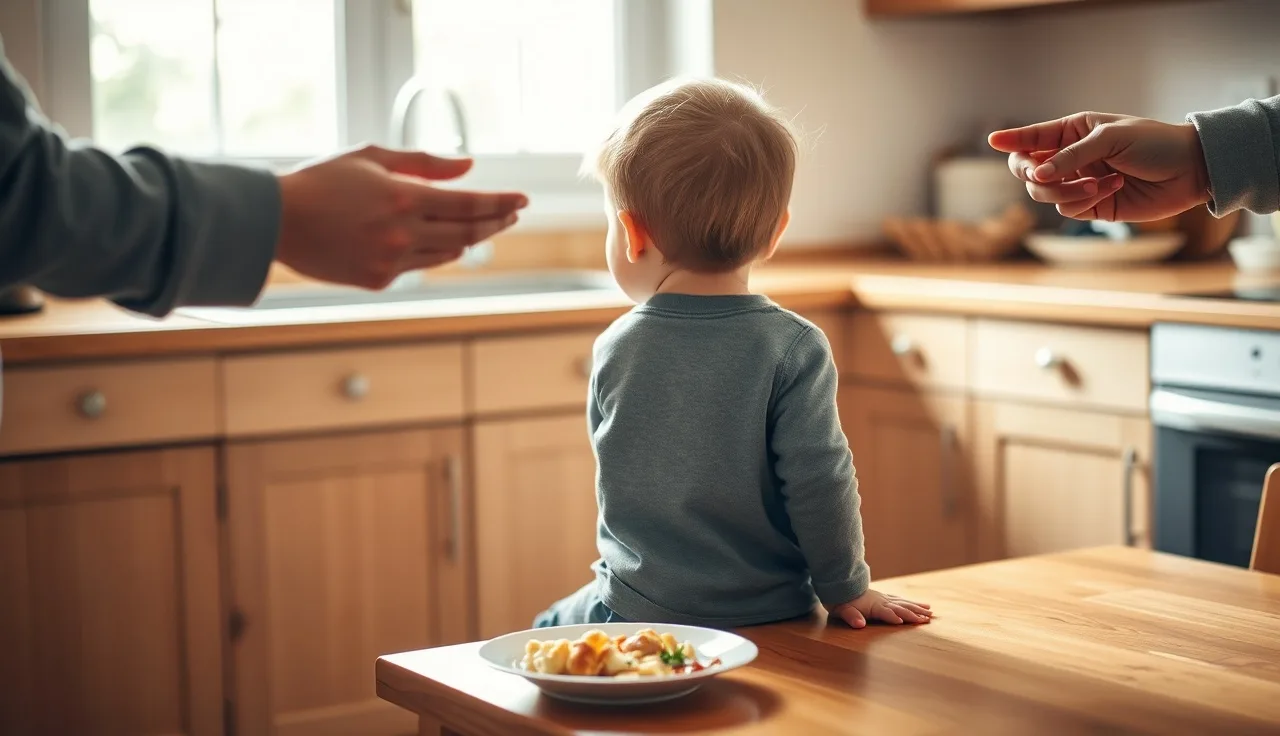
Most kids already want to say no long before they have a way to say it. A baby turns away from a spoon, pushes at your hand, cries when handed something they hate. That's rejection, and it shows up early. What's usually missing isn't the desire to refuse, it's a consistent word, sign, or symbol to carry that message. Pair the intent your child already has with one steady tool, practice it in short real moments during the day, and it clicks fast. If your child isn't talking yet, a gesture or an AAC symbol works just as well, and often speeds speech up rather than slowing it down.
Why refusal matters so much
When kids can't refuse clearly, one of two things tends to happen. Either they go along with everything, which leaves them vulnerable, or they get the point across through behavior instead: throwing, biting, screaming, bolting. Neither is a good outcome, which is why teaching a clean refusal signal is one of the highest-payoff things you can do early on.
The American Speech-Language-Hearing Association lists rejection and refusal among the core communicative functions that show up in the first year of life [1]. In kids with language delays, this function often stalls not because the intent is missing but because the form, whether that's words, signs, or symbols, hasn't caught up yet. So the real job isn't creating a desire to refuse. It's handing the child a tool that works.
What age does this usually happen?
Most typically developing kids start using "no" or a head shake as a refusal gesture between 9 and 15 months [2]. Longer phrases like "I don't want that" or "no thank you" tend to show up between 24 and 36 months, once two- and three-word combinations are steady [9].
For late talkers and kids with developmental differences, those timelines shift. A 3-year-old who isn't using words consistently might still be working on single-word refusal. A child who uses a lot of echolalia might say "I don't want that" right after you say it, without yet using it as a real request. Those are two different teaching situations.
The AAP recommends a speech-language evaluation if a child isn't using at least one word by 12 months, isn't combining words by 24 months, or loses language skills at any age [3]. If your child has no consistent way to refuse by age 2, in any form, word, sign, gesture, or symbol, mention it to your pediatrician or a speech-language pathologist.
Age matters less than function here. The real question isn't whether your 4-year-old is too old to be learning this. It's whether your child has a reliable, safe way to say no right now. If not, start today, regardless of age.
Teaching the skill, step by step
None of this needs a therapy room or special materials.
Start by picking one consistent form: a word, phrase, sign, or symbol. "No." "No thank you." "I don't want that." "All done." Choose one and stick with it for at least two weeks before introducing variations. Consistency matters more than getting it perfect.
Then create real chances to practice. Offer something you're fairly sure your child dislikes, a food they've turned down before, a toy they're bored with, during a calm stretch rather than mid-meltdown. Hold the item out and wait, three to five seconds, without jumping in to fill the silence. That's harder than it sounds; most adults rush to fill the pause, which closes the window for the child to respond first.
If nothing happens, model the target yourself: say or sign "no," "no thank you," or "I don't want that" in a calm voice, once, then remove the item right away. That removal is the payoff. The child learns that using the signal makes the unwanted thing disappear.
Honor every attempt. If your child says "no" or anything close to it, take the item away immediately and confirm it warmly: "You said no. Okay, it's gone." Don't ask them to say it more clearly, don't negotiate. In the early stages, honor the attempt every single time.
Then repeat it everywhere: snack time, bath time, getting dressed, picking activities. Practicing across different natural settings helps the word travel beyond the one situation where it first clicked [4].
What about kids who aren't talking yet?
They can absolutely still learn this, and it might be the most important point here. Refusal is a communicative function, not a speech milestone, so it doesn't require spoken words at all. Research on augmentative and alternative communication (AAC) backs this up clearly: giving a nonspeaking or minimally speaking child a reliable symbol, sign, or device to refuse doesn't slow speech down. If anything, it tends to speed it up [5]. AAC covers every method used to supplement or replace speech for people with complex communication needs [8].
For kids who aren't speaking yet, or are just starting, here are some options, roughly from easiest to introduce:
| Tool | How it works | Best for |
|---|---|---|
| Head shake | Teach a deliberate, clear head shake as a "no" signal | Kids who already do some informal version of this |
| Hand push | A gentle pushing-away gesture for an offered object | Kids who already push things away informally |
| Single sign (NO) | ASL sign for "no" (index + middle finger tap thumb) | Kids with some motor imitation ability |
| Picture card | A printed or laminated "no" or "all done" card | Kids starting to use picture exchange |
| AAC app or device | Symbol-based button the child touches to communicate refusal | Kids using or beginning AAC devices |
Whichever tool fits your child, the process stays the same: offer something unwanted, wait, model the tool, then honor the response by removing the item. And if your child has been through early intervention or sees a speech therapist, ask directly whether building a refusal function is part of the plan. It should be. If it isn't, ask why.
Won't this just teach my child to refuse everything?
It's a fair worry, but here's the reality: kids without a reliable refusal signal refuse things anyway, they just do it through problem behavior instead of words. Teaching the sign or word doesn't create more refusal. It makes the refusal that was already happening visible and manageable.
A couple of things keep it balanced. Build a strong "yes" alongside the "no": teach your child to request what they want, choose between options, show preferences. Kids with solid requesting skills tend to refuse less, simply because their needs are getting met before frustration builds.
Also, only offer choices you're actually willing to honor. If you ask "do you want green beans?" be ready for the answer to be no, and let that be fine. Offering a choice you won't respect is one of the fastest ways to teach a child that their "no" doesn't actually work.
There's a difference between teaching refusal as a skill and setting no expectations at all. Once your child uses the form reliably and you honor it consistently, you can start stretching tolerance a little: "You said no to the carrots. Okay, they stay on the plate. You don't have to eat them." That's reasonable, and it doesn't undo what you taught in the first place.
What if a child says "no" and nobody actually listens?
This matters more than the teaching itself. Research on functional communication training, the evidence-based approach behind much of this work, shows that a taught communication skill only sticks when it reliably works [6]. If a child learns to say "no" and adults override it 60 percent of the time (the carrot is healthy, the shoes have to go on, there's no time), the child learns the tool doesn't work. So they stop using it, and the old behavior comes back.
That doesn't mean every refusal gets honored forever. But during the teaching phase, which can run weeks, every refusal needs a response that acknowledges it: "You said no. I hear you." If the thing genuinely has to happen anyway, give a brief explanation and follow through gently, but never act as though the refusal didn't happen.
For kids in school, write the expectation into the IEP or behavior plan in plain language: "When [child] uses the word 'no,' the sign, or the AAC device to indicate refusal, staff will acknowledge the communication before proceeding." That protects the child's signal and gives staff a clear protocol to follow [7]. A speech therapist can help draft that language and consult with the school team, and coordinating across home and school is usually where progress actually locks in.
Does teaching refusal cut down on meltdowns?
Often, yes, and this is one of the better-studied corners of speech-language research and applied behavior analysis. Functional communication training swaps problem behavior for a communicative alternative that does the same job [10]. A meta-analysis published in the Journal of Applied Behavior Analysis found the approach effective at reducing problem behavior across dozens of studies, with refusal and escape among the most common targets [6].
The logic is simple: if a child throws a plate because that's how they say "I don't want this food," and you teach them to hand you a "no" card instead, the plate-throwing becomes pointless. The new form is easier and it works, so problem behavior often drops sharply once the communicative equivalent is in place and consistently honored.
It won't happen overnight. You're competing with a behavior that has a long track record of getting results. But it usually shifts within weeks of consistent practice, once the approach fits the child. For autistic kids especially, challenging behavior often carries a message underneath it. See autism spectrum speech therapy for how therapists work with that link.
Is this different for autistic children than for late talkers?
The goal is the same either way: a reliable, conventional signal for rejection. The path there just looks different. For late talkers without other diagnoses, the main barrier is usually that the spoken word simply hasn't arrived yet. These kids often already have the social groundwork in place, so teaching tends to be direct: model the phrase in real moments, and it often clicks within weeks.
For autistic children, a few things complicate the picture. Some have strong intent but process sensory and social information very differently, so they may miss the usual cues that signal "this is the moment for my word." They might echo the phrase you just modeled instead of using it on their own (see echolalia meaning for that distinction), or motor planning difficulties can make the physical act of speaking hard, which is where apraxia of speech comes in.
For these kids, what tends to work is more structure, more repetition across more settings, and visual supports alongside spoken language. AAC is often the right first tool, with speech building alongside it rather than being required first. The steps stay the same either way; it's the pacing and tools that need to fit the child, and a speech-language pathologist who specializes in autism can help calibrate that.
Scripts that actually hold up
Use these during the teaching moments described above. When you offer something unwanted and wait: "Do you want this? ... [3-second pause] ... No? You can say no." When you model the refusal yourself: "No. I don't want that." (then remove the item immediately). When the child approximates the refusal: "You said no! Great. It's gone. Good talking." When the child refuses through behavior instead of words: "I see you don't want that. Let's try: no." (prompt the word or sign), then remove the item after the communicative attempt, not after the behavior itself. One thing to skip: a long verbal correction mid-meltdown. "Use your words" isn't a teaching strategy, it's an instruction with nothing underneath it. Give the word, the model, the pause, and the immediate response.
If you use Little Words or another AI speech companion app, the daily practice routines are a natural place to build in refusal work, since the app creates repeated, low-pressure chances to communicate in a format a lot of kids enjoy. Try structured choice games where the child can say "no" to options they don't want.
For longer phrases, build a hierarchy: "no," then "no thank you," then "I don't want that," then eventually "I don't want that, I want [preferred item]." Each step rests on the last, so don't rush the full phrase. Get "no" solid first.
When to bring in a speech therapist
If your child is 18 months or older and has no consistent refusal signal, spoken or otherwise, see a speech-language pathologist. That's a concrete gap worth a professional's eyes, not a wait-and-see situation.
Also worth a referral: a refusal signal that only works in one setting (home but not school, or only with one parent); refusal meltdowns happening several times a day with no movement after four to six weeks of home strategies; refusal that shows up mainly as behavior with no communicative form to replace it; or a child who uses AAC but doesn't have refusal programmed into the device or prompted for it.
An SLP can map which communicative functions are already there and which are missing, build a plan matched to the child's motor, cognitive, and social profile, and coordinate with schools and other providers. Early intervention is available in every U.S. state for children under 3 at no cost to the family under IDEA Part C [7]; for children 3 and older, services shift to the school system under IDEA Part B. If you haven't connected with your state's early intervention program yet, that's the first call. Online speech therapy has grown a lot since 2020 too, and it's a real option when in-person waitlists near you are long.
A realistic timeline
Nobody has clean randomized data on this exact skill in isolation, so the honest answer is that it varies. Here's the clinical picture anyway: for a neurotypical late talker with most of the communicative groundwork already in place, a clear refusal word or sign can show up within one to three weeks of consistent, structured teaching, generalizing across settings within two to four weeks after that.
For kids with more significant language delays, or autistic kids who are minimally verbal, building a reliable refusal function might take two to four months of steady work across home and therapy. The skill often shows up in one setting first and needs deliberate work to transfer elsewhere.
What slows things down: inconsistency in honoring refusal attempts, teaching in only one setting, picking a form that's motorically too hard for the child right now, or rushing to the full phrase before the concept is solid. What speeds it up: high-motivation moments (using foods or items the child really dislikes), an immediate and consistent response every time, short sessions (five to ten focused minutes beats an unfocused hour), and everyone in the child's life using the same prompt and the same response.
Frequently asked questions
At what age should a child be able to say no or refuse things?
Most children shake their head or say "no" to refuse something between 9 and 15 months. Longer phrases like "I don't want that" usually show up between 24 and 36 months. If your child has no consistent way of refusing, spoken or otherwise, by 18 months, it's worth asking for a speech-language evaluation.
My child can say 'no' but only screams when they don't want something at school. What's happening?
Using a word at home and using it at school are two different skills. A word doesn't automatically travel from one setting to another; someone has to teach it in both places, with the adults in each spot using the same prompt and responding to it right away. Ask the school team to build refusal into the child's communication support plan, ideally written into the IEP.
Is it okay to use a picture card or AAC device instead of teaching the spoken word?
Yes. Research consistently shows AAC doesn't hold speech back and usually helps it along. If a child can't reliably say the word, a picture card, sign, or AAC device that gets the same message across works just as well. What matters is that the refusal gets communicated, not which method carries it.
What should I do if my child uses the refusal sign or word but I still need them to do the thing (like put shoes on)?
Acknowledge it first: "I hear you, you said no. I know you don't want shoes on right now." Then explain briefly why it has to happen and follow through gently. The one thing to avoid is acting like the communication never happened. Acknowledging and then proceeding anyway is not the same as ignoring; the child still learns that their signal got through, even when it doesn't change the outcome.
Could teaching my child to refuse make behavior problems worse?
No, the research on functional communication training points the other way. Teaching a child a real way to refuse cuts down on problem behavior because it gives them a more efficient route to the same message. Things get worse when you teach the signal but then don't honor it, which is why responding consistently matters so much here.
My child has childhood apraxia of speech and has trouble saying words. How do I teach refusal?
Spoken words can be physically very hard for kids with apraxia. Starting with a sign, a gesture, or an AAC symbol for refusal is often the better call. Once that's solid, speech can be layered in alongside it. A speech-language pathologist with apraxia experience can guide the motor side of this. See childhood apraxia of speech for more.
How is echolalia related to teaching refusal phrases?
Some children with echolalia will repeat "I don't want that" right after you model it, without yet using it on their own in a real moment of refusal. That's a real first step, not a sign things aren't working. Keep pairing the phrase with genuine rejection moments and honor every attempt, echoed or not. Spontaneous use tends to follow with time.
What's the difference between teaching 'no' and teaching 'I don't want that'?
"No" is a single word and the right place to start for most children. "I don't want that" carries more detail but asks more of the child. If a child is just learning to refuse, start with "no" and build from there; if they're already combining two words, the longer phrase is a fair next target. Function comes first, length comes second.
How many times a day should I practice teaching refusal?
Look for three to five natural chances a day rather than running one dedicated drill. Snack time, toy play, and getting dressed all create real rejection moments without much effort. Short, frequent practice in real situations beats longer, staged sessions: five minutes of intentional daily practice moves things faster than a 30-minute weekly drill.
My child is nonverbal and 5 years old. Is it too late to teach refusal?
No, there's no age where this stops being worth teaching. For a nonverbal 5-year-old, AAC is almost certainly the right place to start. A speech-language pathologist can help figure out which symbols and which device access method fit the child's motor and cognitive profile. This function can be built at any age.
Should I use positive reinforcement when my child says 'I don't want that'?
The reward is already built into the interaction: the unwanted thing goes away. That natural result is usually more powerful than anything else you could add. Warm praise on top is fine, but you don't need a reward chart or points system for this. Just keep the link between the communication and what happens next immediate and clear.
Who qualifies for free early intervention services in the US?
Under IDEA Part C, children from birth to age 3 with a developmental delay, or a diagnosed condition likely to cause one, qualify for early intervention at no cost to the family. Each state runs its own program, and services include speech-language therapy along with other supports. Contact your state's early intervention program to request an evaluation.
Sources
- ASHA, Communication Milestones and Communicative Functions: ASHA identifies rejection and refusal as a core communicative function that emerges in the first year of life
- CDC, Developmental Milestones: Most children use a head shake or the word 'no' as a refusal gesture between 9 and 15 months
- AAP, Language Delay: The AAP recommends referral if a child isn't using at least one word by 12 months, isn't combining words by 24 months, or loses language skills at any age
- ASHA, Principles of Generalization in Language Intervention: Multiple natural contexts help children generalize language forms past the specific situation where they were first learned
- Millar, Light & Schlosser (2006), Journal of Speech, Language, and Hearing Research, AAC and speech output: Giving nonspeaking children AAC does not slow down speech development and typically speeds it up
- Gerow et al. (2018), Journal of Applied Behavior Analysis, Meta-analysis of Functional Communication Training: FCT is effective in reducing problem behavior with communicative refusal and escape among the most common target functions
- US Department of Education, IDEA Part C Early Intervention: Under IDEA Part C, early intervention services are available in every U.S. state for children under 3 at no cost to the family
- ASHA, Augmentative and Alternative Communication overview: AAC includes all communication methods used to supplement or replace speech for people with complex communication needs
- National Institute on Deafness and Other Communication Disorders (NIDCD), Speech and Language Developmental Milestones: Multiword phrases like 'I don't want that' typically appear in the developmental window of 24 to 36 months
- Tiger, Hanley & Bruzek (2008), Behavior Analysis in Practice, Functional Communication Training review: FCT replaces problem behavior with a communicative alternative that serves the same function