Speech Activities by Age

10-Minute Speech Practice That Doesn't Require Sitting Still

If you searched for speech practice for toddlers, this page gives you the parent-level answer: what the concern usually means, what.

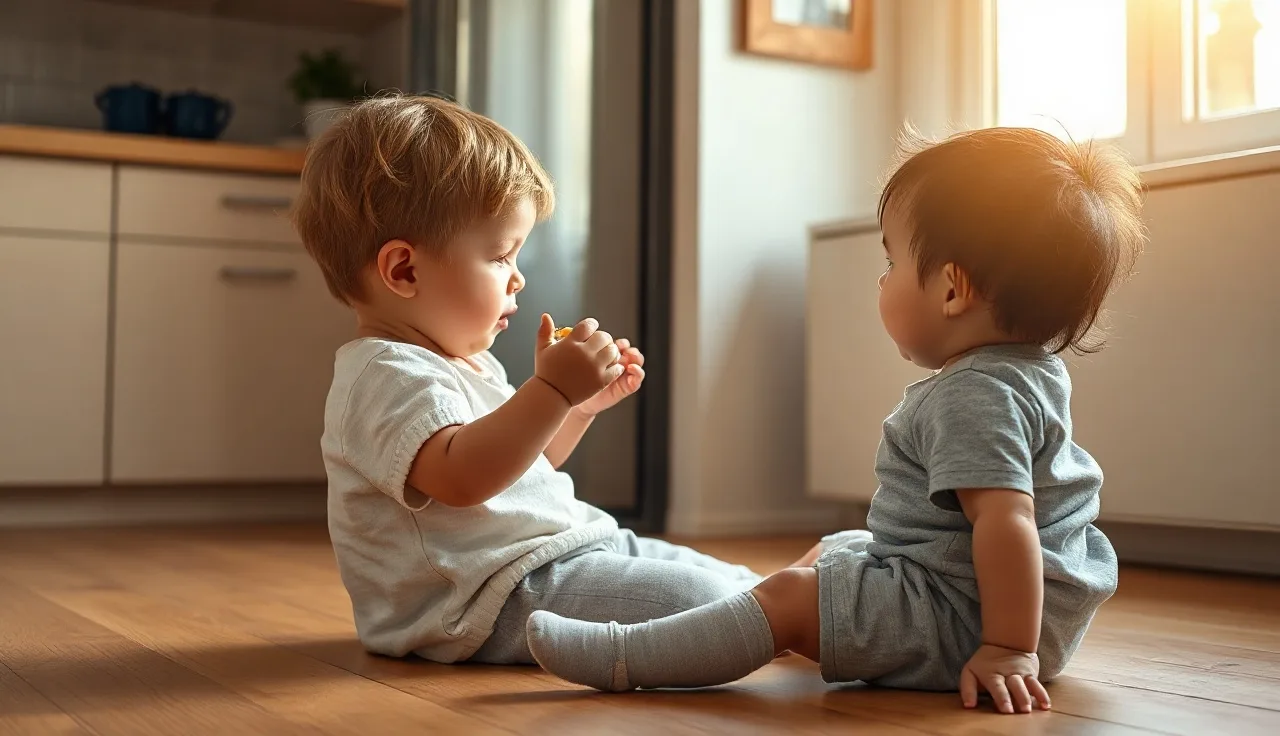
Toddler and parent practicing yes and no head gestures during snack time

Last updated 2026-07-10

TL;DR

Most toddlers shake their head for 'no' around 12 months and nod for 'yes' a bit later, by 15 to 18 months. You can teach both with consistent modeling, natural routines, and gentle physical prompting. These gestures are real communication milestones. If your child isn't gesturing at all by 12 months, talk to your pediatrician.

Why does head shaking yes and no matter for toddler communication?

Head shaking is one of the earliest ways a child communicates on purpose before words show up. The American Speech-Language-Hearing Association (ASHA) counts gestures like nodding and head shaking among the prelinguistic skills that predict later language [1]. A child who can tell you 'yes' or 'no' without words has crossed a real line. They've figured out that their body carries meaning, that communication goes two ways, and that they have some say in what happens next.

That's a big deal. It's the same idea behind pointing, waving, and showing. Research on early gesture use keeps finding that the number of different gestures a 14-month-old produces is one of the strongest predictors of vocabulary at 24 months [2]. Head shaking is part of that inventory.

For late talkers and autistic kids, a reliable head shake can cut frustration fast. A child with no way to signal refusal tends to communicate through behavior: crying, pushing, shutting down. Give them a head shake, and you give them another option. That's the practical reason this skill earns real attention.

When do most toddlers learn to shake their head no and yes?

The head shake for 'no' usually shows up around 12 months, sometimes a little sooner [3]. The nod for 'yes' comes later, typically between 15 and 18 months, because agreeing is a harder communicative act than refusing.

Here's a rough timeline drawn from CDC milestones and peer-reviewed research:

AgeExpected gesture milestone
9 monthsReaches toward desired objects, some early pointing
12 monthsHead shake for 'no', waves bye-bye, points with index finger
15 monthsNods for 'yes', points to show interest
18 monthsUses gestures and words together to communicate
24 monthsGesture use is frequent, paired with growing vocabulary

These are averages, not promises. Some kids nail 'no' at 10 months. Others don't lock it in until 14 or 15 months. The worry zone is a child with no intentional gestures at all by 12 months, or a child who loses gestures they used to have. The CDC's Learn the Signs. Act Early. program lists absence of gestures by 12 months as a flag worth raising with a doctor [3].

For autistic children, gesture development often follows a different path. Studies of early communication in autism consistently find fewer conventional gestures across age ranges compared to typically developing peers, though this varies a lot from child to child [4].

What should I do before I start teaching?

Before you run a single drill on head shaking, get three things in place.

First, your child needs enough joint attention to look at you and track what you're modeling. If they aren't yet making eye contact or sharing attention to objects, that's the real starting point, and a speech-language pathologist can help you work on it. Teaching a head shake to a child who isn't tuned in to people tends to go nowhere.

Second, watch what your child already does. Some kids shake their head 'no' reflexively to reject food or end an interaction without knowing they're communicating. Any spontaneous head movement in response to something unwanted is raw material to shape. Don't let it slide by.

Third, slow down. Teaching a gesture takes days to weeks of low-pressure exposure across everyday situations. Kids don't learn from one demonstration. They learn from dozens. That's not a problem with your child. That's how motor learning works.

Key yes/no gesture milestones at a glance Typical age ranges based on CDC and peer-reviewed developmental norms 12 Head shake 'no' typically emerges (months) 15 Head nod 'yes' typically emerges (months) 42 Gesture count at 14 months predicts later vocab… 12 No gestures by this age = discuss with Source: CDC Learn the Signs. Act Early., 2022; Iverson & Goldin-Meadow, Psychological Science, 2005

How do you teach the head shake for 'no', step by step?

The head shake for 'no' is almost always the easier one to teach first, because toddlers are wired to reject things. Use that instinct.

Step 1: Pick a reliable 'no' situation. Offer something you know your child dislikes, something genuinely unwanted, not a real preference. A food they always refuse works well. Hold it out and say clearly, 'Do you want this?' Then model the head shake yourself, slow and obvious, while saying 'No.' Say it once. Don't repeat the word five times. One clean model.

Step 2: Pause and wait. After modeling, wait about five to ten seconds. Look at your child expectantly. That pause is doing real work. It gives your child space to imitate. Fill the silence right away and you've taken away the opening.

Step 3: If they don't imitate, prompt physically. Gently guide their head side to side with your hands, then immediately remove the unwanted item. The removal is the reward. Their head shake, even a prompted one, made the thing go away. That's the lesson.

Step 4: Respond as if the communication was perfect. Say 'Oh, no! You don't want that,' and take it away. This response matters because it shows your child the gesture had a real effect. Communication worked.

Step 5: Repeat across routines. Don't stick to snack time. Use the same pattern during toy play (offering a toy they don't want), bath time, getting dressed. Variety helps the gesture generalize from one situation into a general tool.

Do this three to five times a day in natural moments. Not in a chair facing a flashcard. In real life.

How do you teach the head nod for 'yes', and why is it harder?

The nod for 'yes' is trickier for a couple of reasons. Agreeing means a child has to confirm something, which means holding the idea in mind long enough to affirm it. And 'yes' doesn't carry the same instant, tangible payoff that refusing does.

The setup that works best: offer something your child genuinely wants, then make the nod the bridge to getting it.

Hold up a favorite snack or toy. Ask, 'Do you want this?' Then model a slow, clear nod while saying 'Yes.' Pause. If your child reaches or shows any sign of wanting it, help their head nod gently. If they produce even a partial nod on their own, hand over the item immediately and with real enthusiasm. The sequence is: model the nod, pause, prompt if needed, deliver the reward.

One thing that helps: cut the physical complexity. Some children find nodding harder than head shaking because the up-down movement is less natural for toddlers than side-to-side. If your child struggles with the motor piece, note it. Real difficulty with purposeful head movements alongside other motor speech concerns is worth mentioning to your child's SLP. Our article on apraxia of speech covers motor-based speech challenges in more detail.

Expect 'yes' to take longer than 'no'. Many parents find it takes an extra two to four weeks to get a reliable nod.

What if my toddler won't imitate the head movement at all?

This is common, and it doesn't mean the approach is wrong. It usually points to one of three things.

The child hasn't developed enough imitation to copy body movements on request yet. Imitating movements in a mirror or during songs (like 'Head, Shoulders, Knees and Toes') is a useful warm-up skill. If your child can't imitate simple whole-body movements yet, build that first and gesture teaching gets much easier.

Or the child isn't reading the meaning behind your model. They see you move your head but don't connect it to anything. Tying the head shake to a very motivating 'no' situation, something they strongly dislike, helps that connection stick faster.

Or there's a motor planning piece making intentional head movement hard. Less common, but real. If a child imitates lots of other things readily but consistently can't produce the head shake even with physical prompting, flag it to a speech-language pathologist or occupational therapist.

A child with no functional imitation at all by 18 months should get an early intervention evaluation. You can request a free one through your state's Early Intervention program if your child is under 3. Our article on early intervention walks through how that works and what to expect.

Should you use a mirror, songs, or videos to teach this?

Mirrors help. Put your child in front of a mirror and model the head shake from behind them. They see your movement and their own reflection at the same time. Some children respond well to this, especially when face-to-face interaction is hard for them.

Songs with head movements, like 'Head, Shoulders, Knees and Toes' or 'If You're Happy and You Know It' with a nodding verse, build the motor pattern in a fun setting. They aren't direct communication teaching, but they make intentional head movement familiar and practiced.

Screens are a different story. The American Academy of Pediatrics advises against digital media for children under 18 months other than video chat, and there's no good evidence toddlers learn gestures from passive screen watching [5]. Your face, your hands, real situations. That's where the learning happens.

How does teaching head shaking fit into broader AAC and gesture use?

Head shaking yes and no sits inside a bigger set of nonverbal communication. Once a child has reliable 'yes' and 'no', the natural next steps are pointing to choices, using other conventional gestures like showing and giving, and pairing gestures with words or sounds. This is what speech-language pathologists mean by multimodal communication.

For children who use, or will use, augmentative and alternative communication (AAC), head shaking is often the first access method or partner-assisted navigation tool they learn. A child who can signal yes and no reliably can do partner-assisted scanning: a partner points to options, the child nods or shakes to pick. That's a genuine functional communication system, not a workaround. Our overview of aac devices explains how these systems build on the same intentional signaling that head shaking establishes.

For kids who do speak but are hard to understand, reliable yes/no gestures work as a repair tool. A child says a word, then confirms or denies a parent's guess, and communication breakdowns drop.

If your child is autistic and you're weighing both verbal and nonverbal targets, the strategies in autism spectrum speech therapy overlap heavily with what's here.

What are the signs that something more is going on?

Most parents can teach head shaking at home, and most toddlers pick it up with consistent practice. But some signals mean a professional evaluation makes sense sooner rather than later.

Red flags: no intentional gestures of any kind by 12 months; loss of gestures or communication skills the child previously had, at any age; no words at all by 16 months; no two-word combinations by 24 months; trouble imitating movements, sounds, or actions across the board [3][6]. The CDC's milestone checklists, updated in 2022 based on more representative population data, are a good reference [3].

No single flag is a diagnosis. Each is a reason to get a professional opinion. A speech-language pathologist can look at your child's full communication profile, more than gestures, and tell you whether development is on track, delayed, or following a different pattern that needs specific support. The evaluation itself is worthwhile no matter what it finds.

If your child is under three and you're in the United States, you can request a free evaluation through your state's Early Intervention program under IDEA Part C without a physician's referral, though many families go through their pediatrician first. Once eligibility is set, services can start quickly.

How long does it take to teach a toddler to reliably use yes and no gestures?

Honest answer: it varies a lot, and nobody has clean controlled-trial data on this exact question.

For a typically developing toddler in the right age window (11 to 15 months), consistent modeling a few times a day in natural routines can produce a spontaneous head shake within one to three weeks. The nod for 'yes' often follows two to six weeks after that.

For children with language delays, autism, or other developmental differences, the timeline can stretch much longer. Some families work on yes/no gestures for months before they turn truly spontaneous. That's normal and expected. The goal is consistent practice, not speed.

The Little Words app includes gesture and prelinguistic communication activities built around naturalistic practice in daily routines. If you want a structured place to start and track progress alongside what you're doing at home, the quiz at littlewords.ai/start can help you find the right starting point.

Two things reliably speed progress: making the communication functional right away (the gesture actually gets the child what they want or takes away what they don't), and keeping practice inside real daily moments instead of isolated drills.

What about children who shake their head 'no' but won't say 'no'?

Very common pattern. Nonverbal rejection often comes months before verbal rejection, and that's developmentally normal. A child shaking their head 'no' reliably has scored a communication win, not a problem.

The road to the word 'no' runs through the gesture. Keep treating the gesture as real communication ('Oh, no! You don't want that!'). Add the word 'no' yourself, clearly, every time they use the gesture, without pressuring them to repeat it. Over time, many children move from gesture to gesture-plus-sound to the word itself, on their own schedule.

If a child uses the head shake consistently but shows no movement toward words or sounds over many months, bring it up with a speech-language pathologist. The gesture is a bridge, and the question becomes why it hasn't extended further. That could be receptive language differences, apraxia of speech, hearing concerns, or other factors worth a professional look.

How do you make this work in everyday life?

A few things make the teaching go easier.

Keep it brief and natural. Two or three minutes of intentional practice spread across existing routines beats a ten-minute session you both dread. Mealtime is your friend. Offer choices several times a day and model the response.

Use real choices, not fake ones. If you're offering something the child doesn't want, make sure they genuinely don't want it. The learning depends on the gesture carrying real stakes.

Get other caregivers on board. Consistency across parents, grandparents, and childcare providers matters. If some adults model and respond to head shaking and others miss it, generalization drags out.

Track the wins. Keep a simple tally: did they use the head shake on their own today, or only when prompted? Over weeks, the ratio of spontaneous to prompted uses should shift. That shift is your evidence it's working.

For any child also getting speech therapy services, tell the SLP what you're working on. They can fold the same targets into sessions and give you feedback on what you're seeing at home.

Frequently asked questions

At what age should a toddler be able to shake their head no?

The head shake for 'no' usually appears around 12 months, though a range of 10 to 15 months is common. It's one of the early intentional gestures the CDC lists as a 12-month milestone. If your child has no intentional gestures at all by 12 months, mention it to your pediatrician. Earlier is better for referrals and evaluations.

Is it normal for toddlers to shake their head no before they say no?

Yes, completely normal. The gesture for 'no' almost always comes before the spoken word. Nonverbal communication precedes verbal communication across early language development. The head shake is a healthy sign your child understands refusal and wants to express it. Keep responding to it as real communication and keep pairing it with the word 'no' out loud yourself.

My toddler shakes their head no but never nods yes. Should I be worried?

'No' typically develops before 'yes' by weeks to months, so this pattern is expected. 'Yes' is a harder communicative act: agreeing with a proposition, rather than rejecting something. If your child uses 'no' reliably and communicates in other ways (pointing, reaching, vocalizing), that's a good sign. Keep working on 'yes' through the offered-choice method and give it more time.

Can I use physical prompting to teach head shaking, or is that too much interference?

Physical prompting is a standard, evidence-supported tool in speech and language intervention when it's gentle and faded over time. Briefly guiding your child's head through the motion right after modeling it, then responding as if it were real communication, is appropriate. The key is fading the prompt as fast as possible so the gesture becomes spontaneous instead of dependent on your hands.

Why does my toddler shake their head no even when they mean yes?

Very common and normal in early development. Some toddlers learn the motor pattern of head shaking before they fully attach it to meaning, so they use it broadly. Others go through a phase of using 'no' for everything because it's the gesture they have. Keep modeling the distinction clearly in real situations. With consistent, natural exposure, most children sort out the meaning within a few weeks.

What if my child is autistic and not imitating gestures at all?

Reduced imitation is common in autism and doesn't make gesture teaching impossible. It usually means starting even simpler, building basic imitation through games and movement activities before targeting specific gestures. Working with a speech-language pathologist who has autism experience is the most efficient path. Physical prompting paired with immediate, meaningful consequences can also work when imitation is limited.

Can teaching head shaking interfere with or delay speech?

No. This worry comes up often, but the research points the other way: a richer gesture repertoire predicts more words, not fewer. ASHA's guidance supports building all forms of communication at once. Gestures and words reinforce each other. A child who can gesture has more communicative success, which drives more communication attempts, including verbal ones.

How is teaching yes/no head shaking different from teaching AAC?

Head shaking is a natural, conventional gesture, no device needed. AAC refers to systems like picture boards, speech-generating devices, or apps that supplement communication. They aren't competing approaches. For many children, reliable yes/no head shaking is a foundation for AAC use, specifically partner-assisted scanning, where a child nods or shakes to select from options. Both are legitimate communication tools.

What if my toddler can't seem to physically control their head movements on purpose?

Difficulty with voluntary, purposeful head movement alongside other motor coordination concerns is worth flagging to your pediatrician or an occupational therapist. In a communication context, unexplained trouble imitating motor movements can sometimes point to a motor planning issue. This doesn't mean giving up on the skill. It means getting a fuller picture of what your child's motor system is doing so you can support it well.

Does my toddler need to be making eye contact before I can teach head shaking?

Not perfect eye contact, but some shared attention helps. If your child isn't looking at you at all during interactions, working on joint attention first makes gesture teaching much more efficient. That said, you can start modeling head shaking in natural situations even with minimal eye contact. Some children pick up the meaning through consistent pairing of gesture and real outcomes before eye contact develops fully.

How is this different from what a speech therapist would do?

A speech-language pathologist uses many of the same techniques: naturalistic modeling, prompting hierarchies, functional reinforcement. They also run a full communication assessment, identify any underlying concerns, and tailor targets precisely to your child. What you do at home is genuinely valuable and complements therapy. If your child is in speech therapy, share your home practice with the therapist so the approaches line up.

My child is two and still not using yes or no gestures. Is it too late?

It's not too late to teach it, but at age two with no intentional yes/no communication, a speech-language pathology evaluation is warranted. Missing consistent yes/no gestures at this age, especially with limited or unclear speech, can point to a broader communication delay that benefits from professional support. Request an evaluation through your pediatrician or directly through your state's Early Intervention program if your child is under three.

Sources

  1. ASHA, Spoken Language Disorders: Preschool Language Disorders: ASHA identifies gestures as foundational prelinguistic communication skills in early language development
  2. Iverson & Goldin-Meadow (2005), Gesture Paves the Way for Language Development, Psychological Science: Number of gestures at 14 months predicts later vocabulary; gesture-word combinations at 14 months predicted later sentence structure
  3. CDC, Learn the Signs. Act Early. Developmental Milestones: CDC lists absence of gestures such as pointing and waving by 12 months as a developmental concern warranting evaluation; head shaking is included in the 12-month gesture milestones
  4. Camaioni et al. (2003), The Transition to Intentional Communication in Normal and Late Talkers, International Journal of Language & Communication Disorders: Children with autism use fewer conventional gestures compared to typically developing peers across age ranges
  5. American Academy of Pediatrics, Media and Children: AAP advises against digital media other than video chat for children under 18 months; no evidence toddlers learn gestures from passive screen watching
  6. AAP, Developmental and Behavioral Resources for the Medical Home: AAP milestone guidance includes no words by 16 months and no two-word combinations by 24 months as developmental red flags
  7. ASHA, Augmentative and Alternative Communication Practice Portal: ASHA supports multimodal communication including gestures and AAC as complementary systems; yes/no signals are fundamental to partner-assisted scanning
  8. IDEA Part C, U.S. Department of Education, Individuals with Disabilities Education Act: IDEA Part C entitles children under 3 with developmental delays to free Early Intervention evaluations and services
  9. ASHA, Practice Portal Academic Resources: Gesture use in early development consistently precedes and predicts multiword speech
  10. CDC, Data and Statistics on Autism Spectrum Disorder: Autism prevalence data and early communication characteristics including reduced gesture use
  11. Rowe & Goldin-Meadow (2009), Differences in early gesture explain SES disparities in child vocabulary size at school entry, Science: Gesture use at 14 months predicts vocabulary at school entry; the study states 'children whose parents produced more gesture-plus-speech combinations at 14 months entered school knowing more words'
Little Words is a talk-with-Buddy app built for kids like yours.

Buddy is a voice-first speech companion your child actually talks to, made for late talkers and neurodivergent kids. It is free to download on the App Store.

Download on the App Store