Speech Activities by Age

10-Minute Speech Practice That Doesn't Require Sitting Still

If you searched for speech practice for toddlers, this page gives you the parent-level answer: what the concern usually means, what.

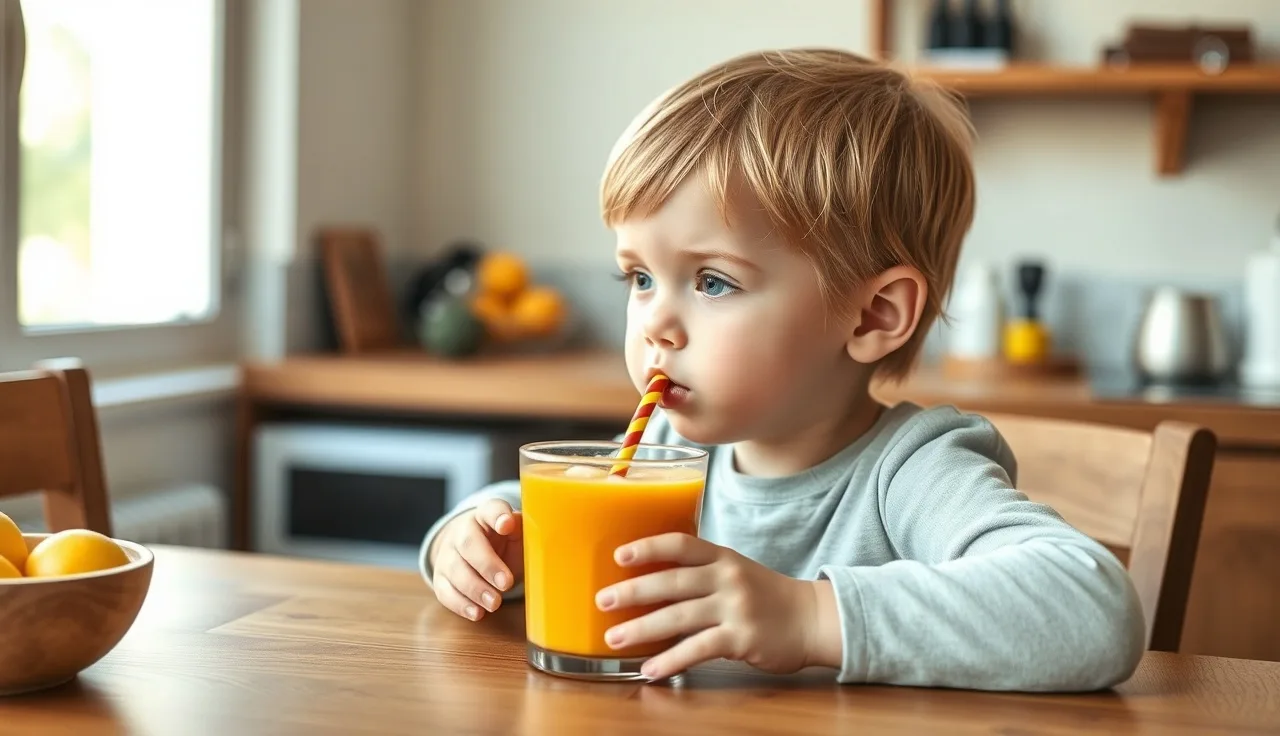
Young child practicing sucking through a wide straw in a smoothie cup

Last updated 2026-07-11

TL;DR

Straw drinking and straw blowing train the lips, tongue, cheeks, and breath pressure kids need for clearer speech. Start with thick liquid through a wide straw, then narrow the straw and thin the liquid as strength grows. Straws build the muscles under speech, not the sounds themselves. A speech-language pathologist should guide kids with real delays.

Do straw exercises actually help with speech?

They can help, but not the way most Instagram reels promise. Straws build the muscle coordination and breath control under drinking, feeding, and mouth awareness. They do not directly install a clean /s/. The American Speech-Language-Hearing Association (ASHA) treats the evidence for non-speech oral motor exercises (NSOMEs) improving speech sound production as mixed at best [1].

The strongest claim, that straw work "fixes speech sounds," has almost no controlled data behind it. A 2009 systematic review by McCauley, Strand, Lof, Schooling, and Frymark in the American Journal of Speech-Language Pathology found "no published studies with strong evidence" supporting NSOMEs for improving speech intelligibility [2]. That's still the field's read today.

So why is there a bin of straws in nearly every pediatric therapy room? Because for a kid with weak lip closure, poor jaw grading, or thin breath support, a straw is a concrete, playful way to work those structures while doing something functional: drinking. The logic runs indirect. Straw practice builds a stronger lip seal, and a stronger lip seal makes certain sounds easier to shape over months. It works best next to real speech practice, never instead of it.

If your child has a diagnosis like childhood apraxia of speech or any feeding disorder, get a formal evaluation before you start an oral motor program at home. Straws are low-risk. They are not risk-free for kids with certain swallowing issues.

What oral motor skills do straws actually build?

Done on purpose, straw use trains a specific short list of structures. None of them is a shortcut to one sound. They are the raw capacities that make mouth movement easier to learn.

Lip rounding and lip seal. Closing the lips around a straw and holding them there fires the orbicularis oris muscle in a coordinated way. Kids who breathe through their mouths, or whose lips rest open at baseline, tend to have weak lip closure. Straw drinking gives them low-stakes reps.

Cheek and buccinator control. Sucking makes negative pressure inside the mouth, and the cheeks help create and hold it. Feeding therapy literature ties cheek strength and coordination to managing a food bolus in the mouth [3]. Narrower straws and thicker liquid demand more of the buccinator.

Tongue retraction and elevation. To suck, the tongue tip usually lifts and the tongue body pulls back to build the pressure gradient. That's close to the tongue position behind /l/, /t/, /d/, and /n/.

Graded jaw opening. The jaw has to open just enough around a straw and no more. This "jaw grading" is a skill many late talkers and kids with low tone haven't fully built [4].

Breath support and control. Blowing through a straw, rather than sucking, trains the steady exhale speech runs on. Every word rides outgoing air. Kids who run out of breath mid-sentence, or can't hold a voiced sound, often warm up well with blowing.

What kind of straw should you start with?

Straw choice matters more than parents expect. Two things drive difficulty: bore diameter (the width of the hole) and length. Wide and short is easy, because it needs less suction. Narrow and long is hard, because the child has to build and hold more negative pressure.

Straw typeBore diameter (approx.)Best for
Wide smoothie straw9-12 mmBeginners, low muscle tone, first straw attempts
Standard plastic drinking straw5-6 mmTypical starting point once child can seal lips
Coffee stirrer straw3-4 mmAdvanced sucking work, thinner liquids
Therapeutic straw (e.g., Bear straw, Honey Bear bottle)Varies (usually 4-5 mm)Controlled therapy context; bottle can be squeezed to assist [5]
Cocktail/short straw5-6 mm, cut to 4-6 cmHarder than a full-length straw of same diameter

For most beginners, a wide smoothie straw with a thick liquid (smoothie, yogurt drink, or nectar-thick liquid) is the entry point. Thick liquid moves slowly, so the child gets more sensory feedback and more time to feel what the mouth is doing.

Once the child sucks through a wide straw consistently, without biting it, crushing it, or falling into a tongue-thrust pattern, move to a standard straw and thin the liquid. This takes weeks to months. Not one session.

Straw difficulty progression: approximate suction demand by straw type Wider bore and shorter length = lower suction demand. Progress one variable at a time. Wide smoothie straw (10 mm bore) 1 Honey Bear straw w/ squeeze assist 2 Standard drinking straw (5-6 mm) 4 Short straw cut to 5 cm (5-6 mm) 6 Coffee stirrer (3-4 mm, full leng… 8 Source: Overland & Merkel-Walsh, A Sensory Motor Approach to Feeding, 2013; clinical convention

How do you actually do straw exercises at home?

Here's a progression you can run at home between therapy sessions. Check with your child's speech-language pathologist (SLP) first, especially with a feeding history, a swallowing concern, or significant low tone [4].

Step 1: Introduce the straw dry. Let the child hold it, blow through it onto their hand to feel the air, and blow a cotton ball across a table. This splits the lip seal and blowing from any fear of getting liquid.

Step 2: Dip-and-sip. Dip the straw into a liquid they like, cap the top with your finger like a pipette, and bring it to their lips. Lift your finger so a little liquid drops in. They get rewarded for lip contact without having to generate suction yet.

Step 3: Honey Bear bottle or squeeze cup. A Honey Bear bottle is a small bear-shaped plastic bottle with a straw in the lid. Squeeze it gently to send liquid up toward the child's lips, then ease off as they take over the sucking. SLP Lori Overland popularized this in feeding therapy, and it's in wide clinical use, though controlled data on it specifically is thin [5].

Step 4: Wide straw, thick liquid, on their own. Target 5 to 10 good sucks per session, twice a day. Keep sessions to 3 to 5 minutes, tucked into snack or mealtime, not run as a separate drill.

Step 5: Change one variable at a time. Never narrow the straw and thin the liquid in the same step. Thin the liquid, keep the wide straw. Narrow the straw, keep the thick liquid. Move up only when the child succeeds on 80 percent or more of attempts without frustration.

Step 6: Add blowing games. Blow bubbles into a cup of water with a straw. Race a pompom across the table. Blow out birthday candles, real or battery-powered. Keep blowing to 1 to 2 minutes so young kids don't hyperventilate.

If your child is also working on speech sounds, the SLP may pair straw blowing with phonemes that use similar airflow, like /f/, /v/, /s/, or /sh/. That link is contextual. Let the therapist set it, don't assume it at home.

At what age can a child start using a straw?

Typically developing kids can learn straw drinking between 9 and 15 months, and many pediatric feeding specialists treat 12 months as a reasonable target [6]. The American Academy of Pediatrics (AAP) recommends moving from bottles toward open cups and straw cups around 12 months [6]. Part of that is oral motor growth. Part is limiting prolonged bottle use, which affects the teeth and jaw.

For kids with developmental delays, low tone, or autism, the timeline runs later, and that's fine. A 2-year-old or 4-year-old learning straw drinking for the first time comes to no developmental harm. The harm is skipping the skill entirely and never building the muscle under it.

If your child is past 18 months and not trying straw drinking, raise it at the next pediatric visit. AAP developmental surveillance flags feeding skills right alongside communication milestones [9]. An early intervention evaluation, free under IDEA Part C for children under 3, can look at both. See early intervention.

For babies under 6 months, straw work isn't appropriate. Their oral patterns are built around the suck-swallow-breathe cycle for the bottle or breast, which moves differently from straw drinking.

Can straw exercises help kids with autism or sensory sensitivities?

Yes, with modifications and patience. Many autistic children have oral sensory sensitivities that make new textures, pressures, and mouth experiences feel aversive [8]. A child with a strong oral aversion needs slow desensitization before a straw ever touches their lips.

Start with the straw just present at meals, no expectation attached. Then let the child hold it, tap it to their own lips on their own terms, blow through it, and eventually sip. This can take days or weeks. Rushing it usually backfires and deepens the aversion.

Flavored straws (strawberry, grape) can help, because the smell and taste give the child something familiar to orient toward. Some kids do better with silicone straws than plastic because the texture is softer.

For a wider look at communication approaches, see autism spectrum speech therapy. If oral aversion is severe enough to shrink eating variety or slow weight gain, that's feeding therapy territory and deserves a full evaluation by an SLP with feeding specialization, often alongside an occupational therapist.

The speech therapy speech therapist guide walks through how to find a therapist with feeding experience if you're not sure where to begin.

How do straw exercises fit into a broader speech therapy plan?

Straw work is a small piece of a bigger picture. For a late talker or a kid with a speech sound disorder, most therapy time should go to actual communication: imitating words, building vocabulary, drilling target sounds in syllables and words, and using language for real reasons [1].

Treat straw work as a warm-up or a companion to feeding therapy, not the main event. A sane home plan might run 3 to 5 minutes of straw practice during snack, then 10 to 15 minutes of speech sound play or language-rich play built on the therapist's targets.

If an SLP recommends 30 minutes of straw exercises a day with no speech practice attached, that's worth a hard conversation. The evidence for that approach is weak, and the opportunity cost, meaning time not spent on real communication, is real [2]. Lof and Watson's 2008 national survey documented how common NSOMEs are in practice despite that thin evidence base [10].

For kids with apraxia of speech, the core problem is motor planning, and intensive speech-movement practice (not oral motor drill) is the evidence-based route. Straw work might serve as a sensory warm-up. It shouldn't stand in for apraxia-specific intervention.

Want guided at-home practice between sessions? The Little Words app has structured speech activities built around what pediatric SLPs actually use. Start a quick quiz to see which activities match your child's current level.

What if my child bites, chews, or crushes the straw instead of sucking?

Common, and it tells you something useful. Biting usually means the child is swapping jaw closure in for lip seal and suction. The oral pattern hasn't come online yet, so they solve the problem with the stronger structure. Young jaw muscles are powerful.

Three fixes help. First, try a firmer straw. Standard plastic crumples under a bite; a silicone or thick-walled reusable straw pushes back and gives clearer proprioceptive feedback, which can actually cut the biting. Second, use dip-and-sip or the Honey Bear method so the child doesn't have to make suction at all early on. Third, physically guide the lips closed around the straw before you offer liquid, and reinforce that lip-closed moment before a bite can happen.

If biting sticks around after several weeks of steady practice, flag it with your SLP. A persistent jaw-dominant pattern can point to hypersensitivity, low tone, or a motor planning issue that needs a direct look.

Are there risks to straw exercises I should know about?

For most healthy kids, straw exercises are low-risk. A few real caveats.

Children with dysphagia (swallowing difficulty) need a formal swallow evaluation before any straw work. Thin liquid through a narrow straw can be aspirated (enter the airway) by kids with pharyngeal weakness or an uncoordinated swallow. Aspiration is sometimes silent, meaning no cough [3]. If your child has a history of repeated chest infections, frequent coughing or choking at meals, or a wet, gurgly voice after drinking, talk to your pediatrician before starting any straw program.

Hyperventilation is a small but real risk with blowing games. Keep blowing under 2 minutes for kids under 3. If a child looks dizzy, flushed, or reports tingling, stop and let them breathe normally.

Dental worries are minimal with typical use, though orthodontists sometimes advise against habitual straw use for kids with specific bite problems. If there's an active orthodontic concern, ask the orthodontist.

One more. If straw practice starts to feel like a punishment or a test, the child builds negative associations with oral activity that spread to mealtimes. Keep it playful, keep it short, and end on a win.

How long does it take to see results from straw exercises?

Honest answer: nobody has clean controlled data on this exact question for speech outcomes. The closest evidence is case series and clinical reports in feeding therapy, where children with mild to moderate oral motor difficulty often show measurable gains in sucking strength and lip seal within 4 to 8 weeks of steady daily practice [5].

Speech outcomes take longer and are harder to pin on straw work alone, because many things move at once: therapy, maturation, language exposure. Most SLPs working with late talkers expect meaningful gains in overall communication across 3 to 6 months of consistent intervention, with oral motor exercises as a supporting piece [1].

Markers you can watch at home: the child sucks through a progressively narrower straw without biting, holds a lip seal longer without losing it, blows a steady stream of air through the straw for 3 to 5 seconds, and shows less cheek dimpling during sucking (a sign they're making intraoral pressure more efficiently).

See none of those after 6 to 8 weeks of consistent practice? Bring the program to your SLP. It may need a tweak, or there may be a structural or sensory issue worth a closer evaluation.

Where can I learn more or get professional support?

Your best first move is an evaluation by a licensed speech-language pathologist with pediatric feeding experience. ASHA's "Find a Professional" directory at asha.org lets you filter by pediatrics and feeding or swallowing specialty [1].

For children under 3 who haven't been evaluated, the Individuals with Disabilities Education Act (IDEA) Part C entitles families to a free multidisciplinary early intervention evaluation, communication and feeding included. Contact your state's early intervention program to request one [7].

For children 3 and older, school-based speech services fall under IDEA Part B if the speech-language delay affects educational performance. That threshold matters: school SLPs judge educational impact, not medical need, so a child with feeding concerns alone may need a private evaluation.

Want guided at-home practice between sessions? The Little Words app runs activities aligned with what pediatric SLPs use in real sessions. Take the short quiz to find ones matched to your child's stage.

For related reading, online speech therapy covers telehealth, which has expanded a lot since 2020 and is now available in most states.

Frequently asked questions

Can straw drinking really improve my child's speech sounds?

Indirectly and partially, yes. Straw work builds lip seal, cheek strength, and breath control that support speech, but it does not directly teach phonemes. ASHA's review of the evidence found non-speech oral motor exercises alone do not reliably improve speech intelligibility. Straw practice works best as one piece of a broader program that also includes real speech sound practice.

What age should my child start learning to drink from a straw?

Most children learn straw drinking between 9 and 15 months. The American Academy of Pediatrics recommends moving to straw cups or open cups around 12 months as part of leaving the bottle behind. Children with developmental delays may learn later, and that's okay. There's no developmental harm in teaching straw drinking at 2 or 3 years old if it was missed earlier.

My child bites the straw instead of sucking. What should I do?

Biting means your child is using jaw strength instead of lip seal and suction. Try a firmer silicone or thick-walled straw that resists biting and gives better proprioceptive feedback. Use dip-and-sip or a Honey Bear bottle to cut the suction demand at first. If biting sticks around after several weeks of daily practice, mention it to your speech-language pathologist for direct assessment.

Is there a specific type of straw that speech therapists recommend?

For beginners, a wide smoothie straw (9 to 12 mm bore) with a thick liquid is the standard start. As the child builds strength, therapists move to narrower straws and thinner liquids, changing only one variable at a time. Honey Bear bottles with attached straws are widely used in feeding therapy because you can squeeze the bottle to assist the child until they develop independent suction.

How often should we do straw exercises?

Short daily practice during natural drink times (snack, meals) beats long separate sessions. Aim for 3 to 10 good sucks or blowing attempts per session, two to three times a day, built into routine rather than imposed as a drill. Consistency matters more than duration. Sessions over 5 minutes rarely add benefit and raise the odds of fatigue or frustration.

Can blowing through a straw help with speech?

Blowing builds the steady outgoing breath speech rides on. It's useful as a warm-up for kids with weak breath support or who run out of air mid-sentence. Blowing does not directly teach specific sounds, but games like racing a pompom across a table or making bubbles in a cup are engaging and train the same respiratory muscles used in voicing.

Are straw exercises safe for a child with a swallowing problem?

Not necessarily. Children with dysphagia can silently aspirate thin liquids, meaning liquid enters the airway without a cough. If your child has a history of repeated chest infections, a wet or gurgly voice after drinking, or frequent choking at meals, get a formal swallow evaluation before starting any straw program. A pediatric SLP can assess swallowing safety.

My toddler with autism refuses to put a straw to their lips. How do I start?

Start with no expectation of sucking at all. Let the straw sit at meals for several days with no demand. Then let the child hold it, blow through it, and touch it to their own lips on their own terms. Flavored or novelty straws can lower resistance. Desensitization before skill building is the right order for kids with oral aversions, even when it takes weeks.

Does my child need a speech therapist to do straw exercises, or can I do them at home?

Basic straw introduction (wide straw, thick liquid, short sessions) is safe for most parents to try at home. But if your child has a feeding history, significant motor delays, oral aversion, or a swallowing concern, an SLP evaluation first is strongly advisable. Home straw practice works best as a complement to therapy, not a replacement, especially for children with identified delays.

How is straw work different from using a pacifier or a bottle for oral motor development?

Bottles and pacifiers train a forward tongue pattern, where the tongue pushes toward the nipple. Straw drinking trains tongue retraction and lip rounding, which are closer to the patterns used in speech. The American Academy of Pediatrics recommends phasing out bottles by 12 to 18 months partly for this reason, since prolonged bottle use can reinforce tongue-thrust patterns that get in the way of sound development.

What is the Honey Bear bottle technique and does it work?

The Honey Bear bottle is a small bear-shaped plastic bottle with a lid modified to hold a straw. A therapist or parent squeezes it gently to push liquid up the straw to the child's lips, then eases off so the child supplies more of the suction over time. It was popularized in pediatric feeding therapy and is widely used. Controlled trial data on the technique specifically is thin, but therapist reports and case series support it for introducing straw drinking.

Can straw exercises help a late talker even before they are saying words?

They can build the oral motor foundation, but they won't replace the language-rich interaction late talkers need most. ASHA's guidance is clear that for children with language delays, the highest-value work is actual communication: joint attention, modeling words, responding to communicative attempts. Straw work is a reasonable addition but shouldn't take time from language-focused activities or therapy.

How do I know if my child is making progress with straw exercises?

Watch for these signs: the child sucks through progressively narrower straws, lip seal lasts longer without breaking, the child blows a steady stream through the straw for several seconds, and biting or tongue thrusting around the straw drops off. If you see no change in these markers after 6 to 8 weeks of consistent daily practice, talk to your speech-language pathologist about adjusting the program.

Are there any risks to having my child do blowing exercises through a straw?

The main practical risk for young kids is hyperventilation from too much sustained blowing. Keep blowing games under 2 minutes for children under 3, and stop if the child looks flushed, dizzy, or reports tingling. For children with specific respiratory or cardiac conditions, check with your pediatrician first. For the typical preschooler, short straw-blowing games like bubble making are very low risk.

Sources

  1. American Speech-Language-Hearing Association (ASHA), Oral Motor Treatment: ASHA's position that evidence for non-speech oral motor exercises improving speech production is mixed and that the primary focus of speech therapy should be on actual communication practice
  2. McCauley et al., American Journal of Speech-Language Pathology (2009), Evidence-Based Systematic Review: Effects of Nonspeech Oral Motor Exercises on Speech: Systematic review concluding 'no published studies with strong evidence' supported non-speech oral motor exercises for improving speech intelligibility
  3. ASHA, Dysphagia and Swallowing Disorders in Children: Cheek and buccinator muscle coordination link to bolus management and risk of silent aspiration in children with pharyngeal weakness
  4. ASHA, Pediatric Feeding and Swallowing Evidence Map: Jaw grading and low muscle tone as feeding and oral motor challenges in children with developmental delays requiring SLP evaluation
  5. Overland L & Merkel-Walsh R, A Sensory Motor Approach to Feeding (2013), TalkTools: Honey Bear bottle technique for graduated straw introduction in pediatric feeding therapy; 4-8 week clinical improvement timeline for mild-moderate oral motor difficulties
  6. American Academy of Pediatrics (AAP), Infant and Toddler Nutrition: Drinks: AAP recommendation to transition from bottles to open or straw cups around 12 months; typical straw drinking development between 9 and 15 months
  7. U.S. Department of Education, IDEA Part C Early Intervention: IDEA Part C entitles children under 3 to free multidisciplinary early intervention evaluations including communication and feeding assessment
  8. Marco EJ et al., Sensory processing in autism: a review of neurophysiologic findings (2011), Pediatric Research: Oral sensory sensitivities in autistic children making new textures, pressures, and mouth experiences aversive; prevalence of sensory differences in autism
  9. American Academy of Pediatrics, Developmental Surveillance and Screening: AAP developmental surveillance guidelines flag feeding skills alongside communication milestones at well-child visits
  10. Lof GL & Watson MM, A nationwide survey of nonspeech oral motor exercise use: implications for evidence-based practice (2008), Language Speech and Hearing Services in Schools: Wide clinical use of oral motor exercises in speech therapy despite limited strong evidence; context for the ongoing debate about NSOMEs in pediatric practice
Little Words is a talk-with-Buddy app built for kids like yours.

Buddy is a voice-first speech companion your child actually talks to, made for late talkers and neurodivergent kids. It is free to download on the App Store.

Download on the App Store