Last updated 2026-07-09
Most kids start making the /l/ sound around age 3 and have it nailed down in all word positions by age 6, though some references stretch that upper limit to 7 [1]. Teaching it comes down to tongue placement first (tip up, resting on the ridge behind the top front teeth), then working outward from the isolated sound to syllables, words, phrases, and eventually real conversation.
When should kids be able to say the /l/ sound?
Most developmental charts put /l/ as emerging around age 3 and mastered across all word positions by age 6 [1]. The American Speech-Language-Hearing Association notes that later sounds like /l/, /r/, /s/, and /z/ show the most disagreement between research studies, so some references cite age 5 as the upper edge of normal and others cite age 7 [1].
Here's the rule of thumb most SLPs actually use in the room: if a child still swaps /w/ or /y/ for /l/ after age 6 ("wion" for lion, "yeg" for leg), it's worth a formal evaluation. That doesn't mean something is broken. It means the sound is late enough that a speech-language pathologist can make a confident call on whether therapy is worth doing. Kids who have a speech delay or who are getting early intervention speech and language therapy sometimes trail further on /l/ simply because their whole sound system got a later start. That's expected, and it doesn't change the target or the practice sequence at all. One number worth remembering: a 2018 meta-analysis by McLeod and Crowe in the American Journal of Speech-Language Pathology reviewed 27 studies across 17 languages and found that 90% of English-speaking children produced /l/ correctly by age 6;0 [2]. That 90% mark is what most diagnosticians lean on.
Why the /l/ sound trips kids up
/l/ is a lateral approximant: the tongue tip lifts and presses the alveolar ridge (that bumpy shelf just behind the upper front teeth) while the sides of the tongue drop and let air spill out around them. That's a lot of precise motor work packed into a small mouth. The most common error is gliding, swapping /l/ for /w/ or /y/, so "lake" becomes "wake" and "lion" becomes "yion." It happens because /w/ and /y/ show up earlier in development and need far less tongue lift, so the brain takes the shortcut. A second common error is vocalization, where the child drops in a vowel instead, saying "ay-ion" for lion. This shows up a lot in blends (words like "blue," "flag," or "play"), where the /l/ rides behind another consonant and the motor load climbs even higher. Autistic children sometimes look different here. Their errors can shift from attempt to attempt, which can mimic childhood apraxia of speech rather than a plain phonological delay. If the same word comes out three different ways on three tries, mention it to an SLP who works in autism spectrum speech therapy, since that kind of inconsistency points more toward a motor-planning problem than a phonological one [3].
What correct /l/ placement actually looks like
Most parent guides say "put your tongue behind your teeth" and leave it there. Here's the rest of it. The tongue tip touches the alveolar ridge, the raised bumpy strip directly behind the upper front teeth: not the teeth themselves, and not further back on the roof of the mouth. The sides of the tongue drop and stay low. Lips stay a little open and relaxed, never rounded. Voicing is on the whole time, since /l/ is a voiced sound. A quick test: have your child rest a finger on their throat while making the sound. They should feel a buzz. No buzz usually means they're whispering it, or sneaking in a /w/ instead. For kids who can't land that placement from words alone, tactile cues help. Dip a cotton swab lightly in peanut butter or cream cheese and dab a bit on the alveolar ridge, then ask the child to touch that spot with their tongue tip. That physical target gives the tongue somewhere to aim, and it's a real clinical tool SLPs have used for decades (check for allergies first). Once the tip stays up, add voice: "hum while your tongue is up there." That hum is basically /l/, and a long, held "llllll" tells you the placement is locked in.
The practice sequence that actually works
Speech therapy for any sound climbs a ladder from simple to complex, and skipping rungs is the number one reason home practice stalls out. Start with isolation: the child holds a sustained /l/ on its own, "llllll," no word or syllable attached, just the sound. You want consistent, correct placement here rather than speed. From there, move to syllables: CV combinations like "la, lee, lo, lu, lay," then VC syllables with /l/ at the end, like "al, eel, ol, ul." Drill until accuracy passes 80% before moving up. Next comes words, sorted by position. Initial position (word start) is usually easiest: lamp, leaf, lip, log, love. Final position (word end) comes next: ball, bell, hill, mail, pool. Medial position (middle of the word) is often the hardest: hello, follow, yellow, balloon, pillow. Once words are solid, minimal pairs sharpen things further. If a child says "wing" for "ling," run wing versus ling back to back. This builds phonological awareness and helps the ear catch the difference. Then move into phrases and sentences, "The lamp is on," "I love lemonade," starting with carrier phrases (same frame, one changing /l/ word) to keep the mental load light. After that comes structured conversation: pick a topic the child loves and box in the vocabulary. A kid obsessed with Legos can hit dozens of /l/ words in one natural chat, "Let's look at this little piece, I'll put it on the left leg." The last rung, generalization, is the one most home programs skip. The child has to use /l/ correctly in spontaneous speech with no reminder. That takes time and usually needs cues faded on purpose, so don't call it a win just because they nail "lion" on a flashcard.
Words to practice at each level
Below is a word list sorted by position and rough difficulty. These aren't random picks: they're high-frequency words your child meets every day, and they hit the error patterns /l/ tends to trip over.
| Position | Easy | Medium | Harder |
|---|---|---|---|
| Initial | lamp, leaf, leg, lip, log | lemon, lizard, ladder, laundry | library, lightning, lollipop |
| Final | ball, bell, hill, mail, tall | animal, bottle, candle, puzzle | beautiful, hospital, principal |
| Medial | hello, yellow | balloon, follow, pillow, silly | lollipop, umbrella, caterpillar |
| Blends (initial) | blue, fly, play | black, flag, sleep | blizzard, flashlight, playground |
| Blends (final) | old, help, milk | belt, melt, salt | bulb, elm, film |
A note on blends: /l/ blends (bl, cl, fl, gl, pl, sl) come in later than singleton /l/ and shouldn't be the starting line. Most SLPs hold off on blends until singleton /l/ sits at 80% accuracy or better across all positions. If your child is in speech therapy for kids and blends keep showing up in homework early, ask the therapist exactly where they belong in the sequence. If you're also working on th words for speech therapy, don't stack the two sounds in one session. The tongue positions differ enough that mixing them early tends to breed confusion rather than accuracy.
How /l/ differs from other late sounds like /th/
Parents ask about /l/ and /th/ together because both land in therapy around the same age, but they work very differently and get taught differently too. The /th/ sounds (voiced as in "the," voiceless as in "think") need the tongue tip to poke between or touch the back of the upper front teeth. /l/ needs the tongue tip up and back on the alveolar ridge instead. One goes forward, the other goes up. On timing, voiced /th/ ("the") usually emerges around age 4 to 5, and voiceless /th/ ("think") around age 5 to 7, putting both in late-sound territory alongside /l/ [2]. The error patterns split too: kids usually swap /f/ for voiceless /th/ ("fink" for "think") or /d/ for voiced /th/ ("dis" for "this"), not the gliding you see with /l/. When a child misses on both sounds, most SLPs choose based on stimulability (can the child make the sound at all with maximum cues?) and functional impact (which error muddies daily communication more?). There's no single right order: some therapists run both at once as separate targets, others do one and then the other, and the research doesn't clearly favor either route for kids without other conditions [4]. For a full breakdown of that sound, see our guide to th words for speech therapy.
How many minutes a day should a child practice L words at home?
There's less research on this than you'd expect. Most studies look at how much therapy happens in the clinic, not what parents actually do at the kitchen table after dinner.
What we do know: shorter sessions spread across more days beat one long block, because speech production is a motor skill and motor learning works better in distributed doses [5]. Ten focused minutes five days a week will almost always generalize faster than one 50-minute Saturday marathon.
Most SLPs suggest 5 to 15 minutes of structured home practice a day, on top of (not instead of) the casual talking that happens over meals and play. Structured means a set activity, a target word list, feedback from you, and a clear start and stop. For little ones between 3 and 5, cap it at 5 minutes since boredom and frustration actively wreck motor learning at that age. School-age kids can usually handle 10 to 15 minutes. Either way, stop before fatigue sets in. A session that ends in tears does real harm: it pairs the sound with a bad feeling and pushes the child toward avoiding it altogether.
If you want something to fill the gaps between therapy sessions, tools like Little Words give kids structured, game-like practice they'll actually sit through. No app replaces a trained clinician telling you whether the placement is truly correct, though.
What techniques do SLPs actually use to teach the /l/ sound?
Knowing the techniques lets you copy them at home and helps you judge whether what you're seeing in a session makes sense.
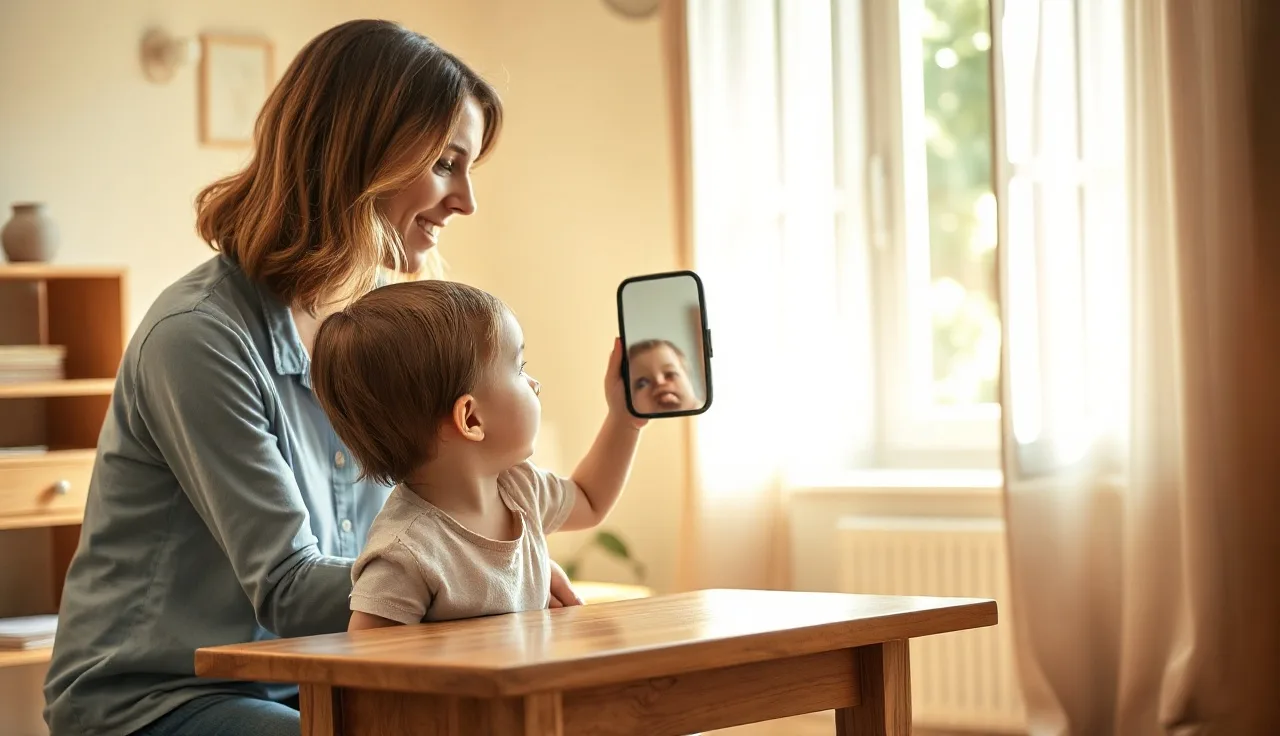
Phonetic placement instruction is the base layer: the clinician shows correct tongue placement, often with a mirror so the child can watch their own mouth. Tactile cuing goes a step further, placing a target like food or a tongue-depressor tap on the alveolar ridge so the tongue has a physical goal to reach for. This helps kids who struggle to turn verbal instructions into actual movement.
Auditory bombardment is different from drilling: the clinician reads a list of /l/ words while the child just listens, sometimes with slight amplification, to prime the ear to notice the sound. Work by Hodson and Paden suggests this speeds up how fast a child internalizes a target pattern [6]. Minimal pair contrast therapy has the child sort pictures into two piles (lamp versus wamp, lake versus wake), hear the clinician model the difference, then produce both. It works especially well when the errors are phonological rather than motor.
For kids with inconsistent errors, as in childhood apraxia, the core vocabulary approach drills a small set of personally meaningful words to automaticity before adding more, starting with something like "mom," "more," "mine" before moving to /l/ words. And when a child can't make /l/ at all, clinicians use successive approximation (shaping): rewarding any tongue lift, then rewarding closer and closer attempts until the full sound appears. It's operant conditioning applied to speech, and it works.
Kids with more layered profiles usually need several of these blended into one session rather than just one approach, which is typical of how pediatric speech therapy is run in practice.
Does a child need a formal diagnosis to get speech therapy for /l/ errors?
No. In most U.S. states a parent can request a speech-language evaluation with no physician referral, and a child needs no medical diagnosis to receive speech therapy [7].
For kids age 3 and up, the Individuals with Disabilities Education Act (IDEA) entitles eligible children to free speech-language services through their public school when the speech sound disorder hurts educational performance [8]. A school SLP can evaluate and, if the child qualifies, provide services at no cost to the family. For children under 3, early intervention programs under IDEA Part C provide evaluations and services free or on a sliding scale by income [8]. An isolated /l/ error alone probably won't qualify a child under 3, since /l/ isn't expected that early anyway, but if it's part of a wider speech delay, it likely will.
Private insurance is a different story and swings hard by state and plan. IDEA governs school-based services, but private coverage depends entirely on how your plan classifies speech-language work. Some plans cover medically necessary speech therapy; others cap sessions at 20 to 30 a year. Call your insurer before the first appointment.
If you're not sure whether your child's /l/ error is developmental or something more, a consult with an SLP is the cleanest way to find out. Many offer free 15-minute screenings, and if in-person access is tight, online speech therapy is worth a look too.
What if a child cannot produce /l/ even with cues?
A small share of children aren't stimulable for /l/ at all, meaning even the best cues can't get them to a rough version of the sound. This shows up more often in kids with low oral tone, motor-planning trouble like childhood apraxia of speech, or heavy phonological delays.
One move SLPs reach for is building /l/ off a sound the child already has. Many kids can make /n/, which also uses the alveolar ridge; starting from /n/ placement and asking the child to slide the tongue tip slightly forward while voicing sometimes produces /l/. Another is the "alligator mouth" trick: open wide, use a mirror so the child can see inside, and practice lifting just the tongue tip toward the ridge. Splitting the motor steps, opening then lifting, before combining them lightens the load.
For childhood apraxia of speech, the strongest evidence points to Dynamic Temporal and Tactile Cueing (DTTC) and the Nuffield Dyspraxia Programme-3 (NDP3), both built on intensive, carefully faded motor practice rather than phonological contrast [9]. Both need a trained clinician, and home practice should follow the SLP's structure exactly rather than improvising.
If a child has been in therapy six months and /l/ still hasn't shown up at all, ask for a re-evaluation to rule out motor or structural issues, including a short lingual frenulum (though that's a less common cause than the popular press implies).
How do you make L word practice fun for young children?
Engagement isn't a nice-to-have here, it's a requirement. A distracted or resistant child won't build the motor memory needed to carry the sound into real speech.
A few approaches that hold up well with the 3 to 7 crowd: barrier games, where matching sets of pictures sit on each side of a small divider and the child describes what they see ("put the lamp next to the lion") while you try to match the layout without peeking, give the child a real reason to talk. Fishing games work too: write /l/ words on paper fish, clip on a paper clip, use a magnet on a string as a rod, and let the child keep any fish whose word they say correctly three times. Standard card games like Go Fish or Old Maid work fine with /l/ picture cards, as long as the rule is that the child says the card's name clearly to ask for or receive it.
Story retelling works well too: read a picture book loaded with /l/ words (Lilly's Purple Plastic Purse, Leo the Late Bloomer), then have the child retell it, pausing expectantly right before an /l/ word comes up. For older kids, age 6 and up, once accuracy is solid you can try beat the clock: set a visible timer for two minutes and count correct /l/ productions. This builds speed and fluency, so save it for after the sound itself is solid, not while you're still teaching it.
For kids who refuse any structured drill, naturalistic teaching during play, like picking up toys with /l/ names or narrating /l/-heavy play, is a real option. It just tends to move slower than structured practice for motor-level errors.
Is the /l/ sound taught differently for kids with autism?
The phonetic target doesn't change: tongue tip up, alveolar ridge contact, voiced lateral airflow. What changes is the approach, the pacing, and the sensory side of things.
Many autistic children have heightened oral tactile sensitivity, so a cotton-swab cue can backfire instead of helping. Visual cues often work better: mirrors, video modeling (watching someone make /l/ in slow motion), or diagram cards of tongue position. Video modeling has a solid evidence base for teaching new skills to autistic children [10].
Some autistic children are heavily echolalic, echoing words and phrases they've heard rather than generating new speech. If a child can echo /l/ words perfectly but can't produce them on request, the motor skill is already there. The work shifts from making the sound to using those words on purpose to communicate something.
For nonverbal or minimally verbal autistic children, /l/ may not be the priority at all. AAC (augmentative and alternative communication) is often more urgent, and it's worth reading about alternative augmentative communication devices for autism if that's where your child is. AAC and speech therapy aren't rivals: research consistently shows AAC doesn't suppress speech and often supports it [11].
Autistic kids who also have apraxia, a common overlap, tend to do best with motor-based approaches like DTTC, delivered in predictable, low-demand sessions with plenty of preferred rewards. Keeping home and clinic practice consistent matters even more here, since generalization is usually harder for this group.
Most speech-language pathologists use age 6 as the cutoff for the L sound. A 2018 meta-analysis in the American Journal of Speech-Language Pathology found that 90% of English-speaking children produce /l/ correctly by age 6;0. If your child is 6 or older and still consistently swaps /w/ or /y/ for /l/, it's time for a speech-language evaluation. Between ages 3 and 6, this kind of error is within normal range and often clears up on its own. Gliding is by far the most common error pattern: /l/ gets replaced with /w/ ("lake" becomes "wake") or /y/ ("lion" becomes "yion"). Both substitutions happen because /w/ and /y/ develop earlier and don't demand the same precise tongue elevation. Less commonly, kids drop /l/ altogether, especially at the ends of words or inside consonant blends. For a straightforward /l/ substitution, many parents can work on this at home. Teach correct tongue placement (tip on the alveolar ridge), then drill syllables, then words by position (initial, final, medial), then phrases. If progress stalls after 8 to 12 weeks of consistent practice, or if the same word comes out differently on repeat attempts, bring in an SLP. When you're choosing practice words, start with the initial position: lamp, leaf, leg, lip, log, lemon, ladder, lizard. Move to final position next (ball, bell, hill, mail, tall), then medial position (hello, yellow, balloon, pillow). Save blends for later: wait until singleton /l/ is at least 80% accurate before trying blue, flag, play, or sleep. Words your child actually uses and hears often will generalize faster than random drill lists. There's no universal timeline, but many children with a simple /l/ substitution improve substantially within 3 to 6 months of consistent therapy plus home practice. Kids with broader phonological delays, apraxia, or autism often need longer. Research on treatment intensity suggests that more sessions per week beats spreading the same total hours thin over more months. L-sound therapy and TH-sound therapy follow the same general ladder (isolation, syllables, words, phrases, conversation), but the placement cues and error patterns differ. /l/ needs the tongue tip up on the alveolar ridge, while /th/ needs the tip forward between or behind the front teeth. /l/ errors are usually gliding (/w/ or /y/); /th/ errors are usually stopping (/f/ or /d/). If your child says the same word differently from one try to the next, that inconsistency is the hallmark of motor-planning trouble, sometimes called childhood apraxia of speech (CAS). It's distinct from a phonological error, which stays consistent (always /w/ for /l/, for instance). Ask your SLP specifically about CAS if you're seeing this pattern, since the treatment approach differs from standard articulation therapy. Public schools use IDEA eligibility criteria, which require the speech disorder to adversely affect educational performance, so a single /l/ error in an otherwise typical child may not meet the bar at some schools. Criteria vary by state and district. Request an evaluation in writing; under IDEA the process runs to a formal decision, and an SLP can walk you through eligibility. Constant correction usually backfires: it raises self-consciousness and can make a child talk less, the opposite of what you want. SLPs generally recommend giving feedback on every production during a structured 10-minute practice session, but outside that window, use indirect recasting (just repeat what the child said with the correct form) rather than direct correction. Keep the overall tone positive and keep talking often. One placement trick worth trying: dip a cotton swab lightly in peanut butter or cream cheese (check for allergies first) and dab a bit on the alveolar ridge, the raised bumpy strip just behind the upper front teeth. Ask your child to touch that spot with their tongue tip, then, once they can hold it there, ask them to voice or hum. The result lands close to a correct /l/, and the tactile target gives the tongue something concrete to aim for. Blends really are harder than singleton /l/ words. /bl/, /fl/, /pl/, /cl/, /gl/, and /sl/ all require the child to transition from one consonant into /l/ quickly, which is a bigger motor demand. Most SLPs wait until singleton /l/ is at least 80% accurate across initial, final, and medial positions before targeting blends. Jump in too early and accuracy tends to drop as the child loses track of the target. A tongue tie can play a role, though less often than the popular press suggests. A restricted lingual frenulum can limit the tongue-tip lift /l/ needs, but plenty of children with mild ties say /l/ just fine because they compensate. If an SLP or physician suspects a real structural limit after checking tongue mobility, they may refer out to an ENT or oral surgeon. A functional assessment of tongue range of motion is the right first step, not automatic surgery. Video modeling, watching someone else produce the target sound and words, has a solid evidence base for teaching new skills to autistic children, and it works especially well when the child can rewatch the model at their own pace. Slow-motion video of tongue placement is handy when tactile cues aren't tolerated because of oral sensory sensitivity. Treat it as one part of a structured program rather than a fix on its own. This article is for general information and isn't a substitute for an individual evaluation from a speech-language pathologist.- ASHA, Speech Sound Disorders: Articulation and Phonology (Practice Portal): The /l/ sound develops between ages 3 and 6, with variability across studies in the upper boundary.
- McLeod & Crowe (2018), American Journal of Speech-Language Pathology, 'Children's Consonant Acquisition in 27 Languages': 90% of English-speaking children produce /l/ correctly by age 6;0 based on meta-analysis of 27 studies.
- ASHA, Childhood Apraxia of Speech (Practice Portal): Inconsistent errors across identical words across attempts is a hallmark feature of childhood apraxia of speech.
- ASHA, Evidence Maps: Research does not strongly favor single-sound vs. multiple-sound targeting for children without comorbid conditions.
- Maas et al. (2008), American Journal of Speech-Language Pathology, 'Principles of Motor Learning in Treatment of Motor Speech Disorders': Distributed practice (shorter, more frequent sessions) is superior to massed practice for motor speech learning.
- Hodson & Paden (1991), Targeting Intelligible Speech, referenced in the ASHA Practice Portal: Auditory bombardment (listening to lists of target-sound words) increases the speed of phonological pattern internalization.
- ASHA, Information for the Public: Parents can request a speech-language evaluation without a physician referral in most U.S. states.
- U.S. Department of Education, IDEA: Individuals with Disabilities Education Act: IDEA Part B entitles eligible school-age children to free speech-language services; Part C covers children under age 3.
- ASHA, Childhood Apraxia of Speech (Practice Portal): Dynamic Temporal and Tactile Cueing (DTTC) and Nuffield Dyspraxia Programme-3 have the strongest evidence base for childhood apraxia of speech.
- Bellini & Akullian (2007), Exceptional Children, 'A Meta-Analysis of Video Modeling and Video Self-Modeling Interventions for Children with Autism Spectrum Disorders': Video modeling has a solid evidence base for teaching new skills to autistic children.
- ASHA, Augmentative and Alternative Communication (Practice Portal): Research consistently shows AAC does not suppress speech development and often supports it.
- CDC, Learn the Signs. Act Early. (Developmental Milestones): Federal developmental milestone guidance supports early evaluation when speech and language lag expected ranges.
- National Institute on Deafness and Other Communication Disorders (NIDCD), Speech and Language Developmental Milestones: NIDCD federal guidance describes typical ages for speech sound development and when to seek evaluation.