AAC (devices, apps, low-tech)

Is Little Words an AAC Replacement? (No, Here's the Difference)

If you searched for AAC vs speech therapy app, this page gives you the parent-level answer: what the concern usually means, what.
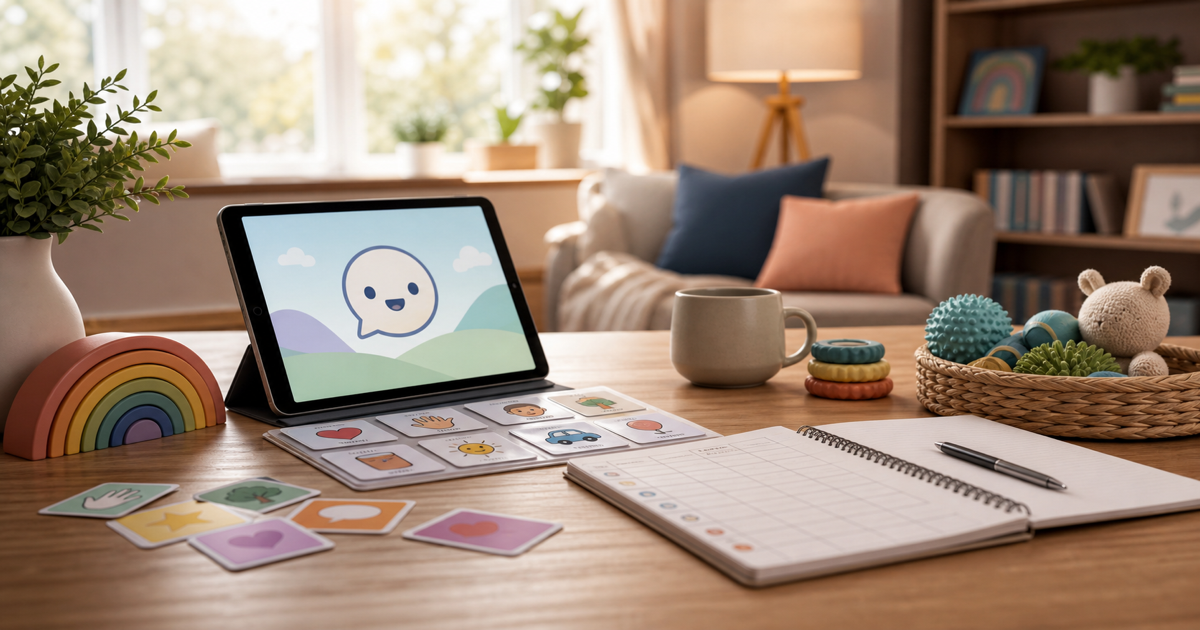
If you've been searching to figure out AAC versus a speech therapy app, you're probably not looking for a lecture on the difference. You want to know whether this matters for your child right now, whether you should act, and what you can actually do without turning practice into a test. The most useful question to ask yourself isn't "how do I get my child talking right now?" It's "what is my child already communicating, and what would make the next step a little easier?" That shift keeps things low-pressure at home, and it also gives an SLP, pediatrician, or early intervention team better information to work with when you do bring in outside help. Rather than judging your child on one rough afternoon, watch a handful of routines over several days. Notice how they point, gesture, imitate, respond to their name, and handle frustration, and pay attention to whether they understand more than they can say out loud. A single moment tells you little; a pattern across mealtimes, play, and bedtime tells you a lot more. For this week, pick one routine your family already does daily, and build in one small model: a word, a phrase, a gesture, or an AAC button that fits naturally there. Pause afterward and give your child room to respond in whatever form they have, whether that's an approximation, a sign, a point, a script, or pressing a device button. All of it counts as communication. If the moment starts turning into a struggle, let it go. A few honest points worth keeping in mind here: AAC gives a child a voice they can use right now, while something like Little Words is built around practicing spoken speech. They aren't competing tools doing the same job. They complement each other rather than replace one another, and treating them as substitutes is where a lot of confusion starts. If this question is part of a bigger pattern you've been noticing, it's worth asking for help sooner rather than later, whether that means a hearing check, an early intervention evaluation, a private SLP evaluation, or a school-based assessment. Asking early isn't overreacting. It just means your child gets access to support sooner. For related reading, parents in this situation often also look into the Neurodivergent Parenting hub, browse speech app reviews and comparisons, or compare specific tools and paths, like PECS versus Proloquo, 504 plans versus IEPs, an AAC starter guide for autism, the difference between apraxia of speech and phonological disorder, whether speech therapy apps are worth it, an honest Articulation Station review, how open-ended toys shape language differently than single-purpose ones, and how to tell autism meltdowns apart from tantrums. Little Words is meant as educational support for home practice, not a medical device, an AAC replacement, or a stand-in for a licensed speech-language pathologist, pediatrician, early intervention program, school team, or developmental evaluation.
AAC and talking practice work best side by side.

Little Words is a voice-first app where your child talks and plays with Buddy at home, low-pressure practice that sits alongside their device. It is free to download.

See your child's planor download on the App Store