Last updated 2026-07-09
TL;DR
By their second birthday, most children say at least 50 words and put two words together (like 'more juice' or 'daddy go'). Strangers should understand about 50% of what they say. By age 3, vocabulary jumps to 200-1,000 words and three-word sentences are common. Missing these markers is one of the clearest signs a speech evaluation is worth pursuing.
What speech skills should a 2-year-old have?
The American Speech-Language-Hearing Association (ASHA) sets the 24-month bar at a minimum of 50 words plus the ability to combine at least two words into short phrases. [1] Think 'more milk,' 'daddy up,' 'big dog.' Those two-word combinations matter more than the raw word count, because they show a child is starting to build the grammatical scaffolding that language runs on.
Vocabulary at this age usually falls between 50 and 200 words, and the spread inside typical development is wide. The 50-word floor is where clinicians pay attention. A child who has 30 words at 24 months but adds new ones every week is in a different spot from a child stuck at 30 words for months. Trajectory matters as much as the number.
By 24 months, a child should also understand far more than they say. Receptive language (what they understand) usually runs well ahead of expressive language (what they produce). Most 2-year-olds follow two-step related directions, like 'get your shoes and bring them here,' without needing a gesture as a cue. [1]
Intelligibility, meaning how well strangers can understand them, is roughly 50% at age 2. Parents and caregivers who hear the child all day understand more, often around 75%. [2] If even familiar adults can only catch a fraction of what a toddler says, that's worth noting.
What are the exact 2 year speech milestones according to ASHA and AAP?
Here is a side-by-side of what ASHA and the American Academy of Pediatrics (AAP) describe as typical for 24-month-olds. [1] [3]
| Skill area | What to look for at 24 months |
|---|---|
| Vocabulary | 50+ words; range 50-200 is typical |
| Word combinations | Two-word phrases ('more cookie,' 'no bed') |
| Intelligibility | ~50% understood by strangers |
| Following directions | Two-step related directions without gesture |
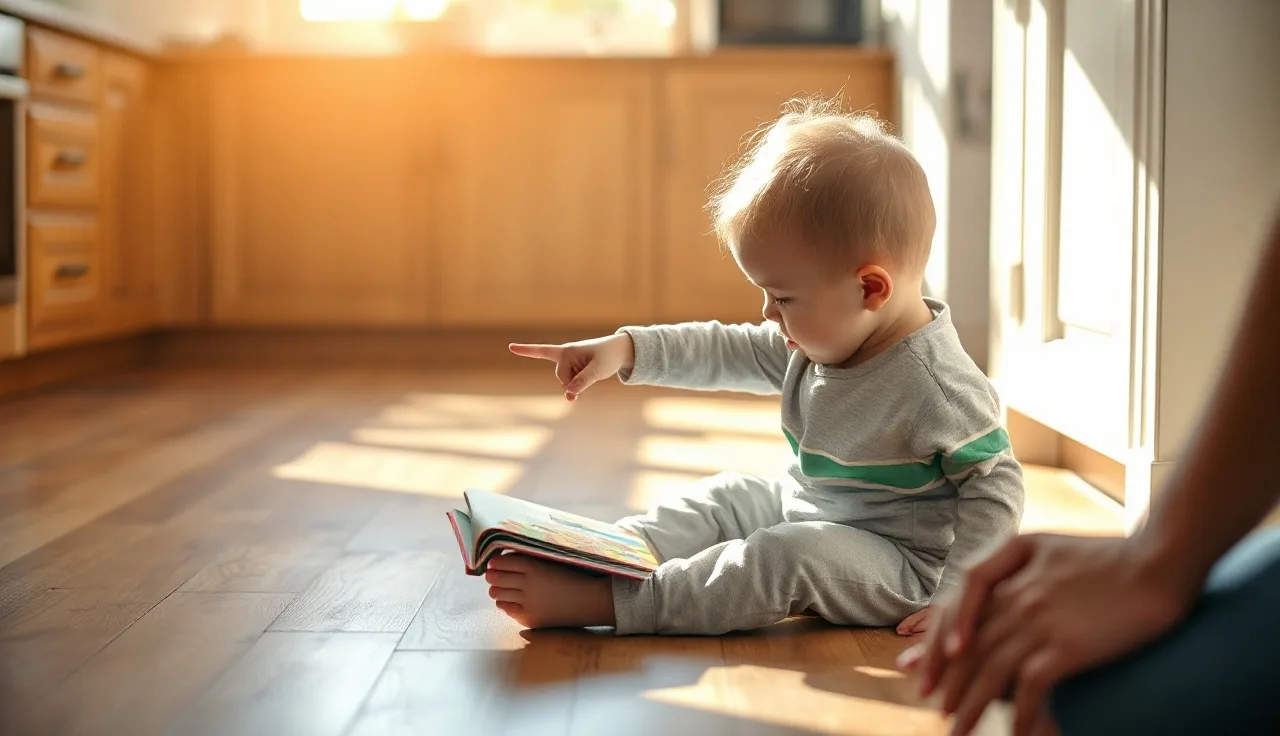
| Pointing | Points to pictures in books when named |
| Questions | Asks simple questions ('where kitty?') |
| Social speech | Uses words more than gestures to get needs met |
The AAP recommends that pediatricians screen every child for developmental delays at the 9-, 18-, and 24-month (or 30-month) well-child visits using validated tools. [3] If a screen flags a concern, a referral to a speech-language pathologist (SLP) should follow. Many parents don't realize the 24-month well visit is built specifically to catch speech delays before they compound.
Both organizations agree on one thing. Do not wait and see past age 2 if a child has fewer than 50 words or no word combinations. Early intervention before age 3 is tied to meaningfully better outcomes, partly because of how fast the brain is wiring language networks during this window. [4]
What are the 3 year speech milestones parents should know?
Between ages 2 and 3, language typically explodes. A child who had 50 words at 24 months can land anywhere between 200 and 1,000 words by their third birthday. That range sounds wild, but vocabulary growth in this stretch really is that variable. Sentence structure is the more telling marker.
By age 3, typical development looks like: [1] [2]
- Three-word sentences and longer ('I want that one,' 'where is the dog?')
- Use of pronouns, though some mistakes are expected ('me want it' instead of 'I want it')
- Questions using 'what' and 'where'
- Intelligibility around 75% for strangers
- Short back-and-forth conversations on a topic
- Simple plural forms and some past tense ('I runned' is normal, 'I ran' comes later)
The 3 year milestones for speech are also when grammatical morphemes start to show up, things like '-ing' endings, articles (a, the), and possessives. [5] Children don't master these all at once. Roger Brown's language acquisition research from the 1970s mapped the order in which children typically acquire 14 grammatical morphemes, and the sequence is remarkably consistent across children even though the pace varies.
Stranger intelligibility reaching about 75% by age 3 is a clean, concrete benchmark. If a child's speech is still mostly unintelligible to people outside the family at 36 months, a speech evaluation is clearly warranted. [2]
What does a late talker look like at age 2?
A late talker is generally defined as a child between 18 and 30 months whose expressive vocabulary sits below age expectations but who has no other diagnosed condition explaining the delay. No hearing loss, no autism diagnosis, no cognitive impairment that accounts for it. [6] It's a descriptive term, not a diagnosis.
At age 2, late talkers typically have fewer than 50 words and don't yet combine words. Some have strong receptive language and understand everything said to them. Others have delays in both directions. The ones with strong receptive skills sometimes catch up without intervention, but the research is less reassuring than the 'he'll talk when he's ready' advice parents often hear.
A 2011 review in Developmental Disabilities Research Reviews found that about 70-80% of late talkers catch up by school age, while the remaining 20-30% go on to have persistent language disorders. [7] The trouble is you can't reliably predict at age 2 which group a given child falls into. Waiting to find out costs months of intervention time that would have helped either way.
Signs at age 2 that make clinicians less likely to predict spontaneous catch-up include a family history of language delays, limited speech sound variety (using only a few consonants), weak gesture use before 12 months, and delayed receptive language alongside the expressive delay.
If you're wondering whether your child's pattern fits late talking specifically, the speech therapy speech therapist page has more detail on what an SLP evaluation involves.
What speech sounds should a 2-year-old be able to make?
Speech sound development has its own sequence, separate from vocabulary and grammar. At age 2, children are expected to have mastered a set of early-developing consonants: m, n, p, b, t, d, and the vowel sounds. [2] That's why common first words lean toward these sounds: mama, dada, bye, no, ball, up.
Sounds like 'r,' 'l,' 'th,' 's,' 'z,' and blends like 'str' and 'bl' come in much later, often not fully in place until ages 6-8. So a 2-year-old who says 'wabbit' instead of 'rabbit' is right on track. A 2-year-old who makes only vowel sounds and no consonants is not.
By age 3, the expected consonant inventory expands to include k, g, f, and y (as in 'yes'). [2] Errors on later-developing sounds are called developmental errors, and they're normal. Errors on early-developing sounds in a child who is also hard to understand deserve closer attention.
If a child's speech sounds consistently off in ways that don't fit this picture, apraxia of speech or childhood apraxia of speech may be worth asking an SLP about. Apraxia is a motor planning disorder, not a language delay, and it has a specific treatment profile.
How is echolalia different from typical speech development at age 2?
Some repetition is completely normal in toddlers. Repeating back words they just heard is part of how language gets learned. But when a child consistently echoes phrases instead of generating new ones, and especially when the echoed phrases seem disconnected from the context, that pattern is worth understanding more carefully.
Echolalia in young children can be a stage of typical development, a communication strategy in autistic children, or a sign of other language processing differences. Echolalia meaning covers the split between immediate and delayed echolalia and why context matters so much for interpretation.
At age 2, you might hear a child repeat a line from a TV show in a way that seems scripted, or echo the end of your question back to you as their answer. If the child also lacks spontaneous word combinations, shows limited eye contact during communication, or seems to use language mainly to script rather than to connect, those patterns together are worth discussing with a pediatrician or SLP. Echolalia by itself is not a diagnosis of anything. It's a data point.
When should parents be concerned and ask for an evaluation?
There are specific, evidence-based red flags at each age. ASHA and the AAP have published clear guidance on when to refer, and neither one recommends waiting past age 2 if multiple markers are missed. [1] [3]
Red flags at 24 months:
- Fewer than 50 words
- No two-word combinations
- Not following two-step directions
- Loss of words or skills previously gained (this is always a reason to act immediately)
- Speech that only parents can understand
Red flags at 36 months:
- Fewer than 200 words
- No three-word sentences
- Strangers understand less than 75% of speech
- Cannot ask simple questions
- Unclear or no use of pronouns
Any regression (losing words or skills) at any age is a reason to contact a pediatrician right away, not to schedule a routine follow-up. Regression can signal several conditions that benefit from prompt attention.
The referral process matters too. In the United States, children under age 3 qualify for free evaluations through the Individuals with Disabilities Education Act (IDEA), Part C, run by each state's early intervention program. [8] You don't need a doctor's referral to self-refer your child. Calling your state's early intervention program directly is often faster than waiting for the next well-child visit. More on that process is at early intervention.
What can parents do at home to support speech development?
You don't need structured drills to help a 2-year-old's language. The evidence-based strategies SLPs teach parents are built around ordinary interaction. The term in the research literature is 'naturalistic language intervention,' and it consistently beats rote practice for toddlers. [9]
Some of the best-supported home strategies:
Parallel talk: narrate what your child is doing without asking them to repeat. 'You're pushing the truck. The truck goes fast.' This loads the child's environment with language and puts zero pressure on them.
Expand and extend: when a child says 'ball,' you say 'yes, big ball' or 'you threw the ball.' You're modeling the next level of language just above where they are. This is called following the child's lead, and it's one of the more consistent findings in language intervention research. [9]
Reduce questions: most parents dramatically over-question toddlers. 'What's that? What color? What sound does it make?' Questions create a performance demand. Commenting instead of questioning keeps the exchange low-pressure and actually produces more child speech.
Read together daily: shared book reading, especially interactive reading where you talk about the pictures instead of just reading the text, is tied to vocabulary gains. [10] Board books with simple, clear images work well at age 2.
Turn off background TV: ambient television lowers the quantity and quality of parent-child talk and is linked to language delays in toddlers. [10] It's one of the clearest environmental factors in the data.
If you want a structured tool to track strategies across the week and flag which sounds and words to target for your child's current level, Little Words (littlewords.ai/start) has a quiz that builds a personalized practice plan from your child's developmental profile.
Does bilingualism delay speech at age 2?
This question comes up constantly, and the short answer is no. Bilingualism does not cause language delay. [11] A bilingual child's total vocabulary across both languages combined typically meets or beats the same milestones as a monolingual child. The confusion comes from counting words in only one language, which can make a bilingual toddler look like they have a smaller vocabulary than they actually do.
What bilingual development does look like: a child might mix languages inside a sentence, which is called code-switching and is a sign of competence, not confusion. They may have stronger vocabulary in one language for home topics and stronger vocabulary in the other for school or community topics. That's normal and expected.
Speech-language evaluations of bilingual children should assess both languages. If an SLP only evaluates in English and a child's primary language is Spanish or Mandarin, the result isn't valid. [11] Parents in this situation can request, and are entitled to, an evaluation in the child's home language under IDEA. [8]
A genuine language delay in a bilingual child shows up as a delay in both languages, not one. If a child is struggling in both, that warrants evaluation just as it would for a monolingual child.
How does autism affect speech development at age 2?
Autism spectrum disorder is one of the most common reasons a child has atypical speech development at age 2, though speech delay is not required for an autism diagnosis, and most children with speech delays are not autistic. The two things can exist on their own.
Speech and communication differences in autistic 2-year-olds vary a lot. Some children have no spoken words at 24 months. Some have many words but use them in scripted, non-communicative ways. Some have typical or even advanced vocabulary but show differences in the social use of language, called pragmatics. [12]
Early signs that point toward an autism evaluation at age 2 include not pointing to share interest (rather than just to request), not responding to their name consistently, limited joint attention, and the kind of echolalia described earlier. These are social communication differences more than language quantity issues.
Children with autism who receive autism spectrum speech therapy show meaningful improvements in communication, especially when therapy starts before age 3 and includes parent coaching alongside direct child sessions. [4] The goal of speech therapy for autistic children is not to make them communicate in a neurotypical way. It's to build effective communication in whatever form works for that child, which sometimes includes AAC devices or other augmentative and alternative communication strategies.
What happens during a speech evaluation for a 2-year-old?
A lot of parents put off evaluations because they're not sure what to expect, or they worry their child won't cooperate. A good pediatric SLP evaluation is built around exactly the kind of attention span a 2-year-old has, which means it's largely play-based and takes under an hour in most cases.
The SLP usually starts with a parent interview covering birth and medical history, the child's current vocabulary (many clinicians ask parents to fill out the MacArthur-Bates Communicative Development Inventories, or CDIs, beforehand), and family concerns. [1]
During the direct assessment, the clinician plays with the child using standardized toys and activities while watching for spontaneous language, sound production, comprehension, social communication, and play skills. For a 2-year-old who isn't cooperating, the SLP gathers plenty just from watching how the child interacts, plays, and responds.
Standardized tests normed on children as young as 12-24 months exist, including the Preschool Language Scales (PLS-5) and the Receptive-Expressive Emergent Language Test (REEL-4). Results usually come back as standard scores or age equivalents. A score below 1.25 standard deviations from the mean (roughly the 10th percentile) qualifies a child for early intervention services in most U.S. states, though eligibility criteria vary by state. [8]
If you're looking for ways to prepare or find someone to run this evaluation, speech therapy speech therapist breaks down how to find an SLP and what to ask them.
What does the research say about outcomes for late talkers?
The honest summary is that outcomes are better than many parents fear but less predictable than 'wait and see' implies. The often-cited 20-30% of late talkers who don't catch up on their own often have subtle language processing differences that stay hidden until reading and writing demands in school expose them. [7]
A 2011 meta-analysis in the American Journal of Speech-Language Pathology found that late talkers who received parent-implemented language interventions showed faster vocabulary growth than wait-and-see controls. [9] The effect sizes were modest to moderate, not dramatic, but steady across studies. Intervention helps. More of it, and earlier, tends to help more.
The research on early intervention under IDEA Part C points the same direction: children who receive services before age 3 show better language and school readiness outcomes than those who begin later. [4] The American Academy of Pediatrics states that "early identification of developmental delays and early intervention can change a child's developmental trajectory." [3]
Nobody has great data on exactly how much therapy is enough, because the studies vary widely in intensity. What the field generally agrees on is that parent coaching, where parents learn to use therapeutic strategies during daily routines, multiplies the effect of direct sessions because it turns everyday life into practice.
For children with more complex needs, including those using AAC, earlier intervention looks specifically at the research on timing and outcome.
Frequently asked questions
How many words should a 2-year-old say?
By their second birthday, most children say at least 50 words. The typical range runs from 50 to about 200 words at 24 months, but the 50-word floor is the clinically significant threshold. Word count matters less than whether the child is actively adding new words and starting to combine two words together, like 'more juice' or 'daddy go.'
Is it normal for a 2-year-old not to talk much?
Some variation is normal, but if a child has fewer than 50 words or no two-word combinations at age 2, that's outside the typical range and worth evaluating. The old advice to 'wait and see' until age 3 is no longer supported by ASHA or the AAP. Free evaluations are available through your state's early intervention program for children under age 3.
What are the 3 year speech milestones I should be watching for?
By age 3, children typically use three-word (or longer) sentences, have 200-1,000 words in their vocabulary, and are understood by strangers about 75% of the time. They ask 'what' and 'where' questions, use pronouns (with some errors), and can hold a short back-and-forth conversation. Missing several of these markers at 36 months is a clear reason to get a speech evaluation.
What is the difference between a late talker and a speech delay?
'Late talker' is a specific informal term for children 18-30 months whose expressive language is delayed but who have no other identified condition explaining it. 'Speech delay' is a broader, more general term that can apply at any age and can co-occur with other diagnoses. A speech-language pathologist uses standardized assessments to characterize the type and severity of delay more precisely.
Should I be worried if my 2-year-old only speaks a few words?
Yes, this warrants action. A 2-year-old with only a few words (say, under 20-25) is well below the typical threshold of 50 and should be referred for evaluation promptly. You don't need to wait for the next well-child visit. In the U.S., you can self-refer to your state's early intervention program at no cost. Delays caught and addressed at this age have better outcomes.
Does watching TV affect speech development in toddlers?
Background television has a clear negative association with language development in toddlers, mainly because it reduces the amount of back-and-forth verbal interaction with caregivers. Foreground, interactive screen use (like video-calling grandparents) is less clearly harmful. The American Academy of Pediatrics recommends limiting passive screen time for children under 24 months, except for video chatting.
Can a bilingual child be a late talker?
Yes, bilingual children can have genuine delays, but they should be evaluated across both languages. A bilingual 2-year-old's vocabulary counted across both languages combined should still meet roughly the same 50-word threshold. Code-switching between languages is normal. Under U.S. law, children are entitled to early intervention evaluations in their home language.
What speech sounds should a 2-year-old be making?
At age 2, children are expected to produce early-developing consonants: m, n, p, b, t, d, plus vowels. Sounds like 'r,' 'l,' 's,' 'th,' and blends don't develop until much later, sometimes age 6-8. A 2-year-old who mispronounces later sounds is on track. One who has few consonants at all, or is very hard to understand even for parents, needs an evaluation.
How do I get a free speech evaluation for my toddler?
In the U.S., children under age 3 are entitled to free evaluations through IDEA Part C, administered by each state as its early intervention program. You can self-refer without a doctor's order by calling your state's program directly. After age 3, evaluations shift to the local school district under IDEA Part B. Both routes are free to families.
What is echolalia and is it a red flag at age 2?
Echolalia is the repetition of words or phrases heard previously, either immediately or hours later. Some repetition is a normal part of language learning. When a 2-year-old primarily echoes rather than generating new phrases, especially combined with limited eye contact or social communication, it's worth discussing with a clinician. Echolalia alone isn't diagnostic but is one piece of a larger picture.
Do boys really talk later than girls?
There is a small, real average difference in language development favoring girls, but it's modest and doesn't justify ignoring a male toddler's delay. Standardized tests are normed by sex precisely because of this variation. A boy with fewer than 50 words at age 2 still falls below the threshold regardless of sex, and the same referral guidance applies.
What should I do if my child lost words they used to say?
Contact your pediatrician right away, not at the next scheduled visit. Regression in language, losing words a child clearly had before, is always a reason for prompt evaluation. It can be associated with several conditions where early diagnosis and intervention matter. Don't wait to see if the words come back.
How much speech therapy does a 2-year-old typically need?
It varies based on the type and severity of delay. Early intervention programs in the U.S. commonly offer one or two sessions per week, each 30-60 minutes, and research supports pairing those sessions with parent coaching so caregivers can use therapeutic strategies throughout daily routines. Children with more complex needs may require more intensive services.
At what age is speech delay no longer considered 'typical variation'?
By age 2, the clinical community has clear benchmarks that separate typical variation from delay. Missing the 50-word and two-word-combination milestones at 24 months is no longer explained by variation alone and warrants evaluation. The earlier idea that all children 'catch up by age 3' has been revised by research showing 20-30% of late talkers have persistent language difficulties.
Sources
- ASHA, Speech and Language Developmental Milestones: By 24 months, children should have 50+ words, two-word combinations, and follow two-step directions; by 36 months, three-word sentences and 75% intelligibility to strangers
- ASHA, How Does Your Child Hear and Talk?: Speech sound expectations by age and intelligibility percentages (50% at 24 months, 75% at 36 months)
- American Academy of Pediatrics, Developmental Surveillance and Screening: AAP recommends developmental screening at 9, 18, and 24 (or 30) months and states that 'early identification of developmental delays and early intervention can change a child's developmental trajectory'
- CDC, Learn the Signs. Act Early.: Early intervention for children under age 3 is associated with better language and school readiness outcomes
- Brown, R. (1973). A First Language: The Early Stages. Harvard University Press.: Roger Brown's research identified 14 grammatical morphemes acquired in a consistent developmental sequence, including -ing endings, articles, and possessives appearing in the third year
- ASHA, Late Language Emergence: Late talker defined as a child 18-30 months with expressive vocabulary below expectations and no other identified condition explaining the delay
- Rescorla, L. (2011). Late Talkers: Do Good Predictors of Outcome Exist? Developmental Disabilities Research Reviews, 17(2).: Approximately 70-80% of late talkers catch up by school age; 20-30% have persistent language disorders; predicting outcome reliably at age 2 is not possible
- U.S. Department of Education, IDEA Part C Early Intervention Program: Under IDEA Part C, children under age 3 are entitled to free evaluations and early intervention services; families can self-refer; evaluations must be conducted in the child's home language
- Roberts, M. Y. & Kaiser, A. P. (2011). The effectiveness of parent-implemented language interventions: a meta-analysis. American Journal of Speech-Language Pathology, 20(3), 180-199.: Parent-implemented language interventions showed consistent, modest-to-moderate effect sizes on vocabulary growth in late talkers compared to wait-and-see controls
- Mendelsohn, A. L. et al. (2018). Reading Aloud, Play, and Social-Emotional Development. Pediatrics, 141(5).: Interactive shared book reading is associated with vocabulary gains in toddlers; background television reduces parent-child verbal interaction and is linked to language delays
- ASHA, Bilingual Service Delivery: Bilingualism does not cause language delay; bilingual children's total vocabulary across both languages meets typical milestones; evaluations must assess both languages to be valid
- Lord, C. et al. (2020). Autism spectrum disorder. Nature Reviews Disease Primers, 6(1), 5.: Communication differences in autism spectrum disorder are highly variable and include differences in pragmatics, echolalia, and joint attention independent of overall vocabulary size