Last updated 2026-07-09
TL;DR
Speech therapy services are assessments and treatment sessions from licensed speech-language pathologists (SLPs) that build communication, language, and swallowing skills. Children under 3 can qualify for free services through Early Intervention under federal law. School-age kids get therapy through an IEP. Private therapy runs $100 to $350 a session out of pocket, though insurance often covers part.
What exactly are speech therapy services?
Speech therapy services are any evaluation, treatment, or support from a licensed speech-language pathologist that helps a person communicate better. The American Speech-Language-Hearing Association (ASHA) sets the scope: speech sound production, language comprehension and expression, fluency, voice, and social communication. [1]
That's a wide net. One child needs help producing the /r/ sound. Another is a late talker with almost no words at 22 months. A third has autism and uses a picture-based AAC system. A fourth is 18 months and already in early intervention because a pediatrician flagged a motor speech concern. All four are getting speech therapy services, even though the sessions look nothing alike.
SLPs hold at least a master's degree plus a Certificate of Clinical Competence from ASHA (the CCC-SLP credential). Most states also require a separate state license. [1] This matters when you compare providers. Anyone offering speech therapy without those credentials is working outside professional guidelines, and insurance almost certainly won't pay for it.
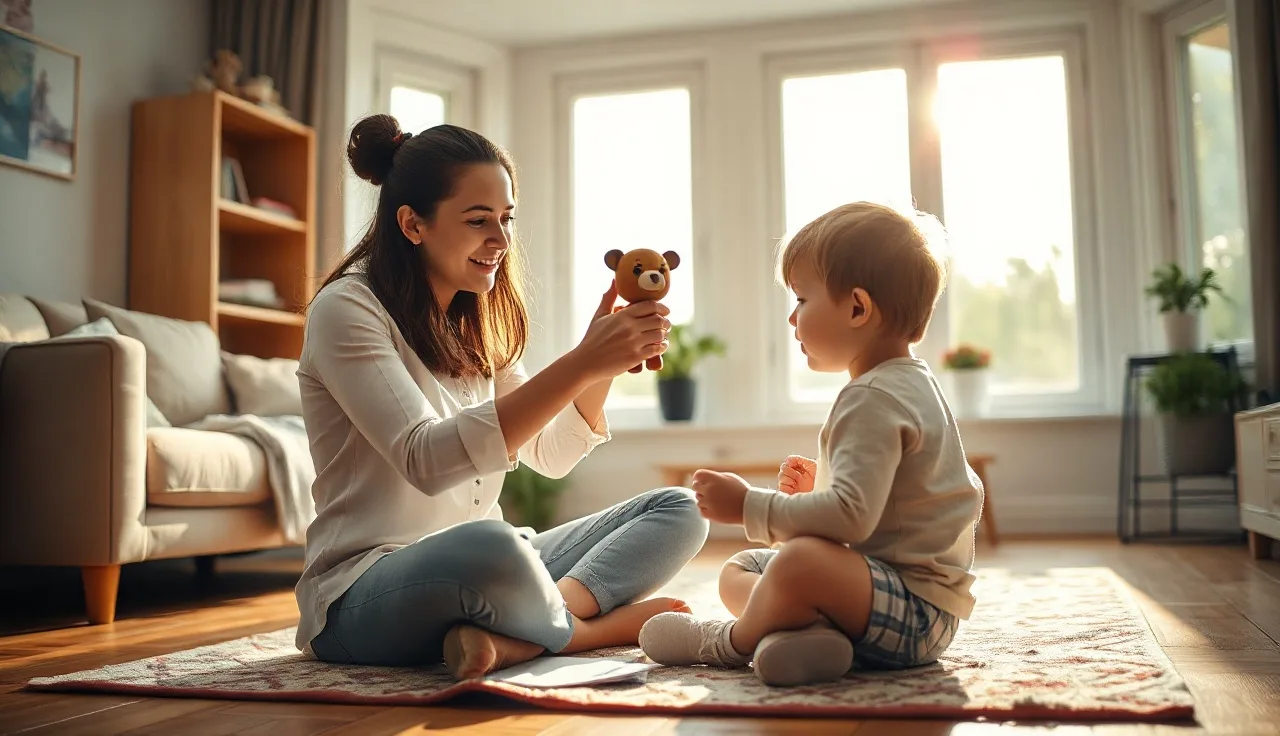
Therapy can happen in a clinic, a school, your living room, or over a video call. The setting doesn't change the credential requirements. It does change cost, convenience, and sometimes results, depending on the child.
What kinds of speech therapy services exist for young children?
The delivery model matters as much as the content, especially for toddlers and preschoolers. Here are the main types you'll run into.
Early Intervention (EI) services. Under Part C of the Individuals with Disabilities Education Act (IDEA), every state must provide a free evaluation and, if the child qualifies, free services for children from birth through age 2. [2] The eligibility threshold varies by state (some require a 25% developmental delay, others use 33% or a qualifying diagnosis), but the federal right to a free evaluation is absolute. Services are meant to happen in the "natural environment," which usually means your home. Families pay nothing for EI, regardless of income. That's federal law, not a state perk.
School-based services (Part B of IDEA). Once a child turns 3, services shift from EI to the local school district under Part B. If an IEP team decides speech therapy is necessary for the child to access their education, the district must provide it free. [2] These sessions usually run 30 minutes, once or twice a week, in a small group or one-on-one. The catch is caseload. School SLPs report median caseloads of 50 to 80 students per clinician, which caps how intense any single child's therapy can be. [3]
Private outpatient therapy. You can hire a private SLP outside the school system, either instead of or alongside school services. Private therapy gives you more say over frequency, technique, and who your child actually sees. It costs more. Most families paying for it are supplementing an IEP, working with a child who didn't qualify for school services, or chasing more sessions per week than a school can offer.
At-home speech therapy services. Some SLPs do home visits instead of asking you to come to a clinic. Home-based speech therapy is practical for very young children, kids who melt down during transitions, and families without reliable transportation. A home visit usually costs a little more than a clinic visit because of the SLP's travel time. The quality can match clinic work exactly. If you're searching for at-home speech therapy in Louisville KY or any other city, ASHA's ProFind directory is the most reliable place to start. [1]
Teletherapy. Online speech therapy grew fast after 2020. A systematic review in the American Journal of Speech-Language Pathology found telehealth delivery was comparable to in-person delivery across several pediatric groups, though the evidence for children under 2 is thin. [4] The online speech therapy guide breaks this down in detail.
How much do speech therapy services cost?
Prices swing enough that a single number means nothing without context. Here's what the data shows.
A private SLP session lasting 45 to 60 minutes costs $100 to $350 in most U.S. markets, with metro areas like New York, Los Angeles, and Seattle at the top of that range, per FAIR Health Consumer's cost lookup. [5] Evaluations are priced separately at $300 to $600 because they take longer and require a written report.
School-based and Early Intervention services are free to families under federal law, as covered above.
Insurance is the messy part. Coverage hinges on whether your plan includes habilitative services (building skills a child never had) or only rehabilitative ones (recovering lost skills). The Affordable Care Act requires most individual and small-group plans to cover habilitative services as an essential health benefit, but employer self-funded plans are often exempt. [6] So call your insurer, ask specifically about "speech-language pathology outpatient habilitative services," and confirm the number of covered sessions per year before you start. Covered plans typically allow 20 to 60 sessions a year with a copay of $20 to $60 per session.
Medicaid covers speech therapy for children under the Early and Periodic Screening, Diagnostic, and Treatment (EPSDT) benefit, and coverage is broad. [7] If your child has Medicaid, call your state's Medicaid office before you assume anything is uncovered.
Flexible Spending Accounts (FSAs) and Health Savings Accounts (HSAs) can pay for private speech therapy if you have no insurance. The IRS lists speech therapy as a qualified medical expense. [8]
Does my child actually need speech therapy, or are they just a late talker?
This is the question parents ask most and get the least satisfying answer to. Honest version: nobody can tell you over the internet whether your specific child needs therapy. But the research gives you real benchmarks.
The American Academy of Pediatrics recommends a formal developmental screening at 9, 18, and 24 or 30 months, plus an autism-specific screen at 18 and 24 months. [9] If your pediatrician isn't doing this at those well visits, ask for it.
Some concrete language milestones from ASHA [1]:
- By 12 months: at least one word, plus babbling with consonants
- By 18 months: at least 10 words
- By 24 months: at least 50 words and some two-word combinations
- By 36 months: sentences of 3 to 4 words, strangers understand about 75% of speech
Missing these benchmarks doesn't automatically mean a language disorder. Some late talkers catch up on their own (the literature calls them "late bloomers"). But roughly 20 to 30% of late talkers at age 2 still have language delays at age 4, and early therapy narrows that gap. [10] Watching and waiting has a cost. A free Early Intervention evaluation has none. The math favors getting the eval.
If you're seeing other signs alongside late talking, like limited eye contact, no pointing or showing by 12 months, or loss of words your child used to have, those warrant a faster referral. The autism spectrum speech therapy article covers that picture.
How do I get a referral for speech therapy services?
You don't always need one.
For Early Intervention, parents can self-refer. Call your state's EI program directly. Every state has a single intake number, and the CDC's "Learn the Signs. Act Early." program keeps a state-by-state directory. [9] You don't have to go through your pediatrician first, though having them involved helps with documentation.
For private therapy, most outpatient SLP clinics accept self-referrals from parents. Insurance may require a physician referral, so check your plan before you schedule. If your insurer wants one, any primary care doctor can write it.
For school-based services (age 3 and up), submit a written request for a special education evaluation to your school district's special education director. Under IDEA, the district has 60 calendar days to complete the evaluation. [2] The request can be short: "I am requesting a special education evaluation for my child, including a speech-language assessment, under the Individuals with Disabilities Education Act." Write it, date it, keep a copy. That starts the clock.
Can't find an SLP taking new patients? That's a real problem in rural and some suburban markets right now. The ASHA ProFind directory, Psychology Today's therapist finder, and the Autism Speaks provider directory all let you filter by specialty and zip code. Ask specifically about home visits, since some SLPs offer them but never advertise them on clinic websites.
What happens in a speech therapy session?
Sessions look nothing like tutoring. A good SLP doesn't sit a toddler down and drill flashcards.
For children under 4, most evidence-based therapy is play-based. The SLP follows the child's lead, sets up moments that require communication, then models and expands language without pressure. Naturalistic Developmental Behavioral Interventions (NDBIs), like the Early Start Denver Model, fall here and carry the strongest evidence for children with autism. [10]
For older children with speech sound disorders, like apraxia of speech, sessions turn into structured motor practice. Childhood apraxia of speech needs high-repetition, motor-focused work that looks more like drill, though skilled SLPs still keep it playful.
A typical 30-to-45-minute session might include:
- 5 minutes of check-in with the parent about the past week
- 20 to 25 minutes of structured play or targeted activities
- 5 to 10 minutes of parent coaching so you can carry strategies into daily life
That coaching piece is not an optional extra. Children make faster progress when parents run therapy strategies between sessions. [10] If your SLP isn't spending time coaching you, ask them to. An SLP who sees your child twice a week for an hour total cannot out-teach a parent using good strategies for several hours every day.
Some children use AAC devices as part of therapy. AAC stands for augmentative and alternative communication, and it runs from low-tech picture boards to high-tech speech-generating devices. If your child's SLP recommends AAC, that isn't giving up on speech. The research is clear: AAC supports natural speech development, it doesn't replace it.
What are at-home speech therapy programs and do they actually work?
People mean two different things by "at-home speech therapy."
The first is a licensed SLP who comes to your house instead of you driving to a clinic. That's home-based speech therapy in the traditional sense: a credentialed professional, in your home, doing real therapy. The evidence base matches clinic therapy because the clinician and the techniques are identical. The bonus is that your child is in their natural environment, which can lower anxiety, and the SLP coaches you in the actual rooms where your child plays and talks.
The second meaning is parent-implemented programs: structured curricula that teach parents to run speech-promoting activities at home. The Hanen "It Takes Two to Talk" program has peer-reviewed evidence behind it, especially for toddlers with language delays. [10] These work because they change how parents communicate, and parents are the constant in a child's life.
A third category has shown up lately: app-based and AI-supported tools that guide parents through activities with their child. The evidence here is thinner and newer. Some tools are well built and made with SLP input. Others aren't. Little Words, for example, pairs a parent-facing quiz with guided activities built around each child's communication profile. Before you commit to any app or program, ask whether licensed SLPs helped build it and whether you can reach a human clinician when you have a concern.
None of these home programs replace a licensed SLP for a child with a moderate or significant delay. Use them as supplements to formal therapy, or as a first step while you wait for an evaluation slot to open.
What's the difference between private speech therapy and school-based speech therapy?
Both can be excellent. They chase genuinely different goals.
School-based speech therapy under IDEA is tied to educational impact. The IEP team asks one question: does this communication challenge affect the child's ability to access and benefit from their education? If yes, services follow. If the team decides the child's speech doesn't affect their education, they can decline services even when a private SLP would recommend treatment. [2] That frustrates a lot of families, and fairly.
Private therapy runs on a clinical model. The question there is: does this child have a communication disorder that warrants treatment? That threshold is usually lower than the educational one. A child with a mild articulation delay that doesn't hurt classroom performance might not qualify for school services, but a private SLP would typically take them on.
Session intensity is another real gap. IEPs often authorize one 30-minute session per week. Private SLPs commonly see children two or three times a week. For childhood apraxia of speech, which demands high-intensity motor practice, once-a-week school therapy alone is rarely enough. Plenty of families run both at once.
The speech therapy speech therapist article goes deeper into credentials and how to size up an individual provider.
What does the research say about how effective speech therapy is?
Short answer: it works, especially started early and delivered consistently.
A 2018 systematic review in Language, Speech, and Hearing Services in Schools found that speech-language intervention produced moderate to large effect sizes for expressive and receptive language in children with developmental language disorder. [10] The same review noted dosage matters: more sessions per week and longer treatment periods produced better outcomes.
For children with autism, reviews of early naturalistic language interventions report significant gains in communication and language, with the strongest effects for children who started before age 4. [10]
For late talkers, the picture is more tangled. Some catch up without any help. But research from Rice, Zubrick, and colleagues found that children who received early intervention had better outcomes at age 4 than those who watched and waited, even after controlling for initial severity. [10]
The takeaway isn't that every late talker needs intensive therapy tomorrow. It's that a free Early Intervention evaluation is low-risk and high-upside. After a proper evaluation, an SLP can tell you whether your child is on a typical trajectory or genuinely needs support. Guessing from a milestone chart is not the same thing.
Echolalia is one place where parent education shifts outcomes hard. What echolalia means, and how to respond to it, is something most parents never get taught. The echolalia meaning article has practical guidance.
What should I look for when choosing a speech therapy provider?
Credentials first. Your SLP should hold ASHA's CCC-SLP certificate and a license in your state. You can verify the CCC-SLP credential through ASHA's online directory. [1] Do it. Providers sometimes overstate qualifications, and the stakes are high.
Then look at experience with your child's specific profile. An SLP who mostly works with adults recovering from stroke is a different clinician than one who lives in toddler language delays or autism communication. Ask straight out: "How much of your caseload looks like my child?" A good SLP answers that without flinching.
Ask about their approach. Evidence-based approaches for toddlers include NDBI methods (like the Early Start Denver Model or PRT), Hanen strategies, and, for autism, practices listed in ASHA's Evidence Map. For older children with apraxia, ask whether they use DTTC (Dynamic Temporal and Tactile Cueing) or the Nuffield Dyspraxia Programme, both of which beat generic articulation drill on evidence. [1]
Ask what parent coaching looks like in their practice. If the answer is "parents wait in the waiting room," that's a yellow flag for a young child.
And ask about home program support. The sessions are only half the treatment. What you do between them is the other half.
How long does speech therapy usually take?
Honest answer: it varies enormously, and anyone who quotes you a session count before evaluating your child is guessing.
A mild articulation error in a school-age child (say, a distorted /s/) often resolves in 10 to 20 sessions. A late talker with a moderate expressive delay who starts at 18 months commonly needs a year or more, though the early gains can be dramatic within the first few months. A child with a significant language disorder or autism may get communication support for years, with the focus and intensity shifting as they grow.
Progress review should happen every 6 to 12 weeks at minimum. Your SLP should track data, more than report a sense that things "seem to be going well." Ask to see progress notes. Ask what the measurable goals are and how close your child is to hitting them. This isn't being a difficult parent. It's ordinary oversight of your child's care.
If progress has stalled after 6 months with no clear gains, request a team meeting, ask about changing the approach, or get a second opinion from another SLP. Stuck cases sometimes need a different technique, a different clinician, or a different dose.
Frequently asked questions
Can I get speech therapy services at home without going to a clinic?
Yes. Some licensed SLPs offer home visits where they come to you. Under Early Intervention (children under 3), home-based services are the preferred delivery setting under federal law. For older children, search ASHA's ProFind directory and filter for home visit availability, or ask clinics directly whether they offer in-home sessions. Teletherapy is another home-based option when in-person visits aren't available in your area.
How do I find at-home speech therapy services in Louisville, KY or my city?
Start with ASHA's ProFind directory at asha.org and filter by zip code plus "home health" or "early intervention" under setting. Also check Psychology Today's speech therapy finder and your state's Early Intervention directory. For at-home speech therapy in Louisville KY specifically, Kentucky's Early Intervention System (First Steps) handles referrals for children under 3 at no cost, regardless of income.
Is speech therapy covered by insurance?
Often, but the rules are messy. Under the Affordable Care Act, most individual and small-group plans must cover habilitative services, which includes speech therapy for children building new skills. Employer self-funded plans may be exempt. Medicaid covers speech therapy broadly under the EPSDT benefit for children. Call your insurer and ask about "outpatient speech-language pathology habilitative services" to get a clear answer for your plan.
What is Early Intervention and is speech therapy free through it?
Early Intervention is a federal program under Part C of IDEA for children from birth through age 2 with developmental delays or qualifying conditions. The speech-language evaluation is free. If your child qualifies, services come at no cost to the family, regardless of insurance or income. Services happen in the child's natural environment, usually your home. Parents can self-refer without a physician's referral.
At what age should a child start speech therapy?
There's no minimum age. Children can get speech-language services from birth when there's a documented need. The strongest evidence supports earlier intervention, particularly before age 3. If you have any concern about your child's communication, the first step is a free Early Intervention evaluation (children under 3) or asking your pediatrician for a referral to a licensed SLP. Watching and waiting rarely pays off.
Can parents do speech therapy activities at home between sessions?
Yes, and the research consistently shows children whose parents use speech-promoting strategies at home progress faster than children whose therapy stays inside the clinic. Your SLP should coach you on specific techniques at each visit. Programs like the Hanen "It Takes Two to Talk" curriculum are built for parents to run at home and have peer-reviewed evidence supporting them for toddlers with language delays.
What is the difference between a speech delay and a language disorder?
A speech delay means a child follows the typical trajectory but moves along it more slowly than average. A language disorder (also called developmental language disorder, or DLD) means the underlying processing of language is affected and won't simply resolve with time. Only a licensed SLP can tell them apart through a proper evaluation. Both may benefit from therapy, but the prognosis and approach differ a lot.
Does insurance require a referral for speech therapy?
It depends on your plan. HMO-style plans almost always require a physician's referral for specialist services including speech therapy. PPO plans often don't. Call your insurer before scheduling and ask specifically whether a referral is required for outpatient speech-language pathology services. If one is required, any primary care physician can write it. Early Intervention services never require a doctor's referral.
Can a child receive both school-based and private speech therapy at the same time?
Yes. A child can get school-based speech therapy through an IEP and private therapy at the same time. Many families do this when school services alone fall short, especially for children with childhood apraxia of speech who need more frequent sessions than schools usually provide. Coordination between school and private SLPs is ideal but not automatic. You may need to connect the two providers yourself.
How do I know if my child's speech therapy is actually working?
Your SLP should set measurable goals (for example, "produce the /k/ sound in word-initial position with 80% accuracy in structured activities") and track data against them, more than clinical impressions. Ask to review progress data every 6 to 12 weeks. If goals go unmet and the approach hasn't changed, ask why and whether a different method or more intensity is warranted. No improvement after 3 to 4 months is a signal to reassess.
What credentials should a speech-language pathologist have?
At minimum, a licensed SLP holds a master's degree in communication sciences and disorders, ASHA's Certificate of Clinical Competence (CCC-SLP), and a state license where they practice. You can verify the CCC-SLP credential through ASHA's online directory. Some SLPs hold added specialty certifications in areas like Augmentative and Alternative Communication or fluency. Never hire a speech "tutor" or "specialist" as a substitute for a credentialed SLP for a child with a communication disorder.
Is teletherapy as effective as in-person speech therapy for kids?
For school-age children and many preschoolers, research suggests teletherapy outcomes match in-person therapy when the platform fits and the child can engage through a screen. Evidence for children under 2 is thin. Teletherapy needs a parent or caregiver present to facilitate, which can actually increase how well strategies carry into daily life. For many families it's a legitimate option, not a compromise.
What should I bring to my child's first speech therapy evaluation?
Bring any prior evaluations or reports, your pediatrician's developmental screening results, and a list of words your child currently uses (parents often undercount these). A short video of your child communicating at home helps a lot, since children sometimes perform differently in a clinic. Bring your insurance card, a list of questions, and realistic expectations: an evaluation gathers information, it isn't immediate treatment.
Sources
- American Speech-Language-Hearing Association (ASHA) - Practice Portal and ProFind Directory: SLPs hold at minimum a master's degree and the CCC-SLP credential; ASHA defines scope of practice covering speech, language, fluency, voice, and social communication; ProFind directory allows location-based provider search
- U.S. Department of Education - Individuals with Disabilities Education Act (IDEA), Parts B and C: Part C guarantees free evaluation and services for children birth through age 2; Part B requires school districts to provide speech therapy at no cost when educationally necessary; school districts have 60 days to complete evaluations after written request
- ASHA - 2022 Schools Survey: Caseload Characteristics: School SLPs report median caseloads of 50 to 80 students per clinician
- American Journal of Speech-Language Pathology - Telehealth in Speech-Language Pathology (systematic review): Telehealth delivery was comparable to in-person delivery for several pediatric populations; evidence for children under age 2 is limited
- FAIR Health Consumer - Procedure Cost Lookup (speech therapy CPT codes): A 45-to-60-minute private SLP session costs $100 to $350 depending on market; evaluations run $300 to $600
- U.S. Centers for Medicare & Medicaid Services - Essential Health Benefits and Habilitative Services: ACA requires most individual and small-group plans to cover habilitative services including speech therapy; self-funded employer plans are often exempt from this requirement
- Medicaid.gov - Early and Periodic Screening, Diagnostic, and Treatment (EPSDT): Medicaid's EPSDT benefit covers speech therapy broadly for children; states are required to cover any medically necessary service under EPSDT
- IRS Publication 502 - Medical and Dental Expenses: The IRS classifies speech therapy as a qualified medical expense eligible for FSA and HSA reimbursement
- American Academy of Pediatrics - Developmental Surveillance and Screening Policy Statement: AAP recommends formal developmental screening at 9, 18, and 24 or 30 months, and autism-specific screening at 18 and 24 months
- Language, Speech, and Hearing Services in Schools - Evidence base for speech-language intervention in developmental language disorder and early naturalistic interventions (multiple systematic reviews 2018-2020): Speech-language intervention produces moderate to large effect sizes for children with DLD; dosage matters; early naturalistic language interventions show significant gains for children with autism; children who received early intervention had better outcomes at age 4 than those who watched and waited; parent implementation of therapy strategies accelerates child progress