Last updated 2026-07-09
TL;DR
The speech therapy techniques with the strongest evidence for autism language development include naturalistic developmental behavioral interventions (NDBIs like JASPER and ESDM), augmentative and alternative communication (AAC), visual supports, and structured approaches like PECS. No single technique works for every child. A licensed SLP should drive the plan, but parents can apply most of these strategies at home every day.
Why do autistic children need different speech therapy approaches?
Autism spectrum disorder affects communication in ways that are genuinely different from a typical speech delay. It's more than words coming late. Many autistic children have trouble with the social motivation to communicate, the back-and-forth of conversation, understanding nonverbal cues, and using language flexibly across situations. Some children are nonspeaking or minimally verbal well into school age. Others speak in full sentences but struggle with pragmatic language, meaning the social rules of how conversation actually works.
The American Speech-Language-Hearing Association (ASHA) recognizes that autistic individuals show many different communication profiles, and that treatment must match the individual, not the diagnosis [1]. That's not a platitude. A technique that produces real gains for one child may do nothing for another, even when both children look similar on paper.
Speech-language pathologists (SLPs) working with autistic children usually target several areas at once: joint attention (getting two people focused on the same thing), functional requesting, social reciprocity, vocabulary, sentence structure, and pragmatic skills. The techniques below hit different parts of that list, which is why most treatment plans pull from more than one approach.
One more thing worth knowing. The research base here is genuinely uneven. Some techniques have multiple randomized controlled trials behind them. Others have strong clinical consensus but thinner experimental data. I'll flag the difference as we go.
What is naturalistic developmental behavioral intervention (NDBI) and does it work?
NDBIs are the most well-supported category of early intervention for autism communication right now. The name is a mouthful. The idea is simple: use the motivations and play interests the child already has, in natural settings, to teach communication. NDBIs blend principles from applied behavior analysis (ABA) with developmental science, particularly research on how joint attention and social engagement drive early language.
The two most studied NDBIs are the Early Start Denver Model (ESDM) and JASPER (Joint Attention, Symbolic Play, Engagement, and Regulation). A 2010 randomized controlled trial published in Pediatrics found that toddlers who received ESDM for two years showed significantly greater gains in language, adaptive behavior, and IQ compared to community-referred intervention [2]. JASPER has similar data, with multiple trials showing gains in joint engagement and language use for minimally verbal children [3].
What makes NDBIs different from older behavioral approaches is the child-led interaction. The adult follows the child's focus of attention rather than directing it. Reinforcement is natural rather than arbitrary. If a child reaches for a toy, giving them the toy is the reinforcement, not a piece of candy. Sessions look like play, not drills.
Parents can learn NDBI strategies. Several trials trained caregivers to deliver NDBI at home and measured real language gains. This matters practically, because even children in clinic-based therapy spend far more waking hours at home than in any therapy session.
If you're weighing therapy programs, ask whether the approach has peer-reviewed trial data behind it, more than testimonials. ESDM and JASPER both do. Some programs that borrow NDBI language do not.
How does AAC help autistic children develop language?
Augmentative and alternative communication (AAC) refers to any method that supplements or replaces spoken speech: picture boards, speech-generating devices, tablets with communication apps, and sign language all count. A common parent fear is that using AAC will kill the motivation to speak. The research does not support that fear.
A 2008 systematic review in the American Journal of Speech-Language Pathology found no evidence that AAC suppresses speech development in children with autism, and some evidence it supports it [4]. The reasoning makes sense: cutting the frustration of not being understood frees up cognitive and emotional resources. Children who can get their wants across are more likely to engage in the social exchanges that build language.
For minimally verbal autistic children, ASHA's guidance supports introducing a full-featured AAC system early rather than waiting to see if speech emerges on its own [1]. That means a system with enough vocabulary to express many different messages, more than a few basic requests.
The Picture Exchange Communication System (PECS) is one of the most studied AAC-adjacent approaches. PECS teaches children to exchange picture cards to make requests, moving through phases that increasingly resemble spontaneous communication. Research shows PECS produces gains in requesting and, in some children, prompts increases in spontaneous speech [5]. It isn't a full AAC system for every child, but it's a well-defined protocol with a clear training path for parents.
For a broader look at device options and how to choose one, the aac devices article covers the landscape in real detail.
One practical note: AAC is dramatically underused. Children often wait years before an SLP introduces a device, sometimes because of the myth that a child must show certain prerequisites first. ASHA explicitly states there are no prerequisite skills required before trying AAC [1].
What is PECS and how is it used in speech therapy for autism?
PECS (Picture Exchange Communication System) was developed in 1985 by Andy Bondy and Lori Frost and has been studied heavily in autism populations. It's a six-phase protocol. In Phase 1, a child learns to pick up a picture and hand it to a communication partner to get a desired item. By Phase 6, the child is using pictures to answer questions and comment spontaneously.
The structure of PECS appeals to many families because parents can learn it with modest training. The official training program runs about two days. The approach works across settings, meaning school, home, and community, which matters because carrying skills from one setting to another is a known challenge in autism.
A 2010 meta-analysis in Autism found PECS produced reliable gains in functional communication across multiple studies, though effect sizes varied [5]. It tends to work well for children who are motivated by tangible reinforcers and who have the motor ability to pick up and exchange cards. It fits less well for children with significant fine motor difficulties, for whom a touch-based or eye-gaze AAC system may be a better match.
PECS is sometimes treated as an entry point before a full speech-generating device. Whether that staging is necessary or optimal is genuinely debated among SLPs. Some prefer moving straight to a full-featured speech-generating device from the start.
What does visual support look like in speech therapy for autism?
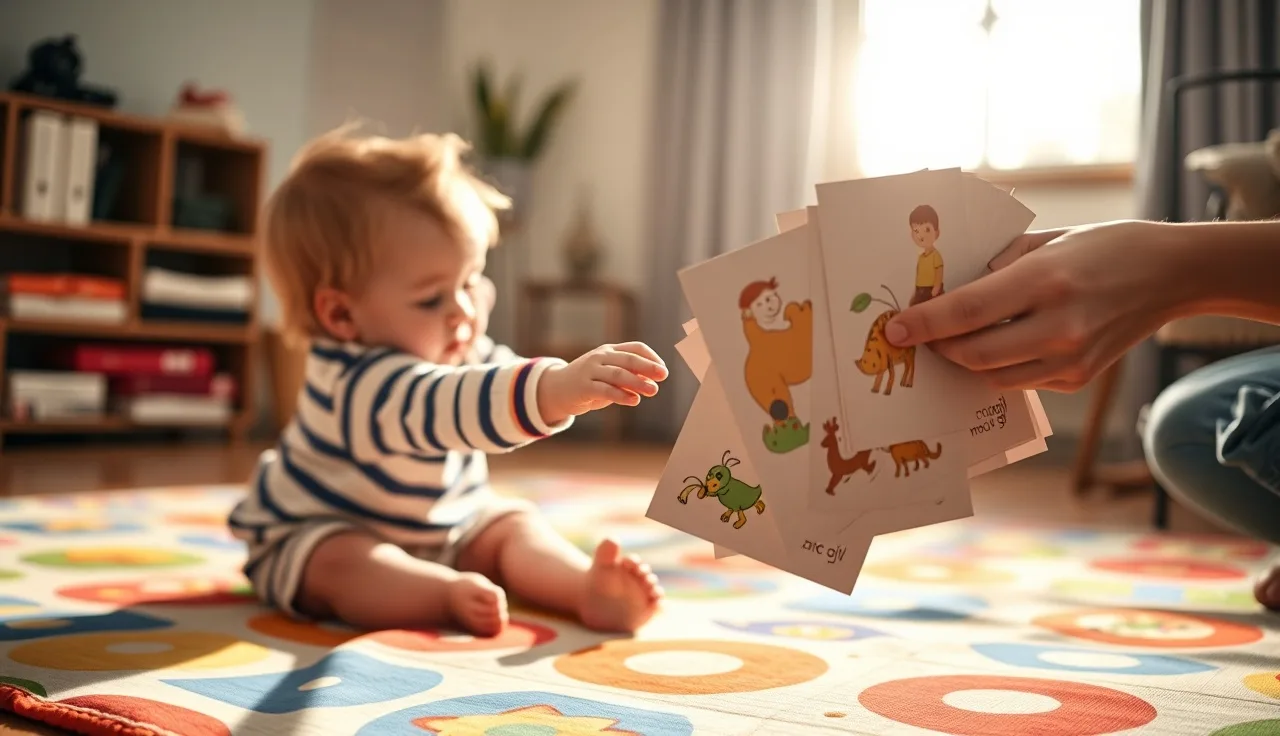
Visual supports are exactly what they sound like: any visual cue that helps a child understand language, follow routines, or communicate. They include picture schedules, choice boards, first-then boards, social stories, and visual timers.
Many autistic children are stronger visual processors than auditory processors. Pairing spoken language with a visual representation dramatically increases comprehension. An SLP might show a picture of "wash hands" while saying the phrase, or post a visual schedule so a child can see what's coming next without leaning on verbal instruction alone.
Visual schedules have good support from single-case research across dozens of studies. They reduce anxiety about transitions, a major source of behavioral dysregulation, and build the child's ability to follow routines on their own. That independence is itself a communication skill, because a child who is calm and oriented is a child who can learn.
Visual supports are cheap, low-tech, and easy to set up at home. You don't need a formal program. A set of printed pictures or a symbol-based app, put in sequence on a strip of cardboard, is a working visual schedule. The sophistication can grow from there.
How does speech therapy address echolalia in autistic children?
Echolalia, repeating words or phrases heard from other people or media, is extremely common in autism. It can be immediate (repeating what was just said) or delayed (quoting a TV show line in a seemingly unrelated context). Historically, echolalia was treated as something to stamp out. The current view is more careful.
Between 75 and 85 percent of autistic children who develop speech go through an echolalic stage [6]. For many children, echolalia is functional: it's a way of communicating before the child has built flexible, generative language. A child who says "do you want a snack?" when they want a snack is using what they have. The clinical term is "functional echolalia."
Speech therapy for echolalia now focuses on expanding what the child can do, not suppressing what they're already doing. Therapists use scripts as a bridge, taking a phrase the child echoes and gradually reshaping it toward more flexible use. They also model language at or just above the child's current level to grow the bank of available phrases.
For a much deeper look at the mechanics and meaning of echolalia, the echolalia and echolalia meaning articles cover what research actually says about this behavior and how to respond to it at home.
What is the SCERTS model and is it used in autism speech therapy?
SCERTS stands for Social Communication, Emotional Regulation, and Transactional Support. It's a framework developed by Barry Prizant and colleagues, widely used in school-based and clinic-based autism intervention.
SCERTS isn't a single technique. It's an assessment and planning tool. It maps where a child is across social communication and emotional regulation, then builds a support plan around those findings. It folds AAC, visual supports, and family involvement into one framework rather than bolting them on as separate add-ons.
The research base for SCERTS as a standalone program is thinner than for ESDM or JASPER. A 2014 study found gains in social communication outcomes for children receiving SCERTS-aligned intervention, but the study was not a randomized controlled trial [7]. It's widely respected clinically and shows up often in school IEPs, so it's worth understanding as a parent even if you won't be running it yourself.
If your child's school team mentions SCERTS, ask one question: what specific goals is the SCERTS framework generating, and how will we measure progress on those goals?
What role does joint attention play in speech therapy for autism?
Joint attention is the ability to share focus on an object or event with another person: following someone's pointing finger, or looking at a toy and then looking at the adult holding it. It's one of the earliest social-communicative behaviors in typical development, usually showing up between 9 and 12 months. In autism, joint attention is frequently delayed or develops differently.
Joint attention matters enormously for language learning because most early vocabulary is picked up through shared reference. A child who doesn't reliably follow a caregiver's gaze or point misses thousands of incidental word-learning moments every day.
Speech therapy for joint attention usually involves structured interaction routines where an adult creates chances for the child to look between a person and an object, follow a point, and eventually start joint attention themselves (showing or pointing to share interest, more than to request). JASPER, mentioned earlier, is built around growing joint attention and symbolic play as a foundation for language.
Research by Connie Kasari and colleagues at UCLA has shown that interventions targeting joint attention in minimally verbal autistic children produce downstream gains in spoken language, even when the intervention wasn't explicitly aimed at speech [3]. That suggests joint attention is more than a nice social skill. It's a genuine mechanism for language acquisition.
What should parents actually do at home to support speech therapy goals?
The honest answer is that home practice matters a lot, and the techniques are learnable. Research on parent-implemented NDBIs shows caregivers can produce real communication gains when trained well [2]. The challenge is knowing what to do.
Here are the strategies with the clearest evidence behind them for home use:
Follow the child's lead. Join whatever activity or object the child is focused on rather than redirecting them. Comment on what they're doing in simple, concrete language. "Ball. Rolling. The ball rolls."
Create communication opportunities. Pause before giving a desired item. Hold a toy up and wait. Put something out of reach. The research calls these "communicative temptations," and they're among the most reliable ways to prompt a spontaneous communication attempt.
Use language just above the child's current level. If the child uses mostly single words, model two-word combinations. If they use two words, model three. This is called "expanding," and it's one of the most consistent recommendations in early language intervention.
Respond to all communication attempts. If a child reaches, points, vocalizes, or uses a device, respond as if it were a full message. Responsiveness to early communication attempts is one of the strongest predictors of later language growth.
Don't require imitation before responding. Asking "say ball" before giving the ball sets up a demand-response dynamic that's different from natural communication and can lower motivation in some children.
If you want structured support for practicing these strategies consistently, tools like Little Words can help you build daily speech habits around your child's specific profile, based on the same evidence-based techniques SLPs use in session.
For a broader picture of what professional speech therapy looks like and how to find the right SLP, the speech therapy speech therapist article is a good next read.
How early should speech therapy for autism start?
The short answer: as early as possible. Early intervention, meaning services starting before age 3, has better outcomes than the same amount of intervention starting later. This is not controversial in the research literature.
The Individuals with Disabilities Education Act (IDEA) Part C requires states to provide early intervention services to children from birth through age 2 who have developmental delays or conditions likely to result in delays [8]. Autism qualifies. A child does not need a formal autism diagnosis to access Part C services. A developmental delay in communication is enough.
For children aged 3 to 21, Part B of IDEA requires free, appropriate public education including related services like speech therapy as part of an Individualized Education Program (IEP) [8]. Your public school system is legally required to evaluate and, if the child is eligible, provide services.
A 2017 review in the Journal of Autism and Developmental Disorders found that intensity of early intervention, measured in hours per week, was positively associated with language outcomes, with more hours generally producing better results [9]. The review noted diminishing returns at very high intensities, but the general direction was clear.
Don't wait for a diagnosis to seek an SLP evaluation. The evaluation itself is the starting point. For more on what early intervention looks like and how to access it, see the early intervention article.
How does speech therapy for autism differ from therapy for other speech and language disorders?
This is a real question that parents often don't think to ask. Speech therapy for a child with a pure phonological delay looks very different from speech therapy for an autistic child, even if both children are largely nonspeaking at age 3.
For phonological delays, the main target is the sound system: helping a child produce speech sounds accurately. Drills, imitation of sounds, and auditory discrimination exercises are standard tools.
For autism, the main targets are usually social communication: joint attention, intentional requesting, turn-taking, language comprehension, and eventually conversation. Sound accuracy matters too, but it's rarely the first priority unless the child also has a co-occurring condition like apraxia of speech, which shows up more often in autistic children than in the general population.
Apraxia of speech (difficulty with the motor planning for speech) is estimated to occur in a substantially higher proportion of minimally verbal autistic children than in the general population, though prevalence estimates vary and the research is still developing [10]. If a child has apraxia alongside autism, the plan needs to address both, and the apraxia work (typically motor-based, repetitive, multisensory) has to be woven into the autism-specific communication targets. The apraxia of speech and childhood apraxia of speech articles have more on how that diagnosis is made and treated.
Pragmatic language therapy, which targets the social use of language, is often the longest-running part of autism speech therapy. It stays relevant for verbally fluent autistic people who struggle with conversation, humor, sarcasm, and reading social situations. The autism spectrum speech therapy article goes deeper on how this plays out across age groups.
What does the research say about which technique is most effective overall?
No single technique outperforms all others across every child with autism. That's not a hedge. That's the honest state of the evidence.
A 2011 systematic review published in Pediatrics examined 34 studies of behavioral and developmental interventions for young autistic children [11]. The review found the strongest evidence for early intensive behavioral intervention (EIBI) and for NDBIs, with consistent gains in language and adaptive behavior. The authors noted that comparisons between specific programs were limited by differences in study design, age of participants, and outcome measures.
The National Autism Center's National Standards Project, which reviewed over 1,000 studies, sorted interventions into three tiers: established, emerging, and unestablished [12]. Communication-focused interventions with established status included behavioral approaches using discrete trial training, naturalistic teaching strategies, and PECS. Several other popular therapies landed in "emerging," meaning promising but not yet conclusively supported.
The honest takeaway for parents: look for programs that target your child's specific communication needs, use data to track progress, adjust when something isn't working, and are delivered (or supervised) by a licensed SLP with documented autism experience. Evidence-based practice means combining the best available research with clinical expertise and family values, the way ASHA defines it [1].
Comparing key approaches in a practical way:
| Approach | Core mechanism | Evidence level | Best fit |
|---|---|---|---|
| ESDM | Naturalistic, play-based, developmental | Strong (RCT data) | Toddlers and preschoolers |
| JASPER | Joint attention and symbolic play | Strong (multiple RCTs) | Minimally verbal children |
| PECS | Picture exchange as communication scaffold | Moderate (meta-analyses) | Children motivated by tangible items |
| AAC (device-based) | Alternative modality for expression | Strong for augmenting speech | Nonspeaking and minimally verbal |
| Discrete Trial Training | Structured behavioral rehearsal | Strong for skill acquisition | Imitation, matching, early requesting |
| SCERTS | Framework integrating social comm + regulation | Emerging | School-age children, team coordination |
| Visual supports | Environmental scaffolding | Strong (single-case studies) | All profiles, especially with routines |
How can online speech therapy work for autistic children?
Telehealth speech therapy expanded fast after 2020 and has built its own small but growing evidence base. A 2020 study in the Journal of Autism and Developmental Disorders found that caregiver-implemented NDBI delivered through telehealth coaching produced gains in child social communication comparable to in-person delivery [13].
The key is the model. The most effective telehealth format for autistic children isn't the child sitting in front of a screen while an SLP watches. It's the SLP coaching the parent in real time, while the parent interacts with the child in the natural environment. This coaching model actually matches what we already know about how NDBIs work, since the parent is the constant in the child's life.
Telehealth isn't right for every child. Children who need significant sensory integration support, or who have complex feeding and motor needs alongside communication, often do better with in-person therapy where an SLP can physically guide interaction. But for many families, especially those in underserved areas with limited access to autism-specialized SLPs, telehealth removes a real barrier.
For more on what to look for and how to access it, the online speech therapy article covers the practical questions including insurance, platforms, and how to judge quality remotely.
If your child is already getting consistent in-person therapy and you want to extend practice into daily life, Little Words offers an at-home AI companion aligned with evidence-based speech strategies that families can use between sessions.
Frequently asked questions
At what age should an autistic child start speech therapy?
As early as you can access it. Under IDEA Part C, children from birth through age 2 qualify for early intervention services if they show developmental delays, without needing a formal autism diagnosis [8]. Research consistently shows earlier intervention produces better language outcomes. If you're concerned about your child's communication at any age, request an SLP evaluation rather than waiting for a diagnosis.
Can autistic children who are nonverbal learn to talk?
Many can, though outcomes vary and nobody can predict with certainty. A 2013 study in Pediatrics found that 47 percent of minimally verbal autistic children who received early intervention gained phrase speech by early adolescence [9]. Full-featured AAC support appears to help rather than hinder speech development. Starting communication intervention early, whatever the modality, is the best available approach.
What is the difference between ABA and speech therapy for autism?
Applied behavior analysis (ABA) is a broad therapeutic framework that addresses behavior, learning, and communication using behavioral principles. Speech therapy, delivered by a licensed SLP, specifically targets communication, language, and speech. The two overlap a lot in modern practice. NDBIs like ESDM blend both. In many programs, an SLP and a behavior analyst work together. Each has a distinct scope of practice, but they're not competing.
How many hours of speech therapy per week does an autistic child need?
There's no single correct number. Research suggests more hours of early intervention generally produce better outcomes, with intensive programs often running 20 to 25 hours per week across all therapies combined [9]. But intensity has to match the child's tolerance, the family's capacity, and the quality of the intervention. A few hours per week of well-run, parent-extended therapy can beat many hours of poorly matched programming.
What is the Hanen program and is it effective for autism?
Hanen is a caregiver-training program with two relevant curricula for autism: More Than Words (for parents of autistic children) and TalkAbility (for verbal autistic children). It teaches parents to use naturalistic interaction strategies during daily routines. Research shows More Than Words improves parent responsiveness and, in some studies, child communication outcomes, though effect sizes are modest. It's a reasonable parent education option, especially in areas with limited direct SLP access.
Does sign language help autistic children communicate?
Sign language and key word signing (using signs for content words while speaking) can be effective communication supports for some autistic children, particularly those with strong visual learning profiles. The evidence is positive but not as strong as for PECS or speech-generating devices. One catch: signs need a communication partner who knows them. For children outside the home, a device or picture system may carry over better across settings.
How does a speech therapist evaluate an autistic child's communication?
An SLP evaluation for an autistic child usually includes standardized language assessments, observation of spontaneous communication in natural play, and a caregiver interview. Tools like the Communication and Symbolic Behavior Scales (CSBS) or the Autism Diagnostic Observation Schedule (ADOS-2) are common alongside speech-specific measures. A good evaluation identifies both what the child can do and the specific barriers to communication, more than a language age score.
What is social communication disorder and how is it different from autism?
Social communication disorder (SCD) is a diagnosis for children who have significant difficulty with the pragmatic (social) use of language but do not show the restricted and repetitive behaviors that mark autism. In practice the two can look similar. SCD was added to the DSM-5 in 2013. Speech therapy for SCD and for the pragmatic difficulties in autism overlaps a lot, focusing on conversation skills, inferencing, and reading social context.
Can speech therapy help autistic teenagers and adults, or is it only for young children?
Speech therapy has value across the lifespan. Adolescents and adults often benefit from targeted work on conversation skills, workplace communication, and self-advocacy. The language system stays plastic into adulthood, though gains may be more incremental than in early childhood. For autistic adults who are minimally verbal, AAC introduction is still appropriate and meaningful at any age. The speech therapy for adults article covers what services look like beyond early childhood.
Is it possible to do effective speech therapy for autism at home without a therapist?
Parents can learn and consistently apply evidence-based strategies that produce real communication gains, especially when coached by an SLP. That's different from replacing professional therapy entirely. Studies on parent-implemented NDBIs show meaningful outcomes when caregivers get structured training and feedback [2]. The most honest framing: home strategies extend and reinforce professional therapy rather than replace it, but for families without access to an SLP, structured parent-implemented approaches beat waiting.
What should I look for in a speech therapist for my autistic child?
Look for an SLP licensed in your state with documented experience treating autism specifically, more than a general pediatric caseload. Ask which evidence-based approaches they use, how they measure and track progress, and how they involve parents in carrying strategies home. ASHA's ProFind directory lists licensed SLPs and their specialty areas. An SLP who can explain their reasoning and adjusts the plan when progress stalls is worth more than one with an impressive list of credentials.
How does echolalia relate to speech therapy goals?
Echolalia is often a starting point, not an obstacle. Many autistic children use echoed phrases functionally before they develop flexible language. Good speech therapy accepts this, uses scripts the child already echoes as a foundation, and gradually builds toward more generative communication. Eliminating echolalia without replacing it with a functional alternative is not a useful goal. For more detail on what echolalia means and how to respond, see the echolalia meaning article.
What is discrete trial training (DTT) and when is it used in autism speech therapy?
DTT is a structured behavioral teaching method where a specific skill is broken into small steps and taught through repeated trials with clear prompts and reinforcement. It's effective for teaching discrete skills like matching pictures, imitating actions, and early requesting. It works best for building foundational skills and usually needs active work on generalization, getting skills to transfer from the therapy table to real life. Most modern programs pair DTT with naturalistic approaches rather than using it alone.
Sources
- American Speech-Language-Hearing Association (ASHA), Autism Spectrum Disorder practice portal: ASHA states there are no prerequisite skills required before trying AAC and that treatment must be individualized to the communication profile, not just the diagnosis
- Dawson G et al., Pediatrics 2010: Randomized controlled trial of the Early Start Denver Model: Toddlers receiving ESDM for two years showed significantly greater gains in language, adaptive behavior, and IQ compared to community-referred intervention
- Kasari C et al., multiple JASPER RCTs; summary via ASHA practice portal: JASPER interventions targeting joint attention produced downstream gains in spoken language in minimally verbal autistic children
- Schlosser RW & Wendt O, American Journal of Speech-Language Pathology 2008, AAC and speech in autism systematic review: Systematic review found no evidence that AAC suppresses speech development in children with autism, and some evidence it supports it
- Flippin M et al., Autism 2010, PECS meta-analysis: Meta-analysis of PECS studies found reliable gains in functional communication, though effect sizes varied across studies
- Prizant BM, Seminars in Speech and Language 1983; replicated in subsequent literature: Between 75 and 85 percent of autistic children who develop speech go through an echolalic stage
- Wetherby AM et al., Journal of Autism and Developmental Disorders 2014, SCERTS outcomes study: Children receiving SCERTS-aligned intervention showed gains in social communication outcomes; study design was not a randomized controlled trial
- U.S. Department of Education, IDEA Part C and Part B overview: IDEA Part C requires states to provide early intervention services from birth through age 2; Part B requires free appropriate public education including related services for ages 3-21
- Howlin P et al., Journal of Autism and Developmental Disorders 2017, review of early intervention intensity and language outcomes: Intensity of early intervention in hours per week was positively associated with language outcomes; a 2013 Pediatrics study found 47 percent of minimally verbal autistic children gained phrase speech by adolescence
- Tierney C et al., Pediatrics 2015, apraxia and autism prevalence estimates: Childhood apraxia of speech is estimated to occur in a substantially higher proportion of minimally verbal autistic children than in the general population; prevalence estimates vary and research is ongoing
- Warren Z et al., Pediatrics 2011, systematic review of early intervention for autism: Systematic review of 34 studies found strongest evidence for early intensive behavioral intervention and NDBIs, with consistent gains in language and adaptive behavior
- National Autism Center, National Standards Project: Communication-focused interventions with established status include behavioral approaches using discrete trial training, naturalistic teaching, and PECS
- Lindgren S et al., Journal of Autism and Developmental Disorders 2020, telehealth NDBI coaching study: Caregiver-implemented NDBI delivered via telehealth coaching produced comparable gains in child social communication to in-person delivery