Last updated 2026-07-09
TL;DR
The best speech therapy toys make a child communicate to get what they want: bubbles, wind-up toys, simple puzzles, and cause-effect toys lead the research. No toy teaches speech by itself. The toy is a reason to talk, and you are the one who turns play into language. An SLP should set your child's goals.
What makes a toy 'speech therapy' worthy in the first place?
Most toys sold as speech therapy toys are regular toys wearing a colorful label. Any toy can be a language tool if you use it right. And an expensive "educational" toy is useless if a child just plays with it alone in a corner.
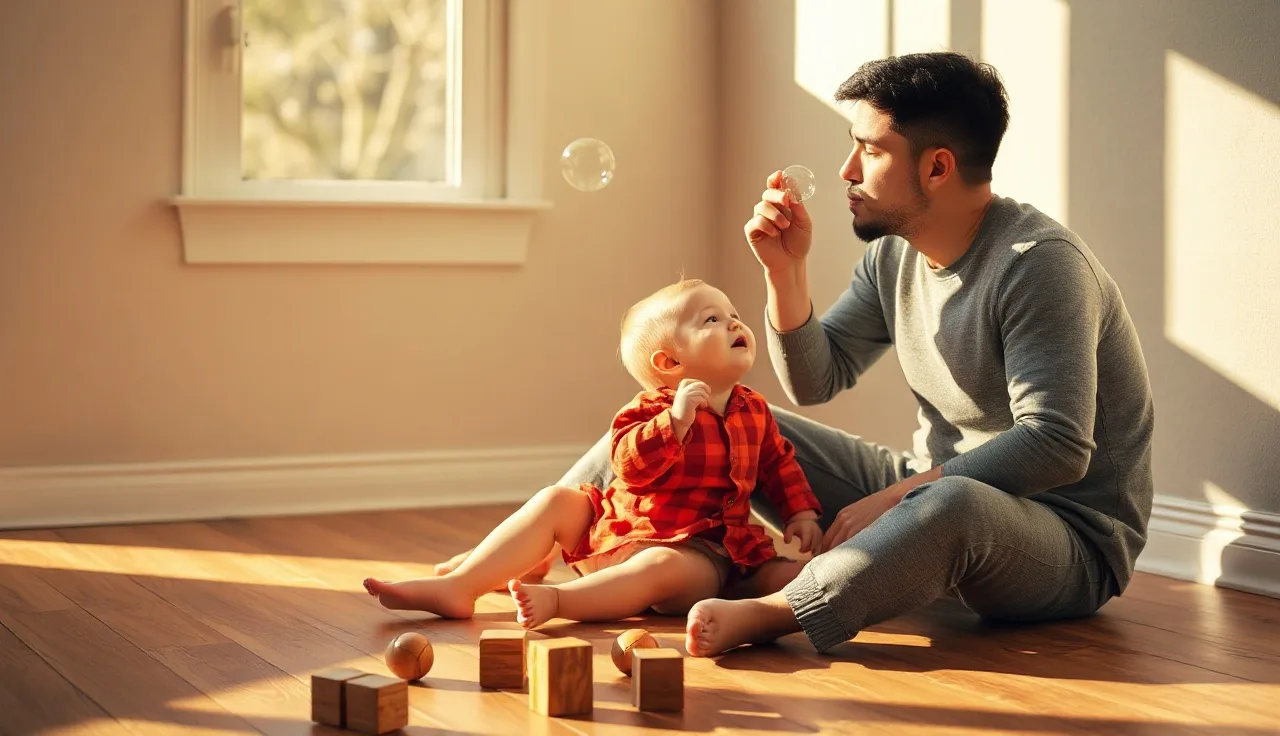
One question decides whether a toy helps speech: does it give a child a reason to communicate? The American Speech-Language-Hearing Association (ASHA) calls this a "communication temptation," a setup where a child is motivated to request, comment, or interact to get something they want [1]. A bubble wand sitting open on the table is just a bubble wand. A bubble wand you control, blowing and then stopping and waiting, is a communication temptation.
Research on early language keeps pointing back to the adult, not the object. A 2017 review in Pediatrics found that responsive, talk-back interactions, not passive media exposure or solo toy play, were tied to better language outcomes in toddlers [2]. The toy is the prop. You are the intervention.
Some props do work better than others. The best speech therapy toys are motivating for that specific child, have natural pause points where you can wait for a response, and don't talk back on their own. Single-function electronic toys that narrate themselves tend to lower adult interaction, not raise it. Good toys meet a child at their current level and stretch gently toward the next one.
What are the best speech therapy toys for toddlers (ages 1 to 3)?
For toddlers, especially late talkers, the goals are joint attention, requesting, and first words or word combinations. The toys that deliver are simple, controllable by the adult, and hard to resist.
Bubbles. SLPs rank these as the best low-tech tool for toddlers, and it isn't close. You blow, the child watches, you stop. Then you wait. Even a child with very limited communication will eventually look at you, reach, or approximate a word like "more" or "buh." A bottle costs a few dollars.
Wind-up toys. A frog that hops or a robot that walks and then stops gives you a clean loop: wind it, let it go, it stops, you wait. Repetition without boredom, because kids genuinely want it to go again.
Simple cause-and-effect toys. Pop-up toys where a button makes an animal appear, or a ball-drop tower, give kids a clear goal. You control access, or play dumb ("I don't know how to do it, show me"), to pull out communication.
Puzzles with handles. A four to six piece wooden puzzle lets you label each piece as the child asks for it. You hold the pieces. The child has to show you which one they want. The motivation to finish is real, so the language comes on its own.
Playdough and simple tools. Cutting it apart, rolling snakes, hiding small toys inside. Every step hands you a word target that comes up naturally: cut, squeeze, more, stuck, open.
A 2019 study in the Journal of Speech, Language, and Hearing Research found that structured play routines with clear adult scaffolding, where the adult follows the child's lead but manages the pacing, produced significantly more language attempts in late-talking toddlers than unstructured free play [3]. The structure is what makes the opening.
What I'd skip at this age: tablets loaded with word apps, electronic books that read themselves, and any toy busy enough to occupy a child without needing you.
Which toys help kids build vocabulary specifically?
Vocabulary grows when a child hears a word in context, over and over, at the exact second they care about the thing it names. A toy your child is genuinely excited about beats ten "educational" ones they ignore.
Pretend play sets are strong vocabulary builders around ages 2 to 5. A toy kitchen cycles through dozens of nouns (pot, cup, spoon, egg) and verbs (cook, stir, eat, pour) in one session. A toy garage does the same with vehicles and actions. Narrate alongside the child instead of quizzing. "Oh, you're pouring! Pour it in. All done. More?" beats "What's this called?" every time.
Farm or animal sets. Animal names, animal sounds, and action words all surface naturally. Kids often reach for animal sounds before real words, and "moo" and "baa" count as intentional communication.
Books. Not electronic talking books. Simple board books with one image per page, or lift-the-flap books, where you control the pace. The AAP notes that shared book reading starting in infancy supports language and literacy and recommends it as a daily habit [4]. The talk around the book matters as much as the words on the page.
Barrier games. These show up in real speech therapy and cost nothing. Two players each get an identical set of small objects. One gives directions ("Put the red car next to the house") and the other follows. Vocabulary and listening comprehension at the same time. Good for kids around 4 and up.
The vocabulary research holds steady: children learn words faster when adults use them inside the child's focus of attention, a principle called joint attention, and when the same word repeats across meaningful contexts [5]. A flashcard deck at a table is far weaker than hearing "pour" said naturally five times while pouring water into cups.
What toys work for kids with autism who are minimally verbal?
For autistic children who are minimally verbal or nonspeaking, toys serve a different purpose. The goal may not be spoken words at all, at least not yet. The goal is any reliable form of communication: pointing, handing over an object, using a picture card, or activating an AAC device.
The autism communication research supports total communication, using several modalities at once, over any approach that chases spoken words alone [6]. A toy doesn't need to produce speech to be a language tool.
Sensory cause-and-effect toys. Light-up or vibrating toys a child activates with a switch help kids working on intentional communication. When a child learns that pressing a big button makes something fun happen, that's the seed of a bigger idea: my actions change the world, and communicating can get me what I want.
AAC-adjacent toys. Low-tech communication boards, PECS (Picture Exchange Communication System) materials, and core word boards can sit right next to play. Some families keep simple cardboard symbol sets beside a favorite toy. You can read more about aac devices as a companion to toy-based interaction.
Preferred objects as communication anchors. For a child who loves specific things (trains, certain textures, a favorite character), those preferences are communication gold. The child wants the train. You have the train. Now there's a reason to communicate. Whatever form it takes (pointing, vocalizing, eye contact), you honor it and hand over the train.
Mr. Potato Head and other assembly toys. SLPs love these for autistic kids because you control the pieces, you can label body parts, and putting the ear where the eye goes is genuinely funny to a lot of kids. Humor and surprise break through where structured drill stalls.
If your child is on the autism spectrum, read autism spectrum speech therapy alongside this. The toy choices should line up with a full communication plan from your SLP.
Are electronic speech therapy toys worth buying?
Here's my honest opinion: most electronic toys sold as speech therapy tools aren't worth the premium the label carries.
The research on screen-based and electronic language learning for toddlers is not encouraging. A 2007 study in the Archives of Pediatrics and Adolescent Medicine found that infant-directed media was tied to fewer vocabulary words, not more, in children under 16 months, with each hour a day of viewing linked to 6 to 8 fewer words [7]. The AAP's guidance for children under 18 to 24 months still says to avoid solo screen media other than video chat [4].
Toys that narrate themselves, self-teach, or pour stimulation at a child without asking for a response hurt late talkers in particular. They cut the conversational back-and-forth the child needs. The child is entertained. Entertainment and language learning are not the same activity.
There are narrow exceptions. Simple recordable buttons, where an adult records a single word or phrase and the child presses to communicate it, can genuinely help kids working on intentional communication. Those are $5 to $20 items, not $80 "smart" toys.
AAC devices are a different category. Apps like Proloquo2Go or dedicated devices like the Tobii Dynavox aren't toys. They're assistive technology set up with an SLP. They cost anywhere from $200 to $8,000 or more depending on the device, and they do real clinical work. AAC devices get their own detailed treatment.
Here's the test: if an electronic toy needs a present, responsive adult to work well, it has potential. If it works fine without you, it probably isn't helping your child's communication the way the box promised.
What's the right toy for each communication stage?
Communication development moves through roughly predictable stages, and the right toy depends on where a child is now, not their age on the calendar.
Here's the plain breakdown:
| Communication Stage | What It Looks Like | Best Toy Types |
|---|---|---|
| Pre-intentional | Reacts to environment but not clearly communicating | Cause-effect toys, light/sound toys, sensory bins |
| Emerging intentional | Reaches, looks, moves toward desired objects | Bubbles, wind-up toys, pop-up toys |
| Early requesting | Points, gives objects, vocalizes to get things | Puzzles (you hold pieces), simple pretend play sets |
| Single words | Says 1-word approximations or signs | Farm animals, vehicles, food sets, books |
| Word combinations | Combining 2 words ("more juice," "big dog") | Dollhouses, pretend kitchen, dress-up sets |
| Sentences, grammar | Building longer utterances | Barrier games, story cards, more complex pretend play |
Your SLP can tell you what stage your child is at and what the next target should be. No SLP yet? Early intervention services for children under 3 are free in all U.S. states under IDEA Part C, and they include speech therapy if a child qualifies [8].
One common mistake: parents buy toys a stage or two above where the child is, hoping it will pull communication forward. It usually doesn't. A child who isn't requesting reliably gets nothing from a toy built for sentence building. Meet the child where they are.
How much should you spend on speech therapy toys?
You don't need to spend much. The most effective speech therapy tools (bubbles, playdough, wooden puzzles, matchbox cars, small animal figures, board books) run $5 to $25 each. A full home toolkit for a late talker comes in under $100.
The priciest toys in the "educational" and "therapy" aisles are not the most effective. They're the most marketed. A $150 "language development system" does not beat a $4 bottle of bubbles in the hands of an attentive parent.
A few investments earn their keep. A durable wooden farm animal set or a well-made toy kitchen lasts years and covers hundreds of language moments. Books wear out, so buy board books you can wipe down. If your child has specific sensory needs (certain textures, weighted objects, fidget tools), those toys can cost more, roughly $20 to $60, and the cost is sometimes partly reimbursed through early intervention or school IEP services when the SLP recommends them.
Pediatric speech therapy itself runs about $100 to $300 per session out of pocket in most U.S. markets, though insurance covers it for many diagnoses [9]. The toys cost a fraction of that and stretch the therapy you're already paying for across every day of the week.
Tight budget? Try library toy lending programs (many public libraries now run toy libraries), Facebook Marketplace for secondhand wooden toys, and your child's own things. A set of spoons and cups is a language activity. Specialty packaging is optional.
How do you actually use a toy to encourage speech?
Technique matters more than the toy. These approaches show up again and again in the SLP research and in clinical practice.
Sabotage the environment. Put desired toys in clear containers the child can't open. Hand over one puzzle piece at a time. Give the child a cup with nothing in it. Each setup makes communication the way to solve the problem.
Wait. This is hard for most parents. After you make an opening, count silently to 10 before you jump in. Research on milieu teaching shows that extended wait time, holding out expectantly while looking at the child, sharply raises communication attempts [3]. Ten seconds feels like forever. Sit in it.
Imitate, don't correct. If a child says "buh" for bubble, say "bubble!" back clearly and blow a bubble right away. Don't say "no, say buh-bble." The instant reward paired with a clean model of the word is how the word sticks.
Follow the child's lead. Research on responsive interaction shows child-led play, where the adult follows the child's attention instead of directing it, produces more language than adult-directed instruction [3]. If your child ditches the puzzle to play with the box, talk about the box.
Model one step up. No words yet? Model single words. Using one word? Model two. Combining two words? Model short sentences. Aim at the next step, never several steps ahead.
For kids using echolalia, where a child repeats phrases they've heard rather than building new ones, toys used inside familiar routines help them tie those phrases to real meaning. The toy turns a repeated phrase into a functional one.
SLPs teach families these moves in parent coaching sessions. If you do one thing alongside buying toys, do this: take a parent coaching session and watch the SLP use a toy with your child. Seeing it once teaches more than reading about it ten times.
Can a speech therapy app replace toys?
No, but a few can complement what you're doing with physical toys.
Apps are screens. The AAP is clear: for children under 18 to 24 months, avoid screen time other than video chat, and for ages 2 to 5, cap screen use at one hour daily of high-quality programming with a caregiver watching along [4]. Co-viewing is the part that counts, because the adult is what makes the content interactive.
For older kids, or families using tech on purpose, apps that support AAC or give parents structured prompts for home practice can add value. They don't replace an SLP or the physical, spontaneous back-and-forth of real toy play. Language is social and physical long before it's digital.
If you want a structured at-home support tool, Little Words offers an AI speech companion built for neurodivergent kids that gives parents guided activities between therapy sessions. It extends SLP-directed goals. It doesn't replace a professional evaluation. You can start the quiz at littlewords.ai/start to see if it fits your child's situation.
The honest comparison: a physical toy costs less, needs no screen, and can run for long stretches without the developmental worries tied to passive media. A well-built app gives parents direction and consistency in home practice. Both do their best work when a real SLP is setting the goals.
What does a speech therapist actually use in sessions?
Real SLP sessions for young kids look more like play than most parents expect. For children under five, there's rarely a worksheet or a flashcard anywhere.
A typical SLP bag: bubbles, a wind-up toy, Mr. Potato Head, a small toy barn with animals, a few cars, a simple ball, playdough, some picture books, and a bag of small figurines. That's often the whole kit. The skill is in how the SLP uses those objects to create communication openings, shape responses, and then fade their support as the child gets stronger.
For children with childhood apraxia of speech, the toy picks shift a little. Toys that pull out specific sound combinations, that carry certain vocabulary targets ("pop," "beep," "up," "go"), are chosen on purpose, because apraxia therapy needs high repetitions of specific motor patterns. The toy gives a reason to say the target word many times without it feeling like drill.
SLPs doing speech therapy in early intervention often spend as much time coaching the parent as working with the child, because parent interaction across the whole week matters far more than one or two 30-minute sessions. The toy is a vehicle for parent coaching.
And if your child works with a therapist over online speech therapy, the same toys apply. The therapist watches through the screen while you play with your child, coaches you in real time, and uses the same strategies. You keep the physical toys at home. The therapist brings the expertise.
Are there red flags that mean a child needs more than toys?
Yes, and I'll be direct about it. Toys and at-home strategies are useful supports. They don't replace a professional evaluation.
The AAP recommends developmental screening at 9, 18, and 24 or 30 months, plus autism-specific screening at 18 and 24 months [10]. If your child isn't meeting language milestones, ask your pediatrician for a referral to a speech-language pathologist, no matter how many at-home activities you've been running.
Specific red flags that call for evaluation sooner rather than later, per ASHA [11]:
- No babbling by 12 months
- No intentional gestures (pointing, waving, showing) by 12 months
- No single words by 16 months
- No two-word combinations by 24 months
- Any loss of language or social skills at any age
Regression is the flag that outranks all the others. Any loss of skills, at any age, is a reason to call a professional immediately.
Early intervention under IDEA Part C is free for children under 36 months who qualify, in all 50 states [8]. A parent can self-refer. You don't need a doctor's referral to request an evaluation. Earlier services correlate with better outcomes, and "wait and see" is rarely the right call once a parent has a real concern.
Toys help. They're real tools. But a concerned parent plus good toys plus no evaluation is not the same as professional speech-language pathology. They work together, not instead of each other.
Frequently asked questions
What are the best speech therapy toys for a 2-year-old late talker?
Bubbles, wind-up animals, a simple wooden puzzle where you hold the pieces, and a small farm or vehicle set are the most useful toys for a 2-year-old late talker. The key is using them with deliberate pauses: you control the fun, then wait for the child to communicate in any form before continuing. Cost is low; all four categories together run under $50.
Do speech therapy toys actually work?
Toys alone don't teach speech. What works is how an adult uses a toy to create communication openings, offer a clear word model, and respond the moment the child tries. A 2019 study in the Journal of Speech, Language, and Hearing Research found that structured play routines with adult scaffolding produced significantly more language attempts in late-talking toddlers than unstructured free play. The toy is the pretext; the interaction is the therapy.
What toys help autistic children communicate?
For autistic children, especially those who are minimally verbal, cause-and-effect toys, switch-activated sensory toys, and preferred objects used as communication anchors tend to work best. The goal is any reliable form of communication: pointing, handing over an object, or activating an AAC symbol. An SLP familiar with autism communication should guide which specific tools fit the child's current level and goals.
Are electronic learning toys good for late talkers?
Generally, no. Electronic toys that narrate themselves, self-reward, or keep a child engaged without requiring interaction can actually cut the conversational back-and-forth late talkers need. The AAP advises limiting solo screen-based media for children under 2. Simple recordable communication buttons, where an adult records a word and the child presses it to communicate, are a narrow useful exception in the $5 to $20 range.
What speech therapy toys do SLPs actually recommend?
In practice, SLPs reach for bubbles, wind-up toys, Mr. Potato Head, small animal sets, a simple ball, playdough, and picture books. None are expensive or labeled as therapy toys. The SLP picks them because they're motivating for toddlers, have natural pause points, and let the adult control the pacing. The therapist's technique with these plain objects is what makes them therapeutic.
How do I use toys to help my child talk at home?
Control access to the fun: hold the puzzle pieces, keep the bubble wand, run the wind-up toy yourself. Then pause and wait up to 10 seconds for the child to communicate in any way. When they do, respond right away and model the word clearly before continuing. Follow the child's interest instead of steering them to your activity. This approach, called milieu teaching or responsive interaction, is the evidence-based core of most early language interventions.
What toys are good for building vocabulary in preschoolers?
Pretend play sets (toy kitchen, garage, doctor kit), animal and vehicle figures, simple board books, and barrier games are the most reliable vocabulary builders for preschoolers. The mechanism is the same across all of them: the adult labels objects and actions the moment the child is interested. A child hearing "pour" naturally while pouring water learns it faster than hearing it on a flashcard.
At what age should I worry if my child isn't talking?
ASHA recommends evaluation if a child has no single words by 16 months, no two-word combinations by 24 months, or any loss of language or social skills at any age. The AAP recommends developmental screening at 9, 18, and 24 to 30 months. Children under 36 months who qualify get free speech therapy through early intervention under IDEA Part C. A parent can self-refer for an evaluation without a doctor's note.
Can books count as speech therapy toys?
Yes, absolutely. Shared book reading is one of the strongest evidence-based language supports there is. The AAP recommends reading aloud starting in infancy. Simple board books, lift-the-flap books, and wordless picture books (where the child narrates) are especially useful. The interaction during reading, pausing, pointing, asking open questions, labeling pictures, matters more than the book's content.
Is there a difference between speech therapy toys and regular toys?
Not really. "Speech therapy toy" is mostly a marketing label. Any toy that motivates the child and gives an adult chances to create communication moments works. The research favors toys with clear pause points, toys that require the child to interact to keep the fun going, and toys the adult controls during play. Simple, cheap, high-motivation toys outperform expensive "educational" ones in clinical settings.
What toys help with articulation and pronunciation?
For articulation, SLPs choose toys that naturally pull out target sounds. Cars and trucks get you plenty of "go," "beep," "stop" (early consonants). Animals give you "moo," "baa," "roar." Pop toys give "pop" and "up." For children with childhood apraxia of speech specifically, high-repetition targets tucked inside motivating play are a core treatment strategy, so any toy the child wants to use again and again becomes a motor practice tool.
How much do speech therapy toys cost?
The most effective ones cost very little. Bubbles run under $5. A set of wooden puzzle shapes is $10 to $20. A small farm animal set is $15 to $30. A full home toolkit comes together for under $100. Specialized sensory toys or communication tools (like recordable buttons) run $10 to $60. Some of these costs may be reimbursable through early intervention or school services if an SLP recommends them as part of a treatment plan.
Can toys replace speech therapy?
No. Toys are tools that extend and support speech therapy, but they don't replace evaluation and treatment. An SLP identifies the specific speech or language pattern your child needs to work on and sets goals that change as your child grows. Toys at home between sessions add practice time, which helps. A child with a speech or language disorder needs professional guidance no toy, app, or book can provide alone.
What toys work for a child who uses echolalia?
Children who use echolalia often do well with toys embedded in predictable, repeated routines. The routine makes familiar phrases meaningful in context: saying "ready, set, go" every time you release a wind-up toy helps a child connect that phrase to a real communicative function. Over time, echolalic phrases used in consistent routines can become functional communication. An SLP can help you pick which of your child's repeated phrases to anchor to specific toys and activities.
Sources
- ASHA, Communication Temptations and Milieu Teaching: ASHA describes 'communication temptations' as situations structured so a child is motivated to communicate to get something they want, a core strategy in early language intervention.
- Kuhl PK et al., Pediatrics (2017), 'Revisiting the Sensitive Period for Language': A review in Pediatrics found that responsive, talk-back interactions rather than passive media exposure were associated with better language outcomes in toddlers.
- Fey ME et al., Journal of Speech, Language, and Hearing Research (2019), 'Effects of Parent-Implemented Communication Intervention': Structured play routines with clear adult scaffolding and extended wait time produced significantly more language attempts in late-talking toddlers than unstructured free play.
- American Academy of Pediatrics, Media and Young Minds policy statement: The AAP recommends avoiding solo screen media for children under 18-24 months other than video chat, limiting screen time to one hour daily for ages 2-5 with co-viewing, and reading aloud starting in infancy.
- Tomasello M & Farrar MJ, Child Development (1986), 'Joint Attention and Early Language': Children learn words faster when adults label objects at the moment of the child's focus of attention (joint attention) and when words are repeated across multiple meaningful contexts.
- Mirenda P, Autism (2003), 'Toward Functional Augmentative and Alternative Communication for Students with Autism': Total communication approaches using multiple modalities simultaneously are more effective for minimally verbal autistic children than focusing exclusively on spoken output.
- Zimmerman FJ et al., Archives of Pediatrics and Adolescent Medicine (2007), 'Associations Between Media Viewing and Language Development': Infant-directed media exposure was associated with fewer vocabulary words in children under 16 months, with each hour per day of viewing associated with 6-8 fewer words.
- U.S. Department of Education, IDEA Part C Early Intervention Program: Under IDEA Part C, all U.S. states must provide free early intervention services including speech therapy to eligible children under 36 months; parents can self-refer for evaluation.
- ASHA, Speech-Language Pathology Service Delivery: Pediatric speech therapy costs approximately $100 to $300 per session out of pocket in most U.S. markets, though insurance covers it for many qualifying diagnoses.
- American Academy of Pediatrics, Developmental Surveillance and Screening Policy Statement: The AAP recommends formal developmental screening at 9, 18, and 24 or 30 months, and autism-specific screening at 18 and 24 months.
- ASHA, Late Language Emergence: ASHA red flags for speech-language evaluation include no single words by 16 months, no two-word combinations by 24 months, and any regression in language or social skills at any age.