Last updated 2026-07-09
TL;DR
Most toddlers reach 50 words and start combining two words by age 2. The strategies with the strongest evidence are child-directed speech (talking at their level), following the child's lead during play, and reading aloud daily. If your toddler isn't meeting those milestones, early intervention before age 3 significantly improves outcomes.
What milestones should a toddler hit for talking?
Knowing where your child stands is the first step, and the numbers are more specific than most parents realize.
The American Academy of Pediatrics and the American Speech-Language-Hearing Association both publish milestone charts grounded in large population studies [1][2]. Here's a quick reference:
| Age | Typical talking milestones |
|---|---|
| 12 months | 1-3 words, babbles with intent, responds to name |
| 15 months | 5-10 words |
| 18 months | At least 10 words; points to show interest |
| 24 months | 50+ words, starts combining two words ("more milk", "daddy go") |
| 36 months | 200-1,000 words; strangers understand about 75% of speech |
These are the 50th-percentile figures. There's real variation around them. A child with 40 words at 24 months is close to the mark. A child with 5 words at 24 months is not, and that gap changes what you do next.
Here's the thing parents often miss: comprehension almost always runs ahead of expression. A toddler who understands "get your shoes" and follows two-step directions sits in a very different place than one who doesn't understand simple requests, even if both are quiet. If your child understands well but says little, the picture is more hopeful than if both are lagging.
What does the research say about teaching a toddler to talk at home?
Several home-based strategies have real evidence behind them. A handful have weak evidence. Some popular products have almost none.
The strongest support goes to a cluster of techniques speech-language pathologists call "responsive interaction" or "naturalistic language intervention." A 2017 Cochrane review of parent-mediated interventions found that training parents to use these techniques improved children's expressive vocabulary and communication [3]. The core ideas are simpler than the academic language suggests.
Follow the child's lead. Whatever your toddler is looking at or touching, talk about that thing. A toddler paying attention to a dog is ready to hear "dog" and "big dog" and "the dog is running." A toddler who's been redirected to a flashcard is not. Interest drives learning.
Child-directed speech. This means speaking in shorter sentences, using a slightly higher pitch, repeating key words, and pausing to give your child a turn. It's sometimes called "parentese" and it's not baby talk. You're not dropping grammar. You're slowing down and lighting up the important words. Research from the Stanford Language and Cognition Lab found that the amount of child-directed speech a child receives predicts vocabulary size at 24 months [4].
Self-talk and parallel talk. Self-talk is narrating what you're doing ("I'm pouring the water"). Parallel talk is narrating what your child is doing ("you're stacking the blocks"). Both put language in front of children in context, which is how words stick.
Expand and extend. If your child says "ball," you say "yes, red ball" or "you kicked the ball." You're modeling the next step up from where they are, without correcting them or demanding they repeat it.
Read aloud every day. The evidence here is overwhelming and decades old. Reading to children increases vocabulary, phonological awareness, and later reading skills [5]. Board books, wordless picture books where you narrate, repetitive rhyming books, all of it works. The interaction around the book matters as much as the words on the page, so ask questions, point, and let your child respond.
How many words a day does a toddler need to hear?
It's less about a daily word quota than about back-and-forth. The "30 million word gap" study from Hart and Risley (1995) got wide attention for finding that children in lower-income households heard far fewer words by age 3, with lasting effects on vocabulary and school readiness [6]. The exact number has been critiqued and refined since then, but the direction has held: more conversational turns and more varied vocabulary in a child's environment predict better language outcomes.
What's come into clearer focus in more recent research is that conversational back-and-forth matters more than sheer volume. A 2018 study in Psychological Science found that the number of conversational turns (child communicates, adult responds, child responds again) predicted brain language network development and vocabulary more strongly than the raw word count a child heard [7]. You don't need to narrate your entire day like a sports commentator. You need to answer your child's bids for interaction and keep the volley going.
So, in practice: when your toddler points at something, name it and then wait. When they babble, respond as if they said something real. When they hand you an object, say what it is and what you might do with it. These small exchanges, repeated dozens of times a day, are the actual machinery of language learning.
What are the most common reasons a toddler isn't talking?
There's no single answer, and this is an area where parents deserve honesty rather than false reassurance.
Some children are late talkers with no identifiable reason. Around 10-15% of 24-month-olds are late talkers [2], and a meaningful share of them catch up by age 4 or 5 without intervention. These kids are sometimes called "late bloomers." The problem is that you generally can't tell from the outside which late talker will catch up and which won't, which is why waiting and seeing without any professional input is riskier than it sounds.
Other children are late talking because of:
- Hearing loss (even mild or intermittent hearing loss from ear infections can disrupt language learning significantly)
- Developmental language disorder (DLD), a condition where language learning is persistently harder despite normal hearing and intelligence
- Autism spectrum disorder, where social communication differences affect how language develops
- Childhood apraxia of speech, where the motor planning for speech is disrupted (see childhood apraxia of speech)
- Bilingual exposure, which can temporarily slow single-language vocabulary counts without indicating any disorder (total vocabulary across both languages is usually typical)
- Limited language-rich interaction, which is addressable
Get a hearing test before assuming anything else. It's standard practice for a reason. It's non-invasive, covered by most insurance, and it rules in or rules out one of the most common and most treatable contributors to speech delay.
If you suspect autism may be in the picture, the communication profile often looks different from a simple late talker: less joint attention (pointing to share interest rather than just to request), less back-and-forth, more unusual or absent babble. That said, autism is diagnosed by a team, not a checklist, and autism spectrum speech therapy has a well-established evidence base even when diagnosis comes later.
Which toys and activities actually help a toddler talk more?
Open-ended toys beat electronic ones for language development. Full stop. That's not opinion. It's what the data shows.
A 2015 study in JAMA Pediatrics found that electronic toys produced significantly fewer adult words, fewer conversational turns, and fewer parental responses compared with books or traditional toys during play [8]. The lights and sounds basically stand in for the parent-child conversation instead of supporting it.
The toys that tend to generate the most language interaction are:
- Simple dolls and figures (they invite narrating a story)
- Blocks and stacking toys (cause-and-effect, spatial language)
- Pretend kitchen or play food sets (action words, social scripts)
- Balls (movement, take-turns play)
- Books, especially ones with flaps, textures, or repetition
Activities matter more than toys. Bathtime, snack prep, getting dressed, a walk outside where you narrate and point, these are language-rich simply because you're together and the world hands you things to talk about. You don't need to buy anything.
One technique worth naming: "sabotage play." You set up a situation where your child has to communicate to get what they want. Put a favorite toy in a clear container they can't open. Give them one cracker when they usually get several. Blow bubbles and then put the wand down without blowing more. These setups create a genuine need to communicate, which is a far stronger language prompt than asking a child to "say please."
Should you worry about screen time affecting speech development?
Yes, with some nuance.
The AAP recommends no screen time for children under 18-24 months except video chatting, and limited, high-quality programming for 2-5 year olds, with a caregiver watching together [1]. The reasoning isn't that screens are inherently corrupting. It's that screen time crowds out the conversational back-and-forth that language learning depends on, and young children learn language from people, not from recordings.
A 2017 JAMA Pediatrics study found that each additional 30 minutes of daily handheld screen exposure at 18 months was associated with higher odds of expressive speech delay at 18-36 months [9]. The confidence interval was wide and the effect size was modest, so don't read this as "screens cause speech delay" in a deterministic way. But it's a real signal, not a moral panic.
Video chat is the exception because it involves a real person responding to the child in real time. A grandparent on FaceTime who waits for the child to respond and reacts to what they do is giving something close to live interaction. A YouTube video is not.
If your toddler already watches a lot of screens and is also a late talker, cutting screens and adding live interaction is a reasonable, low-risk first step. It's not a substitute for evaluation if milestones are significantly delayed, but it's worth doing regardless.
When should you get a speech-language evaluation?
Earlier than most parents seek one. The general guidance from ASHA is that you can and should request an evaluation any time you have a concern, and that specific milestones should trigger a referral whether or not a pediatrician has flagged anything [2]. Pediatricians use developmental surveillance at well-child visits, but they're not speech experts and they don't always catch language delays early.
Get an evaluation if your child:
- Is not babbling by 12 months
- Has no words by 16 months
- Has no two-word combinations by 24 months
- Loses language skills they previously had at any age
- Is hard to understand by familiar adults at 24 months (less than 50% intelligible)
- Is hard to understand by strangers at 36 months (less than 75% intelligible)
Losing language skills is the one that should prompt the fastest action. Regression can be a sign of several conditions, some of which have time-sensitive treatment windows.
For children under 3, you don't need a doctor's referral to access early intervention services in the United States. Under the Individuals with Disabilities Education Act (IDEA), Part C, states are required to evaluate children under 36 months for developmental delays at no cost to the family. You contact your state's early intervention program directly. If your child qualifies, services including speech therapy are provided, often in your home [10].
After age 3, services transition to the school district under IDEA Part B. The eligibility criteria shift somewhat, but the right to a free evaluation stays.
If you want to skip the waitlist (which can be long for public services) and pay out of pocket or through private insurance, a private speech-language pathologist evaluation typically costs $200-500 depending on the practice and region, though this varies a lot. Some pediatric hospitals offer sliding-scale fees.
What happens in speech therapy for toddlers and does it work?
Good speech therapy for toddlers looks a lot like play. That's on purpose.
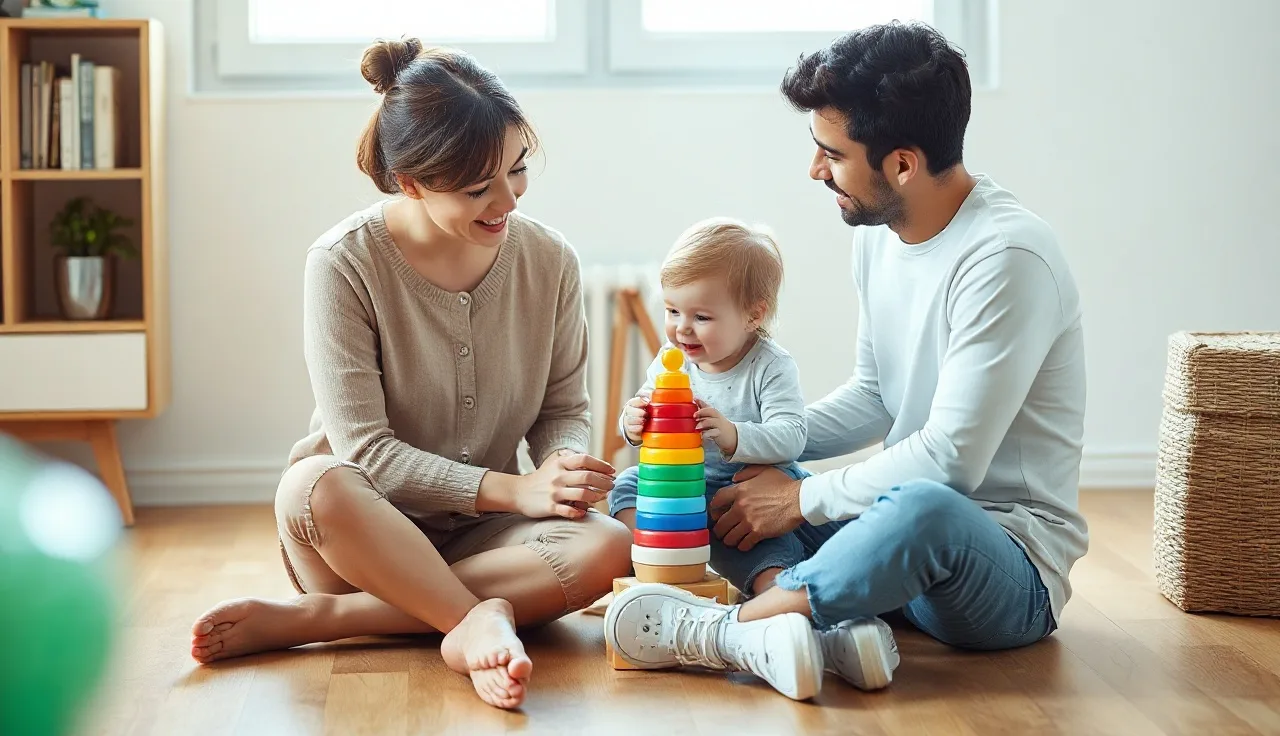
For a 2-year-old, an SLP isn't going to sit them at a table and drill flashcards. They're going to get on the floor, follow the child's lead, model language in context, and coach the parent to do the same at home. Parent coaching has become a central part of early speech therapy because the SLP sees the child for maybe an hour a week. The parent is there for everything else.
The techniques vary depending on what's driving the delay. A child with apraxia of speech needs intensive, frequent, motor-practice-focused therapy (like PROMPT or DTTC). A child with a social-pragmatic communication difference, common in autism, benefits from approaches like JASPER or PRT that build joint attention and social engagement as the foundation for language. A child who is simply a late talker with good comprehension and social skills may need less formal therapy and more parent coaching.
Does it work? The evidence base is strongest for early intervention in general and for specific techniques matched to the child's profile. A 2016 Cochrane review found that speech and language therapy for children with language disorders was more effective than no treatment across multiple outcomes [11]. The "wait and see" approach has been studied directly and found less effective than early treatment for most children with language delays.
For families who can't access enough in-person therapy or are stuck on a long waitlist, technology-supported practice is a real part of the picture now. Tools like the Little Words app were built to give late talkers and neurodivergent kids consistent, structured language practice between therapy sessions. It's not a replacement for an SLP, but it can extend the work. You can find out if it fits your child by taking the quiz.
If you're considering online speech therapy as an alternative or supplement to in-person sessions, the evidence for telehealth speech services has grown a lot since 2020 and outcomes appear comparable for many communication goals.
What about teaching a toddler not to talk back? Is that the same question?
Not really, but it comes up enough to answer directly.
Parents searching for "teaching toddler not to talk back" are usually dealing with a different phase: a child who has learned to talk and is now asserting themselves, sometimes in ways that feel disrespectful. This is developmentally normal between ages 2-4, when children are building autonomy alongside language. The talking back is actually a sign that language is working.
The strategies that help are almost the opposite of what you'd do with a speech-delayed child. With a late talker, you want to expand every communicative attempt. With a child who is talking back, you're setting limits on the content while still validating the underlying feeling. "You're mad that we have to leave. We're leaving anyway" is a common approach from behavioral frameworks that names the emotion without rewarding the behavior.
What doesn't help is punishing the child for using words, even disrespectful ones, in ways that might chill verbal expression generally. Children this age genuinely don't grasp "respect" as an abstract concept. They grasp immediate, consistent consequences, and they grasp that their feelings were heard.
If talking back is a major struggle, that's more a behavior support question than a speech question, and a pediatrician or child psychologist is a better resource than an SLP.
Are there red flags that suggest something beyond a simple speech delay?
Yes. And being honest about them helps more than reassurance.
Some patterns suggest the delay is part of a broader developmental picture that warrants a full evaluation, more than a speech consultation:
- Loss of skills. Any regression in language, social engagement, or other skills at any age is a red flag that should be evaluated promptly.
- No joint attention by 12-14 months. The child doesn't point to share interest (more than to request), doesn't follow a point, and doesn't look back at a caregiver after noticing something interesting.
- Limited imitation. Children learn language partly by imitating sounds, words, and actions. A toddler who rarely imitates facial expressions, sounds, or play actions is missing one of the main routes into language.
- Very limited or unusual babble. Most babies babble with consonants (ba, da, ma, ga) by 6-9 months and use rising and falling intonation as if they're holding a conversation. Flat, limited, or absent babble is worth flagging.
- Significant difficulty with transitions or sensory input alongside speech delay. This pattern shows up often in autism, but also in other developmental profiles.
- Echolalia that is the primary or only mode of communication past age 2.5-3. Some echolalia is typical in toddlers; predominantly echolalic speech at older ages warrants evaluation. Understanding what echolalia means for your child specifically can shape how you respond to it.
None of these is a diagnosis. They're signals that a full evaluation, usually from a developmental pediatrician, psychologist, and SLP together, would give you better information than watching and waiting.
What is the single most impactful thing a parent can do right now?
Talk less and wait more. That sounds backwards, but it's where most parents need to adjust.
The instinct when a child isn't talking is to fill the silence. Ask more questions. Name more things. Prompt more. What often happens instead is that the child never gets a gap to communicate into, because the adult has already moved on. Children with developing language need more processing time than adults expect, sometimes 5-10 seconds of silence after a prompt before they respond.
The technique is called "expectant waiting," and it's one of the most consistently recommended strategies in parent-training programs for late talkers. You create a communicative opportunity, then you genuinely wait, with an expectant expression, for your child to respond in any way. A reach, a vocalization, a word, a point, all of these count and all of them earn a response.
Pair that with getting down to the child's physical level (floor play, eye contact at the same height), turning off background noise during focused interaction, and following what your child finds interesting rather than what you want to practice, and you've built the core of what the evidence supports.
If you do only one thing, do this: wait longer than feels comfortable, and respond warmly to whatever your child offers.
For parents who want structured daily activities to support language between therapy sessions, Little Words builds a personalized activity path from your child's communication profile. The quiz at littlewords.ai/start takes about five minutes and generates a starting plan.
Frequently asked questions
How many words should a 2-year-old say?
By 24 months, most children say at least 50 words and are starting to combine two words, like "more juice" or "daddy go." These figures come from ASHA and AAP developmental guidelines. If your 2-year-old has significantly fewer than 50 words or isn't combining words at all, that's worth discussing with a pediatrician and requesting a speech-language evaluation.
What is the fastest way to get a toddler to talk?
There's no shortcut, but the fastest-acting strategies are expectant waiting (creating a pause where your child has to communicate to get something they want), following the child's lead during play, and responding immediately to every communicative attempt, including pointing and vocalizing. These techniques increase your child's communicative turns, which is the strongest predictor of vocabulary growth according to research published in Psychological Science in 2018.
Is it normal for a toddler not to talk at 18 months?
At 18 months, children should have at least 10 words. Some children have fewer and catch up; many do not without support. If your 18-month-old has fewer than 5-10 words or isn't pointing and showing interest in things, a referral to a speech-language pathologist is reasonable. Waiting until age 2 or 3 to seek evaluation means missing the window when early intervention is most effective.
Can watching too much TV cause a speech delay?
Screen time doesn't cause speech delay in a simple causal way, but high screen time displaces the back-and-forth conversational interaction that language learning depends on. A 2017 JAMA Pediatrics study found an association between handheld screen exposure at 18 months and higher odds of expressive speech delay. The AAP recommends avoiding screen time for children under 18-24 months except video chatting.
How do I get my toddler to say more words during play?
Use parallel talk (narrate what your child is doing), expand their utterances (if they say "ball," you say "big ball" or "you threw the ball"), and use sabotage setups where they need to communicate to get what they want. Stay at their eye level, follow their interest rather than redirecting them, and wait longer than feels natural for a response. Open-ended toys like blocks and figures generate more talk than electronic toys.
What is early intervention and how do I access it?
Early intervention (EI) is a federally mandated program under IDEA Part C that provides developmental services, including speech therapy, to children under age 3 at no cost to families. You don't need a doctor's referral. Contact your state's EI program directly and request an evaluation. If your child qualifies, services are typically provided in your home. After age 3, services transition to the local school district under IDEA Part B.
Should I teach my toddler sign language if they're not talking?
Yes, for most children. The evidence does not support the concern that signing reduces motivation to speak. For children with speech delays, signs give them a way to communicate while spoken language is developing, which often reduces frustration and increases communicative interactions overall. Signs are typically used alongside speech, not instead of it. If your child's needs are more significant, a broader AAC evaluation may be worth exploring.
What is the difference between a late talker and a child with a language disorder?
A late talker is a toddler whose expressive vocabulary is below typical for age but who has normal comprehension and social communication. Many late talkers catch up by age 4-5. A child with developmental language disorder (DLD) has persistent language difficulties across both expression and comprehension that continue beyond the toddler years. The distinction often becomes clearer over time, which is one reason early evaluation and monitoring matter.
Does bilingual exposure cause speech delay?
No. Bilingual children may have smaller vocabularies in each individual language compared to monolingual peers, but their total vocabulary across both languages is typically within normal range. Bilingualism does not cause language disorders. If a bilingual child is evaluated, the assessment should account for both languages. ASHA explicitly states that bilingualism is not a cause of language delay or disorder.
How do I get my toddler to stop talking back?
Talking back between ages 2-4 is developmentally normal and is actually a sign language is working. Consistent, calm limit-setting helps more than punishment. Acknowledge the feeling ("You're upset we have to stop playing") while holding the boundary ("We're leaving anyway"). Avoid responding with anger or long explanations, since toddlers aren't processing abstract concepts like respect. If it's severely disruptive, a pediatrician or child psychologist can give tailored guidance.
What does a speech therapy session for a toddler look like?
For children under 3, sessions usually look like structured play on the floor. The SLP follows the child's lead, models language in context, and often coaches the parent during the session so strategies carry over at home. There's rarely table work or drilling at this age. Sessions typically run 30-45 minutes and may be weekly or twice weekly depending on the child's needs and what's driving the delay.
When should I worry that my toddler's speech delay is autism?
Speech delay alone is not a sign of autism. The patterns that warrant broader evaluation include loss of language skills, absent or limited joint attention (not pointing to share interest, not following a point), very limited imitation, and unusual social communication beyond just fewer words. These patterns, combined with speech delay, should prompt a referral to a developmental pediatrician rather than just a speech evaluation. Early identification significantly improves outcomes.
Is online speech therapy effective for toddlers?
Evidence for telehealth speech therapy has grown substantially since 2020, and outcomes appear comparable to in-person therapy for many communication goals. The main advantage is access, especially for families in rural areas or with long waitlists. The main challenge with very young children is maintaining engagement on a screen. Many programs now coach parents via telehealth to implement strategies at home, which sidesteps some of the engagement challenges.
Sources
- American Academy of Pediatrics, Developmental Milestones: AAP recommends no screen time for children under 18-24 months except video chatting, and publishes developmental milestone guidance used in well-child visits.
- American Speech-Language-Hearing Association, Late Language Emergence: ASHA states that approximately 10-15% of 24-month-olds are late talkers and publishes specific milestone thresholds and referral criteria.
- Cochrane Database, Parent-mediated early intervention for young children with autism spectrum disorder (2017): Cochrane 2017 review found parent-mediated interventions using responsive interaction techniques improved expressive vocabulary and communication in young children.
- Stanford Language and Cognition Lab, child-directed speech and vocabulary: Research from the Stanford Language and Cognition Lab found that the amount of child-directed speech a child receives predicts vocabulary size at 24 months.
- National Institute of Child Health and Human Development, early literacy research: Reading aloud to children increases vocabulary, phonological awareness, and later reading skills; evidence is decades old and consistently replicated.
- Hart & Risley (1995), Meaningful Differences in the Everyday Experience of Young American Children: Hart and Risley 1995 study found children in lower-income households heard far fewer words by age 3, with lasting effects on vocabulary and school readiness, the basis of the 30-million-word-gap literature.
- Gilkerson et al., Psychological Science (2018), Language Experience in the Second Year of Life: 2018 Psychological Science study found conversational turns predicted brain language network development and vocabulary more strongly than raw word count.
- Sosa, JAMA Pediatrics (2015), Association of the Type of Toy Used During Play With the Quantity and Quality of Parent-Infant Communication: JAMA Pediatrics 2015 study found electronic toys produced significantly fewer adult words, fewer conversational turns, and fewer parental responses compared to books or traditional toys.
- Birken et al., JAMA Pediatrics (2017), Association Between Screen Time and Children's Performance on a Developmental Screening Test: 2017 JAMA Pediatrics study found each additional 30 minutes of daily handheld screen exposure at 18 months was associated with higher odds of expressive speech delay at 18-36 months.
- U.S. Department of Education, IDEA Part C Early Intervention Program: Under IDEA Part C, states must evaluate children under 36 months for developmental delays at no cost to families; no doctor's referral is required to access early intervention services.
- Cochrane Database, Speech and language therapy for language problems in children (2016): 2016 Cochrane review found speech and language therapy for children with language disorders was more effective than no treatment across multiple outcomes.