Special Interests as Language Bridges

Bluey for Speech Practice: A Parent's Episode Guide

If you searched for bluey speech therapy, this page gives you the parent-level answer: what the concern usually means, what to watch.
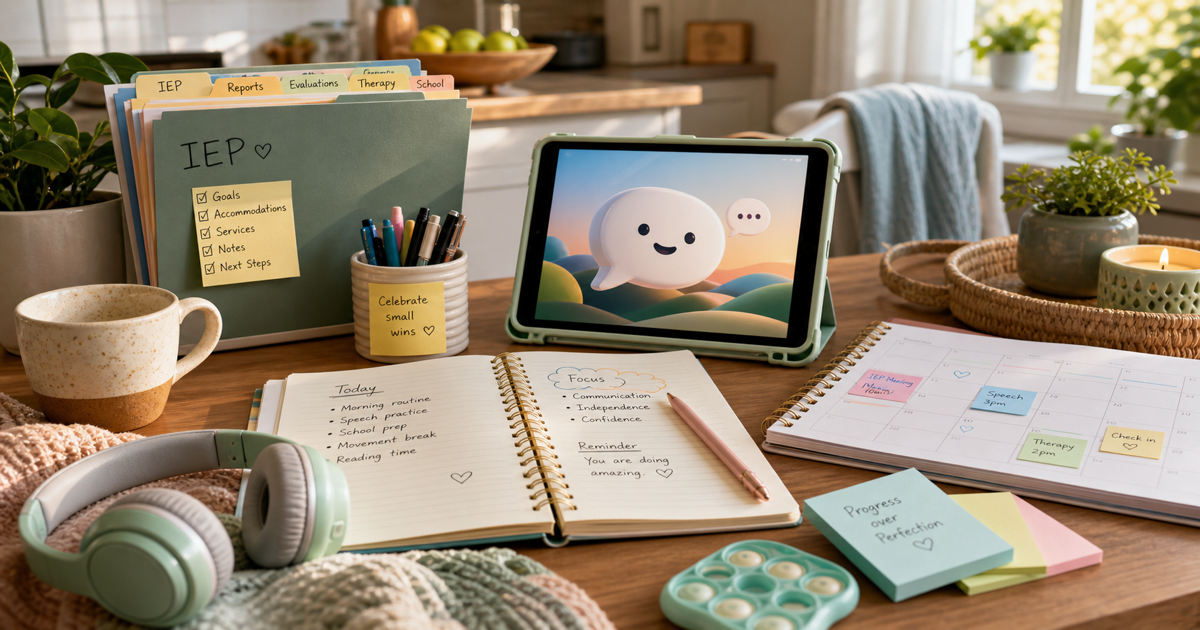
If you searched for Bluey speech therapy, here's the short version: this usually isn't about one show or one skill, it's about whether your child's overall communication pattern is on track, and whether you need a professional set of eyes on it. Watching Bluey with your child can absolutely be part of a language-building routine, but the real question underneath the search is whether to act, and what to actually do without turning your child into a test subject. The most useful question isn't "how do I get my child talking right now." It's "what is my child already communicating, and what kind of modeling would make the next step a little easier for them?" That shift matters for two reasons: it keeps the relationship relaxed, and it gives you better information to bring to an SLP, pediatrician, early intervention team, or school team if you end up needing one. Rather than judging things off one rough afternoon, watch your child across several different moments and routines. Notice how they gesture, point, imitate, play pretend, respond to their name, handle frustration, use scripts or AAC, and attempt sounds, and pay attention to whether they seem to understand more than they can actually say. A pattern that shows up across routines tells you a lot more than any single moment does. For this week, keep it small. Pick one routine you already do daily, and inside it, model just one useful word, phrase, AAC button, or gesture. Then pause, long enough to actually let your child respond in whatever form that takes. A word, an approximation, a sign, a point, a scripted phrase, a device tap: all of that counts as communication. And if the moment starts turning into a power struggle, stop. That's not the goal. If you're using Bluey specifically as a language tool, the most useful approach is going episode by episode, picking out specific language targets for each one, since the show tends to lend itself unusually well to this kind of modeling. If what brought you here is part of a bigger pattern you've been noticing, don't wait to ask for help. A hearing check, an early intervention evaluation, a private SLP evaluation, a school-based evaluation, or a general developmental assessment are all reasonable next steps. Getting ahead of it isn't overreacting, it's just making sure your child has the support they need to communicate. For more on this approach, the Play-Based Therapy hub covers it in depth, and there's a full collection of Speech Activities & Games if you want more ideas to try at home. Little Words is meant to support home practice and learning. It isn't a medical device, an AAC replacement, or a stand-in for a licensed speech-language pathologist, pediatrician, early intervention program, school team, or formal developmental evaluation.
Little Words is a talk-with-Buddy app built for kids like yours.

Buddy is a voice-first speech companion your child actually talks to, made for late talkers and neurodivergent kids. It is free to download and takes 30 seconds to try.

See what Buddy can door download on the App Store