Play-Based Speech Therapy

Parallel Talk vs Self-Talk: The Two Easiest Speech Techniques

If you searched for parallel talk self talk, this page gives you the parent-level answer: what the concern usually means, what.
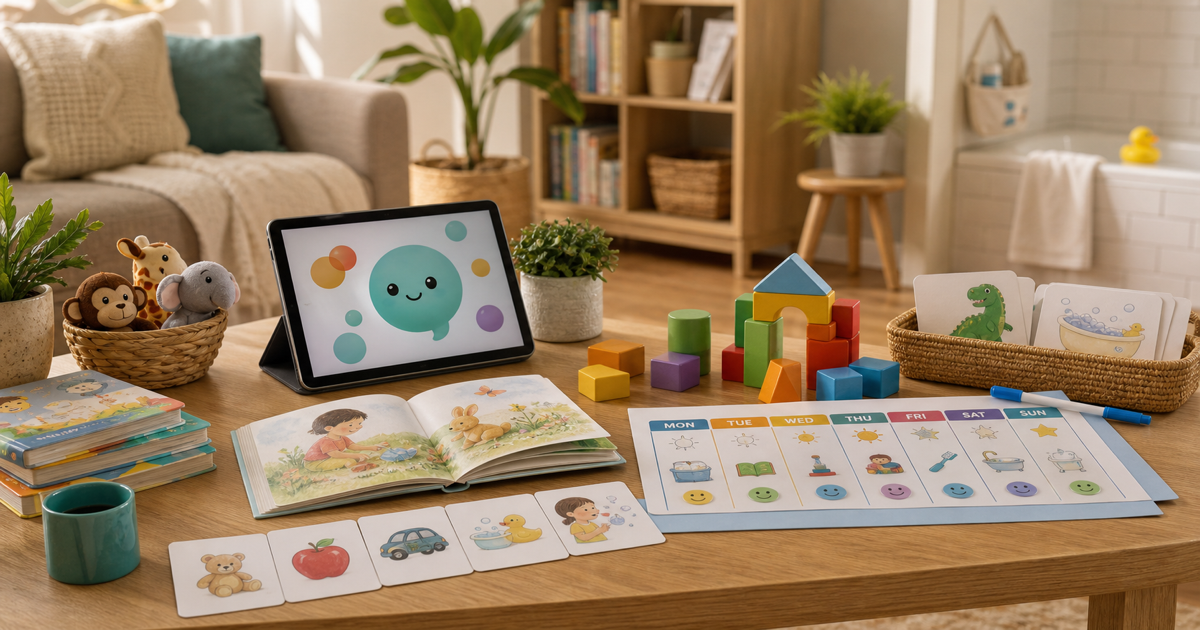
Parallel talk and self talk both mean narrating out loud, the difference is just whose actions you're describing. Self talk is when you talk about what you're doing ("I'm pouring the water now"), and parallel talk is when you narrate what your child is doing ("You're stacking the blocks"). Parents usually land on this question because they've heard the term somewhere and want to know if they're doing it right, or whether it even matters. It does, but not because there's a script to memorize. It works because it hands your child language for things they're already paying attention to, without requiring them to perform on cue. The better question isn't "how do I get my child talking right now?" It's "what is my child already communicating, and what would make the next step a little easier for them?" That mindset keeps things low-pressure and also gives you something useful to report back if you end up talking to an SLP, pediatrician, or early intervention team. Rather than judging a single rough afternoon, watch your child across several everyday moments: how they gesture, point, imitate, play pretend, respond to their name, handle frustration, use scripts, use AAC if they have a device, or attempt sounds. Pay attention to whether they seem to understand more than they can say out loud. One-off patterns matter less than what shows up again and again across routines. To try this in real life, pick one routine you already do every single day, bath time, snack, getting dressed, whatever's easy to remember. Narrate one useful word, phrase, gesture, or AAC button during that routine, then pause and give your child room to respond however they can, whether that's a word, a sign, a point, a script, or a button press. If the moment starts turning into a battle, stop. The goal is modeling language, not extracting a performance. If this pattern is showing up alongside other concerns, it's worth asking for support sooner rather than later. That might mean a hearing check, an early intervention evaluation, a private SLP evaluation, or a school-based developmental assessment. Getting ahead of it isn't overreacting, it's making sure your child has access to the communication support they need. For more on related topics, the Free Speech Resources hub and the full Parent Guides collection are good starting points, and you might also find it helpful to read about setups that encourage talking, why a 10-second pause can change everything, what it really looks like to follow your child's lead, how to get a speech evaluation, why play-based speech therapy works well for neurodivergent kids, or, if autism evaluation is part of your picture, what happens during an ADOS evaluation, what an M-CHAT screening actually means, and how to get a second opinion on a diagnosis. Little Words is meant as educational support for practicing at home. It isn't a medical device, an AAC replacement, or a substitute for a licensed speech-language pathologist, pediatrician, early intervention program, school team, or formal developmental evaluation.
Little Words is a talk-with-Buddy app built for kids like yours.

Buddy is a voice-first speech companion your child actually talks to, made for late talkers and neurodivergent kids. It is free to download and takes 30 seconds to try.

See what Buddy can door download on the App Store