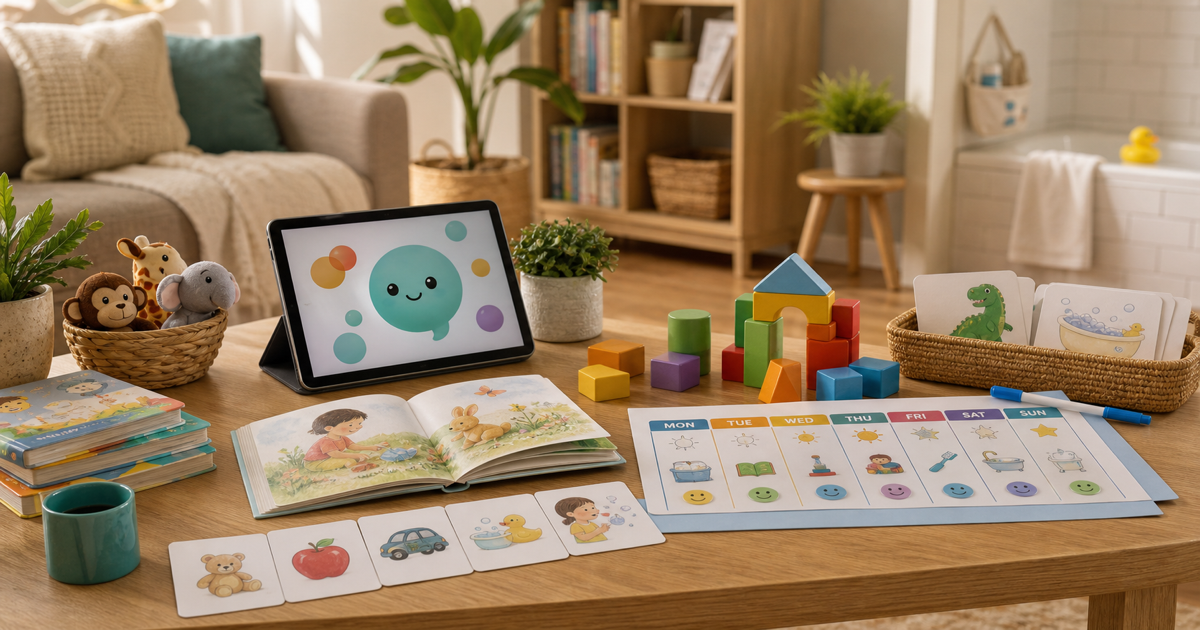
If you've been searching for play based speech therapy, here's the parent-level version: what the concern usually means, what to watch for across your normal routines, what to try this week, and when it's worth calling in an SLP, pediatrician, early intervention team, or school team.
Most parents typing this into a search bar aren't looking for a lecture. They want to know if this is normal, whether they should do something about it, and how to help without turning playtime into a test. So let's keep this practical: observe what's happening, support it in small ways, and loop in the right professional if the pattern doesn't shift.
The more useful question isn't "how do I get my child to talk right now?" It's "what is my child already communicating, and what would make the next step a little easier?" That change in framing keeps things calmer between you and your child, and it also gives any professional you eventually talk to much better information to work with.
Watch across several different moments rather than judging things by one hard afternoon. Pay attention to gestures, pretend play, how your child responds to their name, and whether they understand more than they can actually say out loud. A single rough moment doesn't tell you much. What repeats across mealtimes, bath time, and play does.
For this week, pick one routine that already happens daily, something like snack time or getting dressed. Model one useful word, phrase, AAC button, or gesture right in that routine, then pause long enough for your child to respond in whatever form that takes: a sound, a sign, a point, a script, a button press. All of that counts as communication. And if the moment starts turning into a battle, stop. It's not worth the fight.
The frame most of this rests on comes from Hanen/More Than Words, particularly the OWL strategy (Observe, Wait, Listen), which keeps things child-led rather than adult-directed. Drilling tends to backfire with neurodivergent kids specifically, which is part of why the pause-and-follow approach shows up so often in this kind of guidance.
If this concern is one piece of a bigger pattern, don't wait to ask for help. A hearing check, an early intervention evaluation, a private SLP evaluation, or a school-based evaluation are all reasonable next steps. Asking early isn't overreacting. It just means your child gets access to support sooner rather than later.
For more on this, the Free Speech Resources hub is a good starting point, and the Parent Guides section has a lot more in this vein. Specific reads worth checking out include what actually happens during an ADOS evaluation, communication temptations that encourage talking, the 10-second pause known as expectant waiting, what following your child's lead actually looks like, getting a second opinion on an autism diagnosis, how to get a speech evaluation for your child, what an M-CHAT screening result actually means, and parallel talk and self-talk as two easy techniques to start with.
Little Words offers educational support for home practice. It isn't a medical device, an AAC replacement, or a substitute for a licensed speech-language pathologist, pediatrician, early intervention program, school team, or developmental evaluation.