Red Flags & Early Signs by Age

Speech Milestones From Birth to 5: A Parent's Reference

If you searched for speech milestones, this page gives you the parent-level answer: what the concern usually means, what to watch.
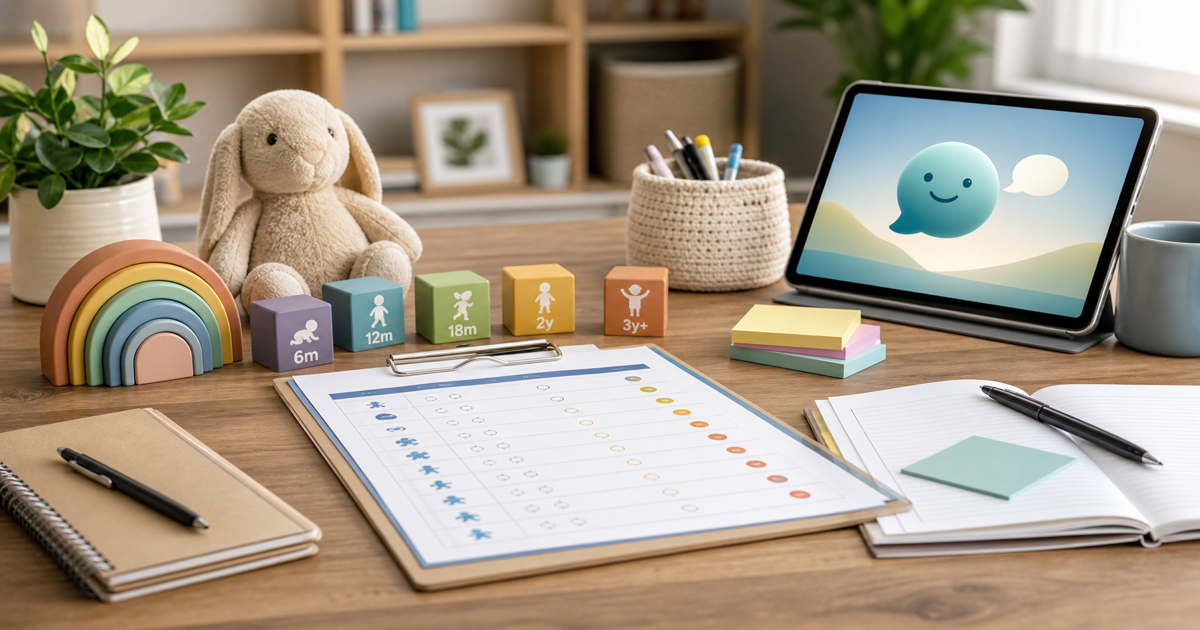
If you're searching for speech milestones, here's the parent-level version: what the concern usually means, what to actually watch for in daily life, one thing you can try this week, and when it's worth calling in an SLP, pediatrician, early intervention team, or school team. Most parents typing this into a search bar aren't after a lecture. They want to know if this is normal, whether they need to act, and what to do that won't turn their kid into a science project. So let's keep it practical: watch, support, and bring in the right professional if the pattern doesn't shift. The question worth asking isn't "how do I make my child talk right now." It's closer to "what is my child already communicating, and what would make the next step a little easier for them." That framing keeps things calmer at home, and it also gives you sharper information to hand off to an SLP, pediatrician, early intervention team, or school team if you get there. Don't judge this off one rough afternoon. Watch across a few different moments: pointing, imitation, pretend play, whether they turn when you say their name, how they handle frustration, any scripts or AAC use, sound attempts, and whether they seem to understand more than they can say back. A pattern across routines tells you far more than any single checklist item ever will. For this week, just pick one routine that already happens daily, snack time, bath time, the drive to school, whatever's reliable. Inside that routine, model one useful word, phrase, AAC button, or gesture. Then pause, longer than feels natural, and give your child room to respond in whatever form that takes. A close approximation, a sign, a point, a scripted phrase, a device tap, all of that counts as communication. And if the moment starts sliding into a power struggle, just let it go for the day. It also helps to know roughly where your child sits developmentally: prelinguistic communication runs from birth to about 12 months, single words from 12 to 18 months, word combinations from 18 to 24 months, simple sentences from 2 to 3 years, and more complex language from 3 to 5 years. Within each stage there's a real range of typical, a wider range of "late bloomer, probably fine," and then a point where a referral makes sense. If this concern is one piece of a bigger picture, don't wait to ask for help. You can request a hearing check, an early intervention evaluation, a private SLP evaluation, a school-based evaluation, or a broader developmental assessment. Getting an early start isn't about panic. It's about giving your child access to support sooner rather than later. If you want more, the Autism Language Development hub is a good next stop, and there's a full set of speech milestones by age guides if you want the age-by-age detail in one place. Little Words is meant as educational support for practicing at home. It isn't a medical device, an AAC replacement, or a stand-in for a licensed speech-language pathologist, pediatrician, early intervention program, school team, or developmental evaluation.
Worried about a late talker? See what Buddy would practice.

Little Words is a voice-first app where your child talks and plays with Buddy, building first words through gentle games you can start today. It is free to download.

See your child's planor download on the App Store