ND Parenting Real Talk

ND Parent Burnout: Naming What You're Feeling

If you searched for ND parent burnout, this page gives you the parent-level answer: what the concern usually means, what to watch.
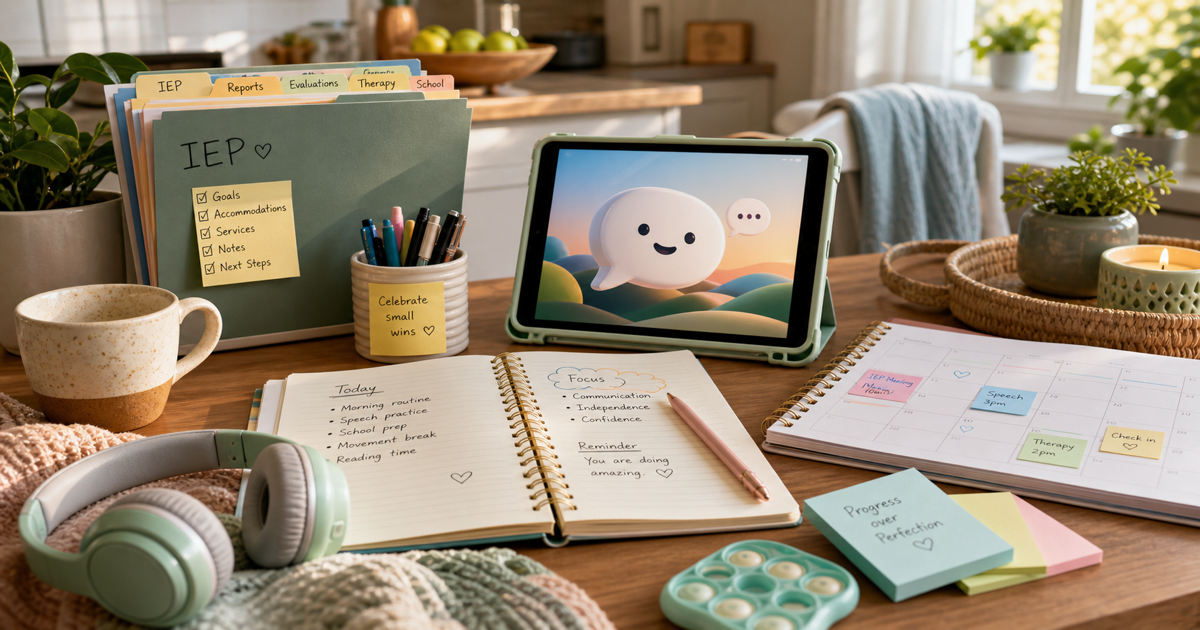
Burnout as an ND parent is real, and it usually shows up as decision fatigue, mask fatigue, advocacy fatigue, or just being tired of comparing your kid to everyone else's. If that's what brought you here, you're not overreacting, and you don't need a lecture. You need to know whether what you're feeling is normal, whether it's time to act, and what you can actually do about it without turning your home into another place your child feels tested. The question worth asking yourself isn't "how do I fix this right now." It's closer to "what is my child already communicating, and what would make the next step easier for both of us." That shift matters for two reasons: it protects your relationship with your child, and it gives any professional you eventually talk to (an SLP, pediatrician, early intervention team, or school team) much better information to work with. Watch your child across several different moments rather than judging things by one hard afternoon. Gestures, pointing, imitation, and how much your child understands compared to what they can actually say all tell you more over time than any single rough day does. Patterns across routines are what matter, not a one-off checklist. For yourself this week, pick one thing that's already part of your daily routine and try modeling a single useful word, phrase, or gesture inside it. Pause long enough to let your child respond in whatever form that takes, whether that's an approximation, a sign, a point, or a device tap. And give yourself permission to stop before it turns into a fight. That's not giving up. That's recovery, and it counts. If the burnout feels like part of something bigger, don't wait to ask for help. A hearing check, an early intervention evaluation, a private SLP evaluation, or a developmental assessment through your school are all reasonable next steps. Asking early isn't panic. It just means you want your child to have access to the support they're entitled to, and you don't want to run yourself into the ground getting there. If you want more on related territory, there are guides on the overlap between ADHD and speech, on what nobody tells you about being an autism dad, on expressive language disorder, and on receptive language delay. There's also a personal account of how one daughter found her words, practical thoughts on making speech practice work for an ADHD child, one parent's story about building an AI friend for his daughter, and a reminder that a late talker often turns out just fine. You can also browse the wider parent resources hub or the full set of parent guides. Little Words is meant as educational support for home practice. It isn't a medical device, an AAC replacement, or a substitute for a licensed speech-language pathologist, pediatrician, early intervention program, school team, or developmental evaluation.
Little Words is a talk-with-Buddy app built for kids like yours.

Buddy is a voice-first speech companion your child actually talks to, made for late talkers and neurodivergent kids. It is free to download and takes 30 seconds to try.

See what Buddy can door download on the App Store