 Little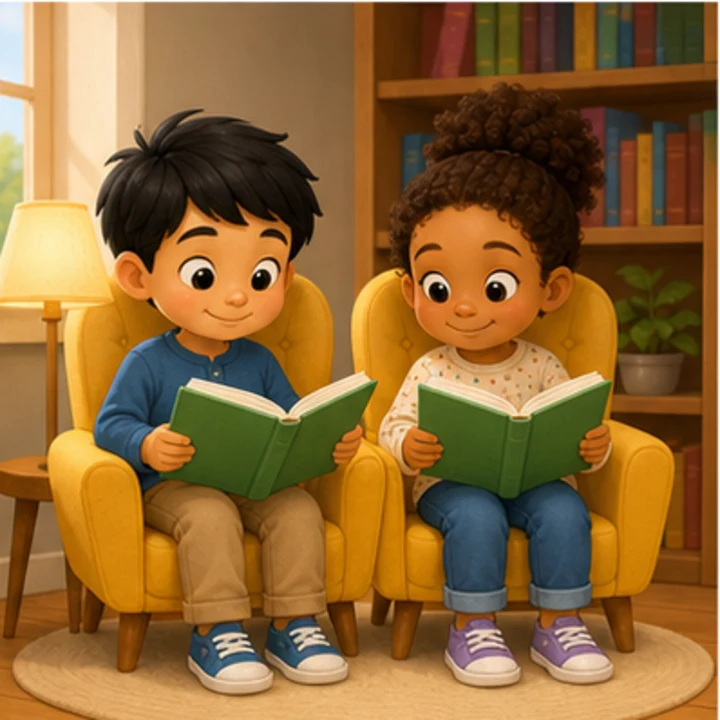
Why the scenes are matched
Each action appears three times in nearly the same view. One named child uses he, one named child uses she, and both children together use they. Keeping the action and setting stable helps make subject pronoun and auxiliary agreement the important change. The activity introduces each character by name and states the intended pronoun. It never asks a child to decide someone’s gender from clothes, hair, color, or activity.
Language grows in pictured steps
The expanded sentence adds only details shown in the scene. At sentence levels, a short fill-in model appears first. An adult can allow time for any response, then reveal and play the complete model.
How a child can participate
A child can look, point, act, gesture, sign, use AAC, approximate a word, or speak. The optional Watch it! control adds a brief visual action cue after the still picture appears. The deck does not score pronoun use or require a spoken response to move forward.
How to use the activity
Choose one action or one pronoun contrast at a time. Name the characters, model the sentence, and allow a comfortable communication pause. A child can match, point, imitate the action, finish part of a sentence, or use a fuller model. When a child receives speech-language therapy, follow the targets, cues, and practice recommendations from the child’s SLP.
Editorial review and limits
Little Words Editorial authored the language models and checked each triplet for grammatical agreement, action clarity, pictured support, and age-respectful representation. The artwork is AI-assisted and reviewed by people. This is an educational practice resource. It is not an individualized assessment, diagnosis, or treatment plan and does not replace care from a qualified speech-language pathologist. Read our editorial standards and limits.
Questions families and SLPs ask
How are he, she, and they introduced?
Each named character is introduced with the intended pronoun. Children are not asked to infer gender from appearance.
Does a child have to speak?
No. Looking, pointing, acting, gesturing, signing, AAC, approximations, and speech can all be meaningful participation.
Is the activity free?
Yes. All 18 cards, language levels, audio models, and optional action cues are free without an account.