Family, Siblings, Marriage

The Neurotypical Sibling: What They Need From You

If you searched for neurotypical sibling autism, this page gives you the parent-level answer: what the concern usually means, what.
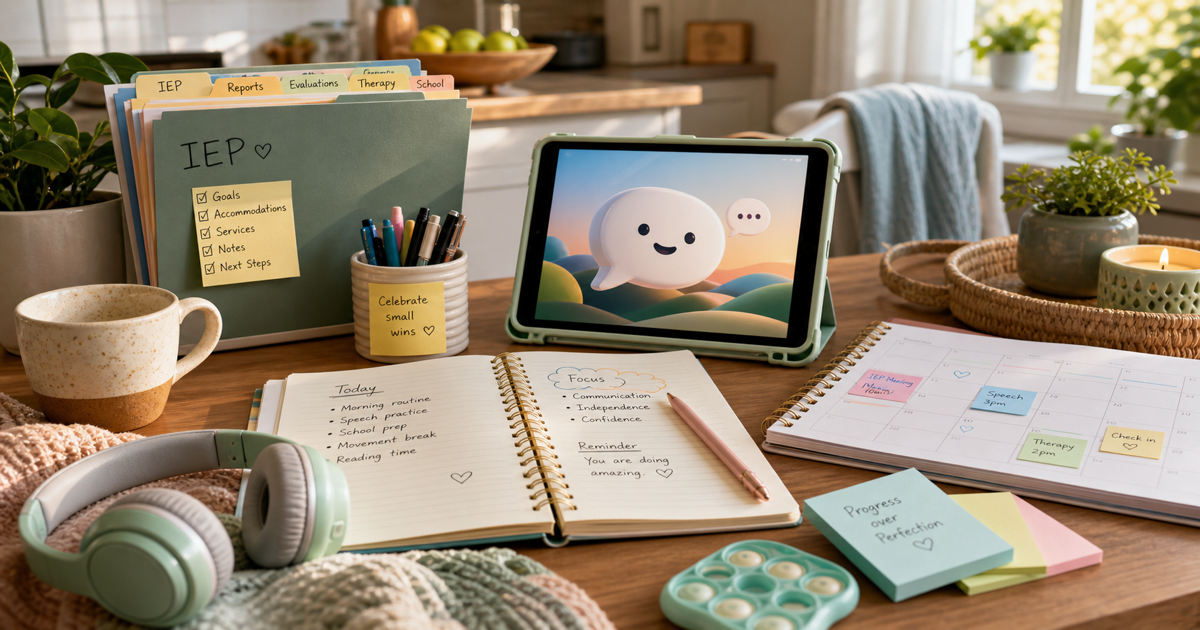
When a parent has one autistic child and one who seems neurotypical, the real question is usually not "is this normal" but "what do I do so both kids get what they need without turning our house into a series of evaluations." The honest answer: watch what's actually happening across your daily routines, try a few small things, and loop in a professional if the pattern holds steady rather than settling. The more useful frame here is not "how do I get my child to talk right now," but "what is my child already communicating, and what would make the next step a little easier for them." That question protects your relationship with your child and gives an SLP, pediatrician, early intervention team, or school team something concrete to work with, instead of a single rough afternoon. So watch across several moments, not just one. Notice how your child gestures, points, imitates, plays pretend, responds to their name, handles frustration, uses scripts or AAC, and whether they understand more than they can say out loud. A single hard day doesn't tell you much. A pattern across routines does. If you want to try something this week, pick one routine your family already does every day, and model one useful word, phrase, AAC button, or gesture inside it. Then pause long enough to let your child respond, in whatever form that takes: an approximation, a sign, a point, a script, a device tap. Accept that as communication. And if the moment starts turning into a battle, stop. It's not worth the fight. A few things worth thinking about as you go: the pressure that can land on "the good one" (the sibling who seems fine and gets less attention as a result), what 1:1 time with each child can look like in practice, and when it makes sense to bring a sibling into caregiving tasks versus letting them just be a kid. If this pattern is part of something bigger, don't wait to ask for help. You can request a hearing check, an early intervention evaluation, a private SLP evaluation, a school-based evaluation, or a developmental assessment. Getting ahead of it isn't overreacting. It just means your child has access to communication support sooner rather than later. For more on this, the Neurodivergent Parenting hub is a good place to start, and our library of parent guides covers related ground in more depth. If AAC is part of your situation, we have a plain-English starter guide to AAC, a rundown of the best AAC apps for toddlers in 2026, and a guide to getting an AAC device through insurance. There's also help for finding toys for kids who don't pretend play, age-by-age toy picks for speech delay, explaining a speech delay to grandparents, raising a bilingual child alongside a speech delay, and building sensory bins that target speech and language.
Important: Little Words is educational support for home practice. It's not a medical device, an AAC replacement, or a substitute for a licensed speech-language pathologist, pediatrician, early intervention program, school team, or developmental evaluation.
Little Words is a talk-with-Buddy app built for kids like yours.

Buddy is a voice-first speech companion your child actually talks to, made for late talkers and neurodivergent kids. It is free to download and takes 30 seconds to try.

See what Buddy can door download on the App Store