Speech Activities by Sound/Skill

Sound Practice Without Drills: Real Activities That Work

If you searched for speech sound practice without drills, this page gives you the parent-level answer: what the concern usually means.
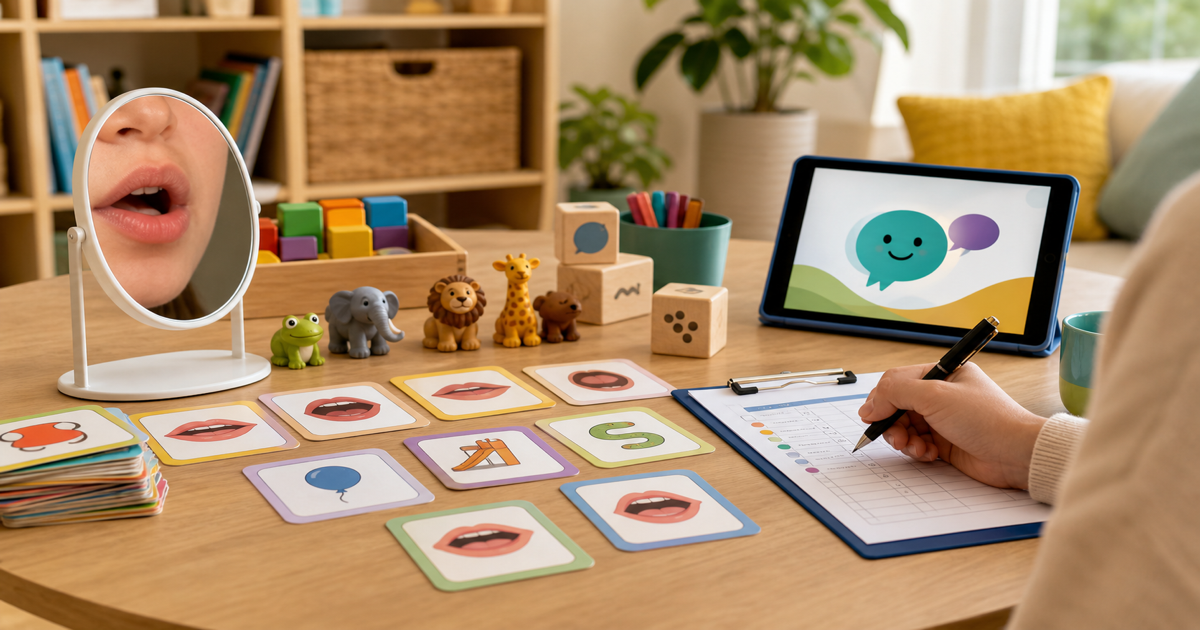
If you've been searching for ways to practice speech sounds without turning everything into a drill, here's the short version: this isn't about lecturing your child or running flashcards at the dinner table. It's about noticing what your child can already do, supporting the next small step, and knowing when to loop in an SLP, pediatrician, early intervention team, or school team. The most useful question isn't "how do I get my child to say this right now?" It's closer to "what is my child already communicating, and what kind of modeling would make the next step a little easier?" That shift matters for two reasons. It keeps the pressure off your relationship with your child, and it gives you sharper, more useful information if you do end up talking to a professional. To get a real read on things, watch your child across several different moments rather than judging one rough afternoon. Pay attention to gestures, imitation, and sound attempts, and notice whether your child seems to understand more than they can actually say out loud. A pattern that shows up across routines tells you a lot more than any single moment of frustration or a script running through a checklist in your head. For this week, pick one routine that already happens daily, bath time, breakfast, the drive to school, whatever's easy to repeat. Within that routine, model one useful word, phrase, or gesture. Then pause and give your child room to respond, in whatever form that takes. A point, an approximation, a sign, a word on a device: all of it counts as communication, and treating it that way matters more than getting the "correct" sound. If the moment starts turning into a battle, stop. That's the cue to back off, not push harder. The core idea underneath all of this: don't call it practice, and don't turn it into a test. If what you're seeing fits into a bigger pattern, it's worth asking for support sooner rather than later, whether that's a hearing check, an early intervention evaluation, a private SLP evaluation, or a school-based assessment. Asking early isn't overreacting. It just means giving your child access to support sooner. For more on typical timelines and what's worth watching, see Articulation 101: Sound Development by Age, or if stuttering is part of what you're noticing, How to Respond When Your Child Stutters and Toddler Stuttering: Should I Worry? both walk through that in more depth. Parents working on specific sounds might find How to Teach the R Sound at Home, Lisp in Toddlers: When to Worry, or Minimal Pairs Activities for Phonology useful, and Phonological Processes: When Toddler Talk Becomes a Problem is worth a look if certain sound patterns keep showing up. If sitting still for anything structured is the real obstacle, 10-Minute Speech Practice for Toddlers Who Won't Sit Still tackles that directly, and the Speech Activities by Age hub or the wider Parent Guides collection are good places to browse from here. Little Words is meant as educational support for home practice. It isn't a medical device, an AAC replacement, or a substitute for a licensed speech-language pathologist, pediatrician, early intervention program, school team, or developmental evaluation.
Practicing tricky sounds is easier when it feels like play.

Little Words is a voice-first app where your child talks with Buddy and works on sounds through games, as many happy repetitions as they want. It is free to download.

See your child's planor download on the App Store