Articulation & Phonology

Toddler Lisp: Cute Phase or Speech Issue?

If you searched for toddler lisp, this page gives you the parent-level answer: what the concern usually means, what to watch across.
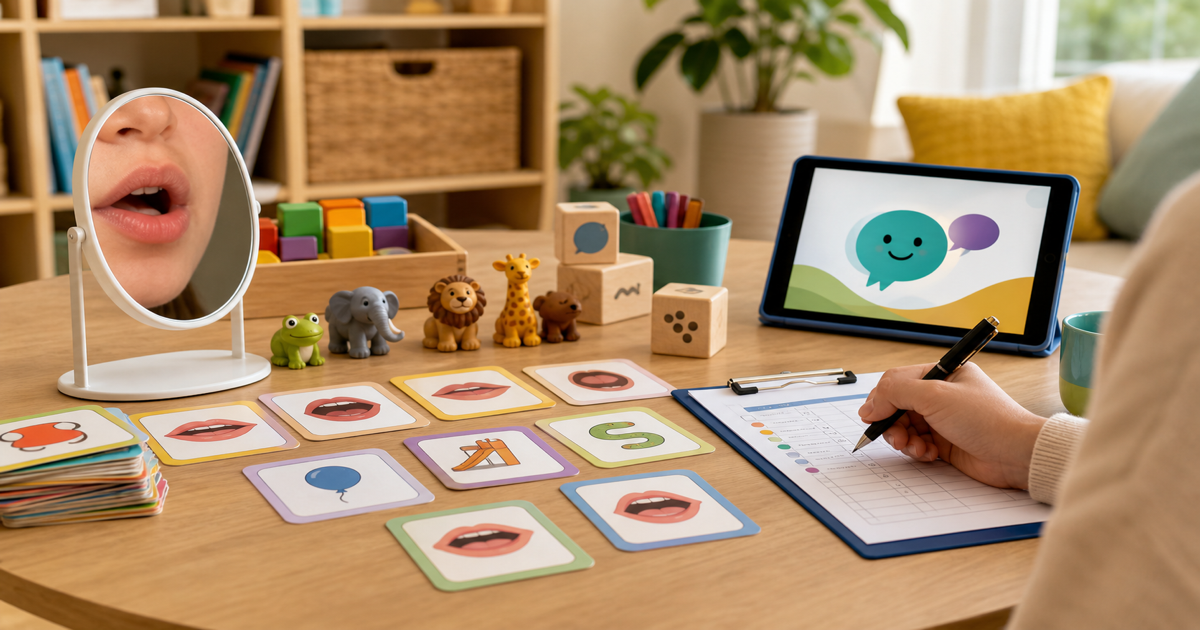
If you're noticing a lisp in your toddler, the short version is this: it's usually not something to panic about, but it's worth watching across real life rather than judging from one rough afternoon, and worth mentioning to a professional if it's part of a bigger pattern. The more useful question isn't "how do I get my child to say this sound correctly right now," but "what is my child already communicating, and what would make the next step a little easier for them?" That framing keeps things relaxed at home and also gives you better information to bring to an SLP, pediatrician, early intervention team, or school team if you do end up asking for help. Watch across several different moments rather than one tricky afternoon. Pay attention to how your child gestures, points, imitates, plays pretend, responds to their name, handles frustration, and attempts sounds, and notice whether they seem to understand more than they can actually say. A pattern that shows up across routines tells you a lot more than a single moment does. For this week, pick one routine that already happens daily and use it as your low-pressure practice ground. Model one useful word, phrase, or gesture during that routine, then pause and give your child room to respond in whatever form they can, whether that's an approximation, a sign, a point, or a script. Accept it as communication. And if the moment starts turning into a battle, stop. That's not the goal. Developmental timeline matters here too: lisps are common at younger ages and often resolve on their own, so context and age both factor into whether this is something to flag. If the lisp is showing up alongside other concerns, don't wait to ask for help. A hearing check, an early intervention evaluation, a private SLP evaluation, or a school-based assessment are all reasonable next steps. Asking early isn't overreacting. It just means giving your child access to support sooner rather than later. For more on this topic, the Speech Activities by Age hub is a good starting point, and you may also find Articulation 101: Sound Development by Age, How to Practice Speech Sounds at Home Without Drills, How to Respond When Your Child Stutters, How to Teach the R Sound at Home, Minimal Pairs Activities for Phonology, Phonological Processes: When Toddler Talk Becomes a Problem, Toddler Stuttering: Should I Worry?, and 10-Minute Speech Practice for Toddlers Who Won't Sit Still worth a read, or browse more in Parent Guides. Little Words is meant as educational support for practicing at home. It isn't a medical device, an AAC replacement, or a substitute for a licensed speech-language pathologist, pediatrician, early intervention program, school team, or developmental evaluation.
Practicing tricky sounds is easier when it feels like play.

Little Words is a voice-first app where your child talks with Buddy and works on sounds through games, as many happy repetitions as they want. It is free to download.

See your child's planor download on the App Store