Key takeaways
- Use age as a guide, not a verdict. Your child's communication level matters more than their birthday.
- Aim one step up from where your child is now, whether that is single words, two-word phrases, or full sentences.
- Embed practice in real routines. Everyday moments give far more chances to talk than a worksheet.
- Repetition is the engine. The same songs, books, and games build language faster than constant novelty.
- If your child is well behind their age group, match activities to their level and check in with an SLP.
Buddy is a voice-first companion your child actually talks to, built for late talkers and neurodivergent kids and the age-and-stage way language really develops. It is free to download on the App Store.
Download on the App StoreUse age as a guide, not a verdict
Age ranges are a helpful starting point, but a child's communication profile matters more than the date on the calendar. Pick the activity that matches your child's attention, regulation, receptive language, motor planning, and current output. Two children the same age can be in very different places, and that is normal. Use the age sections below to orient yourself, then trust what you see your child actually doing.
What should you expect at each stage?
These are general patterns, not deadlines. Children vary widely, and an activity that fits the stage matters more than one that fits the number.
Around 18 months to 2 years
This is the first-words window. Many toddlers are building a vocabulary and starting to combine two words like "more milk" or "daddy go." Good activities: naming objects during snack and bath, reading the same picture books over and over, singing songs with a pause before the fun word, and offering choices so there is a reason to talk. Keep turns short and follow what your toddler points to or reaches for.
Around 2 to 3 years
Phrases stretch into short sentences and vocabulary grows quickly. Pretend play becomes powerful: feeding a doll, driving cars, cooking play food. Talk about what is happening and what just happened, ask simple questions, and expand what your child says by adding a word or two. If they say "car go," you can say "yes, the car is going fast."
Around 3 to 4 years
Children start telling little stories, asking lots of questions, and following longer directions. Help by talking through daily events, reading slightly longer books, playing simple turn-taking games, and encouraging your child to describe and explain. This is a great age for narrating a day or retelling a favorite story together.
Around 4 to 5 years and kindergarten readiness
Sentences get longer and more complex, and clarity of speech sounds continues to develop. Support storytelling, rhyming and sound games, conversations about feelings and ideas, and back-and-forth that goes beyond the here and now. These skills feed directly into the listening and talking children need at school.
Aim for one step up
Whatever stage your child is in, the most useful move is to model just slightly above where they are. If your child uses single words, model two-word combinations. If they use scripts, model flexible phrases. If they use gestures, pair the gesture with a word or an AAC symbol. This keeps practice reachable but stretching, which is exactly the zone where new language grows.
Keep it inside real moments
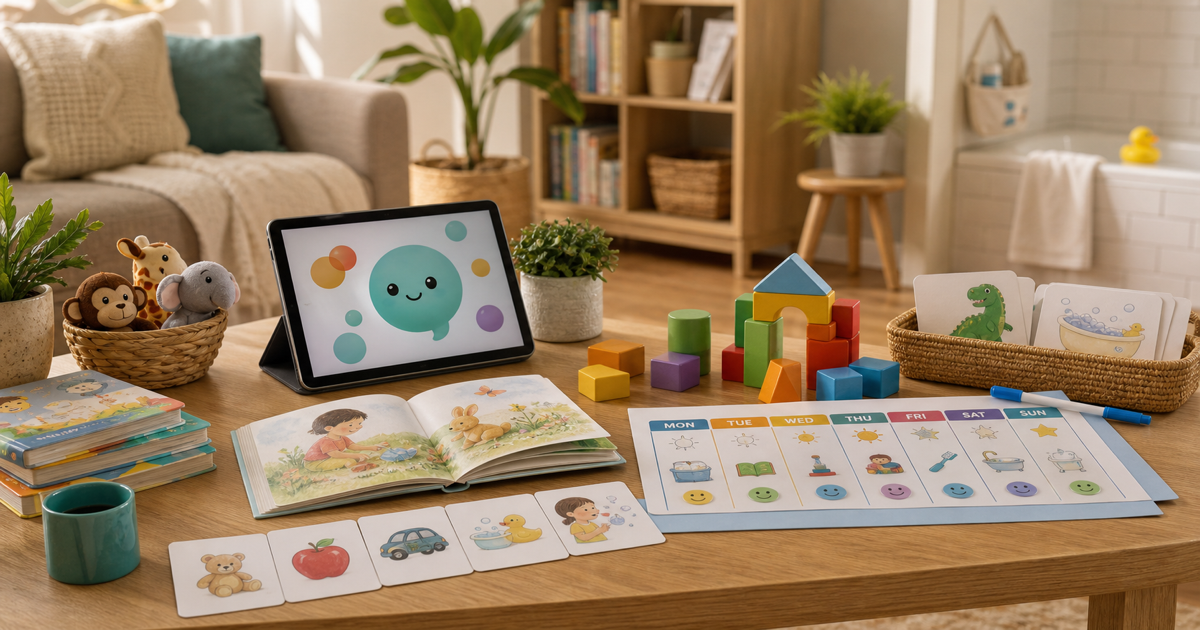
Snack, bath, books, blocks, cars, pretend play, and walks give more chances for repetition than a worksheet ever will. Everyday routines repeat naturally, which means your child hears the same words in the same context again and again, and that repetition is what makes language stick. You do not need special materials. The things already in your kitchen, bath, and toy bin are enough.
When to do more than activities
Home activities are a strong foundation, but they are not a substitute for professional assessment. If your child is well behind their age group, has stopped using words they used to say, seems frustrated when trying to communicate, or you simply have a nagging worry, talk to your pediatrician or a speech-language pathologist. You do not need to wait for a milestone deadline to pass, and asking early never hurts.
Best next reads
- Speech activities for 18-month-oldsRead the Little Words guide
- Speech activities for 2-year-oldsRead the Little Words guide
- Speech therapy activities for 3-year-oldsRead the Little Words guide
- Speech activities for 4-year-oldsRead the Little Words guide
- Speech practice for 5-year-oldsRead the Little Words guide
- Articulation 101: Sound Development by AgeFrom this hub
- How to Practice Speech Sounds at Home Without DrillsFrom this hub
- How to Respond When Your Child StuttersFrom this hub
- How to Teach the R Sound at HomeFrom this hub
- Lisp in Toddlers: When to WorryFrom this hub
- Minimal Pairs Activities for PhonologyFrom this hub
- Phonological Processes: When Toddler Talk Becomes a ProblemFrom this hub
- Is It Normal for a 12-month-old Not to Say the J Sound?From this hub
- Toddler Stuttering: Should I Worry?From this hub
- Is It Normal for a 12-month-old Not to Say the M Sound?From this hub
- Is It Normal for a 15-month-old Not to Say the D Sound?From this hub
Use age as a guide, not a verdict
A child's communication profile matters more than the birthday. Pick the activity that matches attention, regulation, receptive language, motor planning, and current output.
Aim for one step up
If your child uses single words, model two-word combinations. If they use scripts, model flexible phrases. If they use gestures, pair the gesture with a word or AAC symbol.
Keep it inside real moments
Snack, bath, books, blocks, cars, pretend play, and walks give more chances for repetition than a worksheet ever will.
Frequently asked questions
Should I use activities for my child's age or language level?
Use age for context, but choose the activity that fits your child's current communication level. A child who uses single words needs different practice than one who is already making sentences, regardless of their birthday.
What are good speech activities for a 2 year old?
At two, focus on single words and early two-word combinations through play. Name objects during snack and bath, read the same picture books often, sing songs with pauses, and offer choices so your child has a reason to talk. Keep it short and playful.
What are good speech therapy activities for a 3 year old?
At three, build longer phrases and simple sentences. Pretend play, talking about what happened during the day, asking simple questions, and following two-step directions all help. Expand on what your child says by adding a word or two to their phrases.
What language activities help toddlers talk?
Toddlers learn through repetition and play. Favorite books read again and again, songs with predictable pauses, naming things during daily routines, and pretend play give the most chances for new words. Follow what your toddler is already interested in.
How many speech activities should I do each day?
One repeatable activity done well is a better start than ten activities done once. Pick something that fits naturally into your day, like snack or bath, and use it consistently rather than chasing a long list.
My child is behind their age group. What activities should I pick?
Match the activity to your child's current communication level, not their age, then aim one small step above where they are now. If they use single words, model two-word phrases. If they use gestures, pair each gesture with a word. If you are worried about a delay, ask your pediatrician or an SLP.
Do speech activities by age replace speech therapy?
No. Age-based activities are helpful home practice, but they do not replace assessment and treatment by a licensed speech-language pathologist. If your child has a significant delay, home activities should support therapy rather than stand in for it.
Sources
Primary sources for this topic. Little Words Editorial verified each link on August 10, 2026. See how we check claims in our editorial standards.
- NIDCD: Speech and Language Developmental Milestones. Accessed August 10, 2026.
- ASHA: Activities to Encourage Speech and Language Development. Accessed August 10, 2026.
- CDC: Developmental Milestones (Learn the Signs. Act Early.). Accessed August 10, 2026.