Red Flags & Early Signs by Age

Two-Year-Old Not Talking: Late Bloomer or Something More?

If you searched for 2 year old not talking, this page gives you the parent-level answer: what the concern usually means, what to watch.
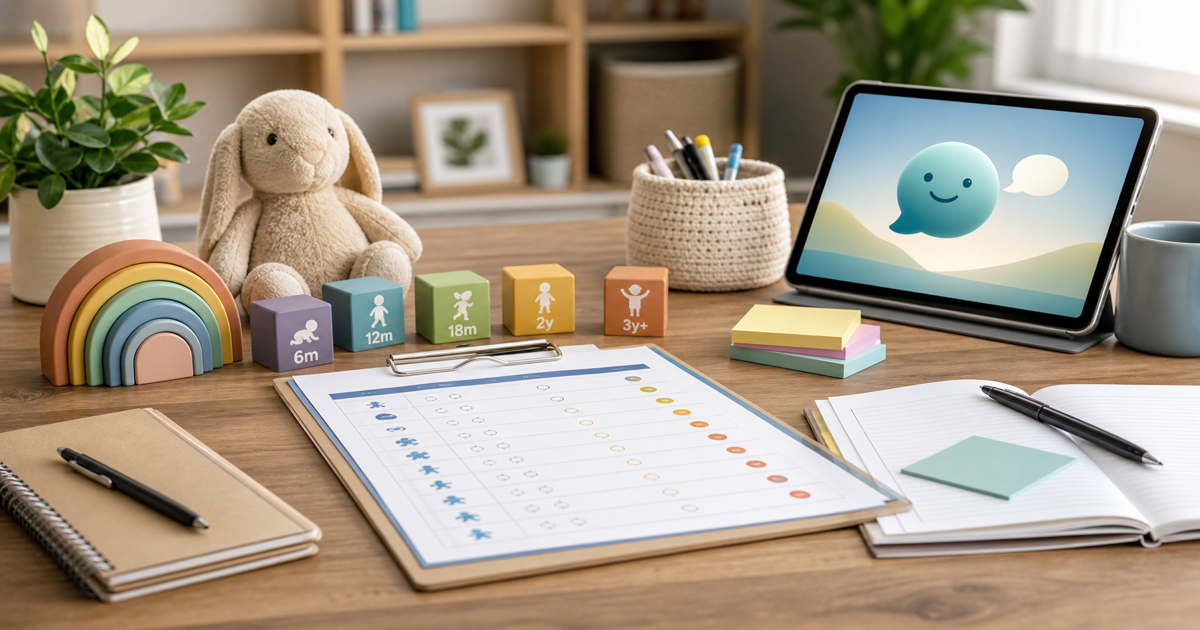
If you're searching for "2 year old not talking," here's the honest parent-level answer: what this concern usually means, what to notice in your daily routines, what to try this week, and when it's time to loop in an SLP, pediatrician, early intervention team, or school team. Most parents typing that phrase aren't looking for a lecture. They want to know whether this is normal, whether they should act, and what they can actually do without turning their toddler's day into a test. So let's keep this practical: watch, support, and bring in the right professional if the pattern doesn't shift. The most useful question to ask yourself isn't "how do I get my child to talk right now?" It's "what is my child already communicating, and what would make the next step easier for them?" That reframe protects your relationship with your child, and it also gives you sharper information to hand an SLP, pediatrician, early intervention team, or school team when you do reach out. Watch across several different moments rather than judging one rough afternoon. Notice how your child gestures, points, imitates, plays pretend, responds to their name, handles frustration, uses scripts or AAC, attempts sounds, and whether they seem to understand more than they can say out loud. A pattern across routines tells you far more than any single moment does. For this week, pick one routine that already happens daily, bath time, snack time, whatever's reliable, and model one useful word, phrase, AAC button, or gesture inside it. Pause long enough to let your child respond in whatever form that takes. Approximations, signs, points, scripts, and device use all count as communication, so accept them as such. And if the moment starts turning into a standoff, stop. Two details worth keeping in mind: the general benchmark of around 50 words and some 2-word phrases by this age, and the difference between typical late-bloomer signs and signs that suggest something more is going on. If the talking delay is part of a bigger pattern, don't wait to ask for help. You can request a hearing check, an early intervention evaluation, a private SLP evaluation, a school-based evaluation, or a developmental assessment. Getting this looked at early isn't panicking, it's making sure your child has access to the communication support they need. For more on this stage, the Autism Language Development hub is a good starting point, and you'll find more age-specific guidance under Speech Help for 2-Year-Olds or the broader Parent Guides collection. If you're working on phrases specifically, there's also a list of books for expanding two-word phrases in a 2-year-old. Little Words is meant as educational support for home practice. It isn't a medical device, an AAC replacement, or a substitute for a licensed speech-language pathologist, pediatrician, early intervention program, school team, or developmental evaluation.
Worried about a late talker? See what Buddy would practice.

Little Words is a voice-first app where your child talks and plays with Buddy, building first words through gentle games you can start today. It is free to download.

See your child's planor download on the App Store