Speech Activities by Age

What Counts As Speech Practice: A Reassuring List

If you searched for what counts as speech practice, this page gives you the parent-level answer: what the concern usually means, what.
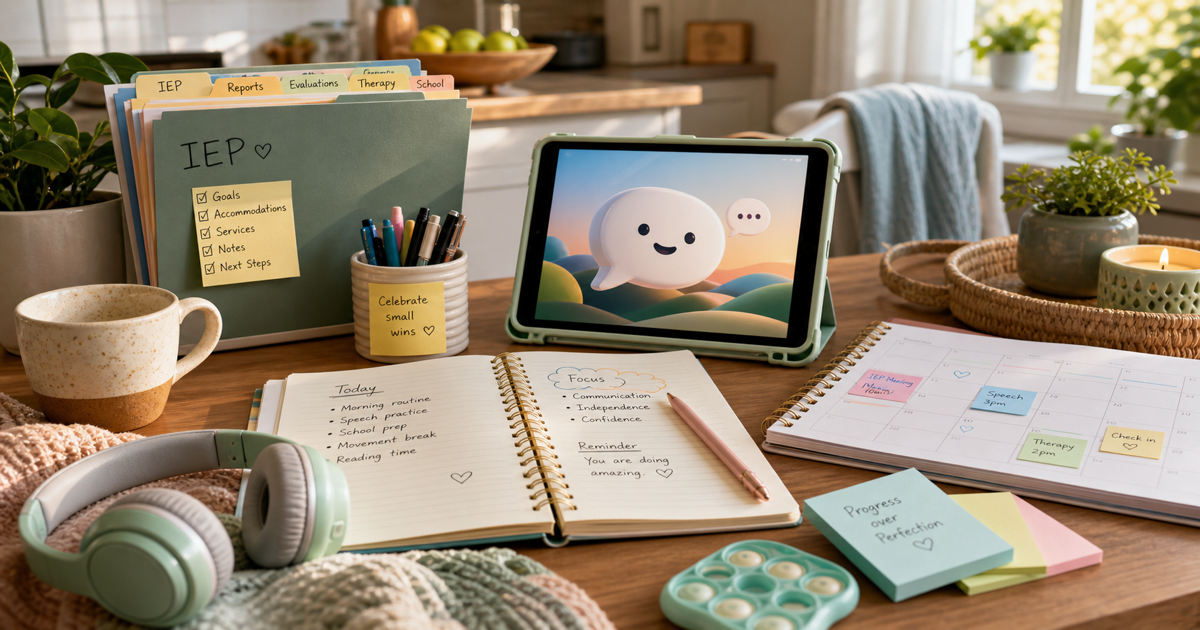
Here's what counts as speech practice, more than most parents expect: reading a book together counts, narrating snack time counts, singing in the car counts. You don't need a flashcard session or a quiet room to make progress happen. The real question isn't how to make your child talk right now, it's what your child is already communicating and what kind of modeling would make the next step a little easier. That shift keeps things relaxed between you two, and it also gives an SLP, pediatrician, early intervention team, or school team better information if you do end up asking for help. To get a real sense of where your child is, watch across several days rather than judging one rough afternoon. Pay attention to gestures, imitation, and whether your child understands more than they can actually say out loud. A single moment doesn't tell you much, but a pattern across mealtimes, playtime, and bedtime does. If you want to try something this week, pick one routine that already happens daily, bath time, snack, the car ride, whatever's easy. Model one useful word, phrase, or gesture during that routine, then pause long enough for your child to respond in whatever form they can manage right now: a sound, a sign, a point, a script from a show, a button press on a device. All of that counts as communication. And if the moment starts turning into a battle, stop. Practice should never feel like a test to your kid. If this concern is part of a bigger pattern you've been noticing, it's worth asking for help sooner rather than later. That might mean a hearing check, an early intervention evaluation, a private SLP evaluation, or a school-based assessment. Getting this looked at early doesn't mean something is wrong, it just means your child gets access to the right support sooner. For more on making everyday moments do double duty, there's a roundup of the best speech therapy apps, ideas for quick practice with toddlers who won't sit still, and suggestions for working language into bath time when you're exhausted. If play is more your child's speed, look at how cause-and-effect toys can get kids talking or why pretend play might be the single most useful activity you can offer. There's also a piece on building language over a bowl of goldfish crackers, a year-long plan of language activities for preschoolers, a list of 12 speech activities for 2-year-olds that don't feel like therapy, and guidance on where to start with nonverbal kids. For the wider picture, the parent guides section covers a lot more of this ground. Little Words is meant as educational support for practicing at home. It isn't a medical device, an AAC replacement, or a stand-in for a licensed speech-language pathologist, pediatrician, early intervention program, school team, or full developmental evaluation.
Little Words is a talk-with-Buddy app built for kids like yours.

Buddy is a voice-first speech companion your child actually talks to, made for late talkers and neurodivergent kids. It is free to download and takes 30 seconds to try.

See what Buddy can door download on the App Store