
Access: Family Plus
Download the printable
1 US Letter page, 0.5 inch margins, black and white friendly. Included with Family Plus.
Download the PDF Browse all printablesWhat's inside
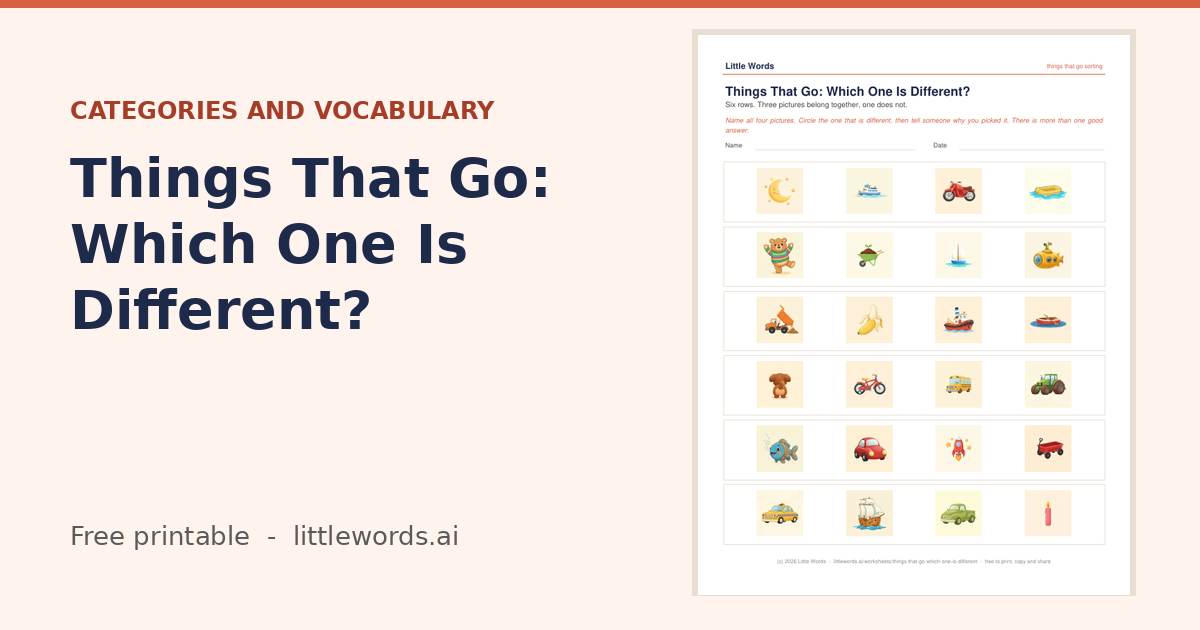
- Six rows of four pictures
- Three from one group and one from somewhere else
- Room to circle the answer
Everything on this sheet is built from the categories and vocabulary content already on the site, so the pictures and words match what your child sees when you practise on screen: bike, boat, bus, car, ferry, motorcycle.
How to use it
- Name all four before choosing.
- Use the word NOT: Which one is NOT in this group?
- Ask why, then model a short reason if the child needs one.
Practise it on screen too
- All printablesThe complete printable library on one page
More categories and vocabulary printables
- Animals: Picture Word Page1 page, picture word page
- Animals: Which One Is Different?1 page, which one is different
- Food and Drink: Picture Word Page1 page, picture word page
- Food and Drink: Which One Is Different?1 page, which one is different
- Things That Go: Picture Word Page1 page, picture word page
- Around the House: Picture Word Page1 page, picture word page
- Around the House: Which One Is Different?1 page, which one is different
- Clothes We Wear: Picture Word Page1 page, picture word page
- Clothes We Wear: Which One Is Different?1 page, which one is different
Frequently asked questions
Is this printable included with Family Plus?
Yes. Family Plus includes this PDF. Download it, print it, and use it within the plan terms.
What is on the which one is different?
1 US Letter page: six rows of four pictures; three from one group and one from somewhere else; room to circle the answer.
Will it print in black and white?
It will. There are no filled backgrounds, so a school copier costs you the same ink as a blank page. Colour is a bonus, not a requirement.
How long should we spend on it?
Ask why, then model a short reason if the child needs one.