Evidence note: The clinical boundaries on this page follow ASHA: Speech Sound Disorders, Treatment and Generalization. Product descriptions come from the current Little Words repository; volatile App Store details should be checked in the store before purchase.
Little Words at a glance
- Purpose
- Supervised speech and language practice at home
- Primary focus
- Children ages 2 to 8
- Full support
- Age-respectful activities through age 10
- Devices
- iPhone and iPad
- Cost
- Free download with optional subscription
- Ways to respond
- Speech, pictures, choices, gestures, and AAC alongside the app
- Not designed for
- Diagnosis, clinical treatment, or replacing AAC or an SLP
Keep the target specific
Choose one sound, word shape, functional phrase, direction, question type, or conversation goal rather than “work on speech.”
Make repetition feel purposeful
The same target can move a game, change a story, help Buddy, or unlock the child's chosen topic.
Close the loop with the team
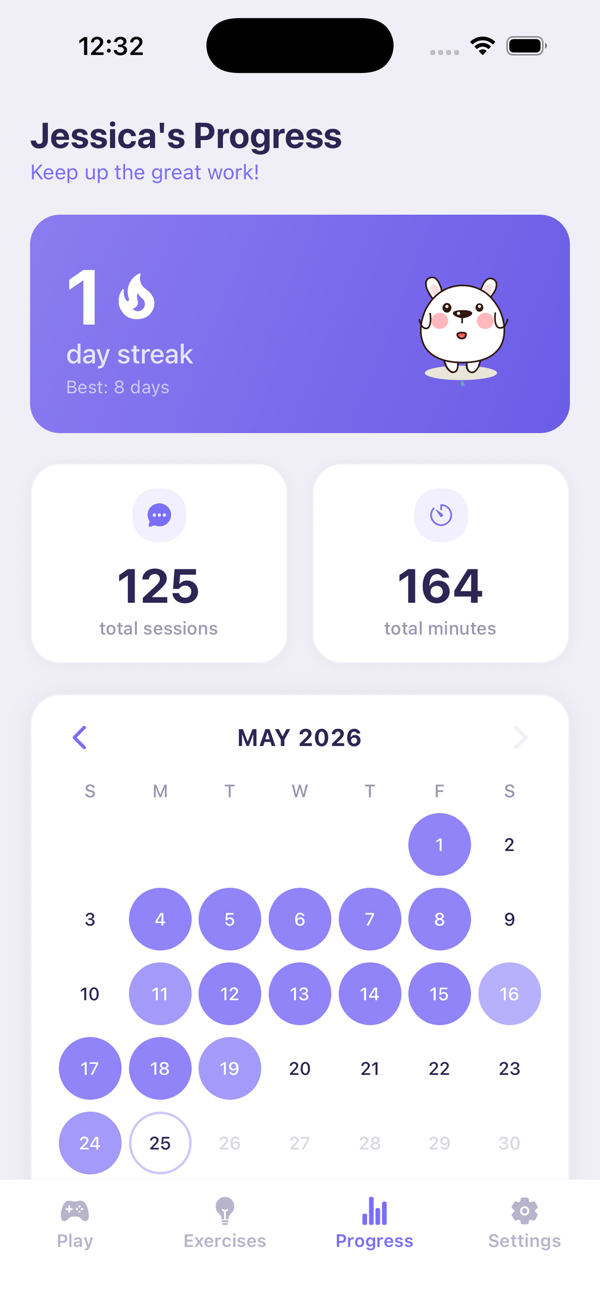
Share a descriptive summary of participation, successful supports, and hard moments, not an AI-generated diagnosis.
A simple practice agreement with the SLP
Ask the SLP for three pieces of information: the exact target, the type of cue the child should receive, and what counts as a useful attempt right now. A target such as “initial /k/ in five familiar words” is easier to practice responsibly than “pronunciation.”
For language or social communication, the target might be requesting clarification, answering “where,” retelling two events in order, or taking one additional conversational turn. Add the target to Little Words and keep the clinician's wording in the parent notes.
The five-to-ten-minute routine
- Check regulation and interest before opening the app.
- Name the short plan: “One Buddy game, then we stop.”
- Let the child choose a world or topic whenever possible.
- Model rather than correct unless the SLP gave a specific feedback instruction.
- End while the child is still successful and use one target again in ordinary life.
Consistency is more realistic than intensity. If a child is exhausted after school, a two-minute supported exchange can be the whole session.
Practice versus performance
A child can understand a skill and still struggle to perform it on demand. Home practice should create opportunities, not turn access to food, toys, help, or breaks into a speech test. Model the word, offer another communication route, and preserve the child's ability to say no or stop.
If practice repeatedly produces distress, pause and bring that information to the SLP. The target, cueing method, timing, or tool may need to change.
What to share in a progress summary
Useful information includes which activities held attention, what the child communicated spontaneously, which support helped after a misunderstanding, whether the target appeared outside the app, and when the child wanted to stop. Those observations give the care team context without pretending that consumer AI produced a standardized score.
Questions parents ask
How long should home speech practice last?
Use the duration recommended by the child's treating SLP and stop on the child's cue. The useful session is one the child can complete without distress.
Should I correct every error?
Use the feedback approach recommended by the child's treating SLP. Do not improvise a correction method for a motor-speech target.
What if my child refuses practice with me?
Lower the demand, shorten the session, use the child's interest, allow another response mode, or pause. Repeated refusal is information to share with the SLP, not a reason to push harder.
Can I send Little Words reports to the SLP?
Parents can create a descriptive PDF practice report to discuss with trusted care-team members. The report is not a clinical assessment.
Can we use it while waiting for an SLP?
Yes, as educational communication practice, while continuing to pursue appropriate evaluation, hearing guidance, early-intervention, or school services.
Clinical and product sources
- ASHA: Speech Sound Disorders, Treatment and Generalization
- ASHA: Childhood Apraxia, Setting and Home Practice
- ASHA Evidence Maps: Parent and SLP Collaboration
How this page was prepared
We checked product statements against current Little Words product materials and linked clinical statements to primary or authoritative sources. Little Words makes the app, so product recommendations on this site carry that conflict. No clinical reviewer is implied unless a named reviewer is listed.
Last checked: . If you spot an error, tell us.